

gray flycatcher vs western flycatcher
Empidonax wrightii versus Empidonax difficilis
Jogue um quiz com gray flycatcher e western flycatcher
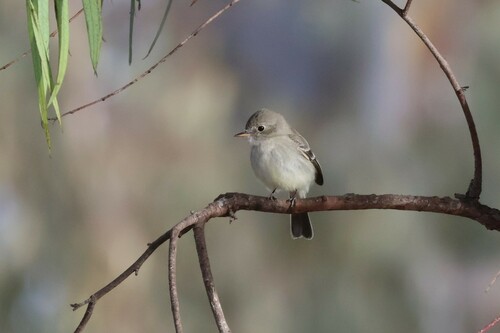 gray flycatcher
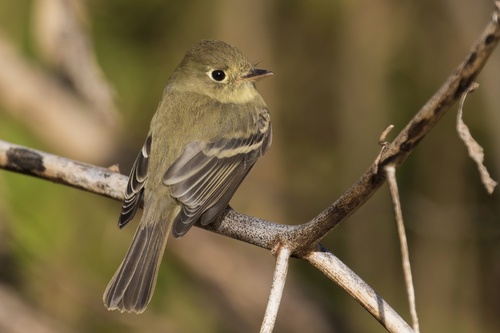 western flycatcher
Em resumo
A marca de campo mais confiável para separar o gray flycatcher do Western Flycatcher é o tom de cor geral e o padrão facial: o gray flycatcher é visivelmente mais pálido e cinza por cima, com um anel ocular sutil e fino e um bico longo e estreito, enquanto o Western Flycatcher é mais oliva por cima, com um ventre amarelo brilhante, um anel ocular em forma de lágrima bem definido e um bico curto e largo. Os juvenis de gray flycatcher mostram barras alares cor de canela e peitos acastanhados, mas os juvenis de Western Flycatcher não são descritos em detalhes aqui. A estrutura também é fundamental: o gray flycatcher tem uma cauda e um bico mais longos, dando-lhe uma aparência mais atenuada, enquanto o Western Flycatcher parece compacto e de cauda curta. A voz e o habitat podem ajudar, mas as sutis diferenças de plumagem e forma são as pistas de campo mais consistentes.
Dicas de identificação
- Cor das partes superiores: O gray flycatcher é cinza pálido por cima (às vezes com um leve tom oliva), enquanto o Western Flycatcher é distintamente cinza-oliva, especialmente nas costas e na coroa. Isso é mais aparente em boa luz.
- Partes inferiores: O gray flycatcher é esbranquiçado por baixo, com apenas uma leve lavagem amarela na plumagem fresca. O Western Flycatcher é fortemente amarelado por baixo, especialmente no ventre e nas flancos inferiores.
- Anel ocular: O anel ocular do gray flycatcher é fino e discreto, misturando-se ao rosto. O Western Flycatcher tem um anel ocular branco em forma de lágrima bem definido que se destaca, especialmente em florestas sombreadas.
- Forma e cor do bico: O gray flycatcher tem um bico longo e estreito com uma mandíbula inferior pálida que se estende pela maior parte de seu comprimento. O bico do Western Flycatcher é mais curto e mais largo, com coloração pálida menos óbvia.
- Comprimento da cauda: O gray flycatcher tem uma cauda visivelmente mais longa, dando-lhe uma aparência esticada e atenuada quando empoleirado. A cauda do Western Flycatcher é curta, fazendo com que o pássaro pareça mais compacto.
- Padrão facial: O gray flycatcher tem uma faixa supraloral pálida (acima do bico), mas é sutil. O contraste facial do Western Flycatcher vem principalmente do anel ocular bem definido.
- Barras alares: Ambas as espécies têm barras alares brancas, mas no gray flycatcher elas costumam ser menos brilhantes; em juvenis, as barras alares do gray flycatcher são cor de canela, enquanto as do Western não são descritas aqui.
- Plumagem juvenil: Os juvenis de gray flycatcher mostram mais oliva e amarelo nas partes superiores, barras alares cor de canela e peitos acastanhados. Os juvenis de Western Flycatcher não são detalhados, mas devem ser ainda mais amarelos por baixo e oliva por cima.
- Comportamento: O gray flycatcher frequentemente forrageia mais baixo e em habitats mais abertos e áridos, às vezes parecendo lento. O Western Flycatcher é mais ativo em florestas sombreadas e úmidas.
- Habitat: Na época de reprodução, o gray flycatcher está quase sempre em arbustos secos e abertos ou em florestas de pinyon-juniper; o Western Flycatcher está em áreas florestais úmidas, frequentemente perto da água.
- Voz: O canto do gray flycatcher é uma nota forte de duas sílabas (chuwip ou wilip); o do Western Flycatcher é uma série rápida e variável de notas (pseet, ptsick, seet). Os chamados podem se sobrepor, mas o canto é distinto se ouvido.
- Contexto sazonal: Na migração, ambos podem ocorrer em áreas semelhantes, mas a preferência de habitat geralmente se mantém. No inverno, o gray flycatcher permanece em áreas áridas e abertas; o Western Flycatcher inverna no México.
- Jizz em voo: A cauda e o bico mais longos do gray flycatcher podem fazê-lo parecer mais alongado em voo, enquanto o Western Flycatcher é compacto e de cauda curta.
- Armadilhas: A luz nublada pode fazer o Western Flycatcher parecer mais cinza do que realmente é, e Grey Flycatchers com plumagem fresca podem mostrar uma leve lavagem amarela por baixo. Sempre verifique múltiplas marcas.
- Quando em dúvida: Se o pássaro estiver em arbustos secos ou em pinyon-juniper abertos e parecer pálido e de cauda longa, prefira o gray flycatcher. Se estiver em uma floresta úmida e sombria com um anel ocular bem definido e ventre amarelo, é quase certamente o Western.
Tamanho
O gray flycatcher é ligeiramente maior que o Western Flycatcher, com uma massa típica de 12,5 g e um comprimento de cerca de 15 cm. O Western Flycatcher não tem uma massa aqui, mas é geralmente menor e mais compacto, com uma cauda e um bico mais curtos. No campo, o gray flycatcher frequentemente parece mais longo e esbelto, enquanto o Western Flycatcher parece mais arredondado e pequeno.
Plumagem
Para adultos, o gray flycatcher é cinza pálido por cima com apenas um leve tom oliva após a muda, e as partes inferiores são esbranquiçadas com uma leve lavagem amarela na plumagem fresca. Seu anel ocular é fino e discreto, e a área supraloral (acima do bico) é pálida, mas não ousada. O Western Flycatcher, em contraste, é cinza-oliva por cima com uma forte lavagem amarela nas partes inferiores e um anel ocular branco em forma de lágrima bem definido. Ambos têm barras alares brancas, mas as do gray flycatcher costumam ser menos contrastantes. Os juvenis de gray flycatcher têm barras alares cor de canela e peitos acastanhados, com mais tons oliva e amarelo no geral, mas ainda tendem a ser mais pálidos que o Western. Nenhuma marca juvenil detalhada é dada para o Western Flycatcher aqui, mas adultos e provavelmente jovens compartilham o ventre amarelo forte e o anel ocular bem definido. Em todas as idades, o Western Flycatcher é mais colorido e contrastante, especialmente no rosto.
Comportamento
Ambas as espécies são clássicos empidonax flycatchers, saltando de poleiros baixos para capturar insetos. O gray flycatcher frequentemente forrageia de arbustos ou ramos baixos em habitats abertos e áridos, e pode parecer mais deliberado e menos ativo do que o Western Flycatcher. O Western Flycatcher é mais provável de ser visto em florestas sombreadas e úmidas, frequentemente perto da água, e pode parecer mais ativo e ágil em folhagens densas. Ambas as espécies balançam suas caudas, mas a cauda mais longa do gray flycatcher pode tornar seus movimentos de cauda mais óbvios.
Habitat
O gray flycatcher é típico do oeste árido da América do Norte, especialmente da Grande Bacia, preferindo arbustos de sálvia, florestas de pinyon-juniper e florestas de pinheiros abertas com sub-bosque esparso. O Western Flycatcher prefere florestas coníferas ou mistas, especialmente perto de água corrente, e é mais provável de ser encontrado em florestas úmidas e sombreadas da Costa do Pacífico até as Montanhas Rochosas. A sobreposição pode ocorrer na migração, mas os habitats de reprodução geralmente são distintos: arbustos secos e abertos para o Grey, e áreas florestais úmidas para o Western.
Voz
O canto do gray flycatcher é uma nota forte de duas sílabas (chuwip ou wilip), às vezes com um teeap ou seep agudo. Os chamados são notas secas pit ou wit. O canto do Western Flycatcher é uma série rápida de notas (pseet, ptsick, seet), com os pássaros do Pacífico emitindo um distintivo ptsick ou ptik de primeira sílaba mais alta. O chamado típico é um pit pete ou tse-seet alto, às vezes um tsweep ascendente. A voz é um forte separador se ouvida bem, mas ambas as espécies podem emitir chamados curtos e secos que são facilmente confundidos.