

gray-capped social-weaver vs crested malimbe
Pseudonigrita arnaudi versus Malimbus malimbicus
Jogue um quiz com gray-capped social-weaver e crested malimbe
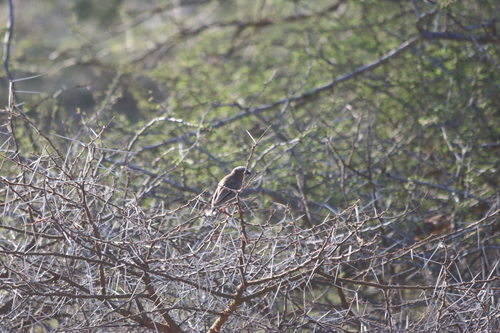 gray-capped social-weaver
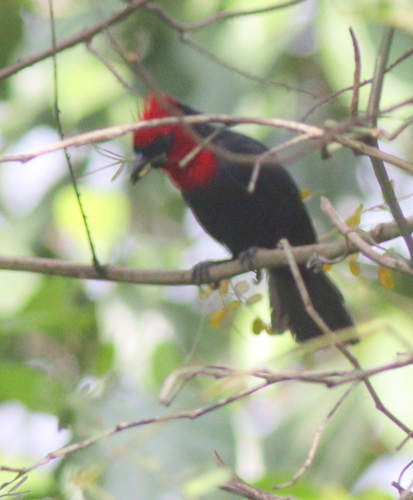 crested malimbe
Em resumo
A maneira mais confiável de separar o gray-capped social-weaver do crested malimbe é pela coloração geral e padrão da coroa: o social-weaver é um pequeno pássaro semelhante a um pardal com uma coroa cinza pálido (quase branca nos machos) e um anel ocular branco distinto, enquanto o malimbe é um tecelão impressionante da floresta tropical com uma crista proeminente (não presente no social-weaver) e não possui a coroa pálida e o anel ocular. Os juvenis de social-weaver são mais apagados, mas ainda mostram uma coroa pálida e um bico marrom, ao contrário de qualquer malimbe. Os social-weavers são encontrados em habitats secos e abertos de acácia, frequentemente em grupos, enquanto os malimbes estão restritos a densas florestas tropicais africanas. Se vistos em voo, procure pela faixa terminal leve na cauda do social-weaver e pelo preto na asa — características não apresentadas pelo malimbe.
Dicas de identificação
- Cor e padrão da coroa: O gray-capped social-weaver sempre apresenta uma coroa cinza pálido (quase branca nos machos) ou de cor fígado clara (juvenis), contrastando com o corpo mais escuro. O crested malimbe não possui nenhuma coroa pálida e, em vez disso, apresenta uma crista proeminente — nunca vista no social-weaver.
- Anel ocular: O social-weaver tem um anel ocular branco conspícuo, visível a curta distância. O malimbe não possui essa característica.
- Cor do bico: Os social-weavers adultos têm um bico cinza escuro, enquanto os juvenis têm um bico marrom. A cor do bico do malimbe não é descrita aqui, mas a combinação da cor do bico com outras marcas é distintiva para o social-weaver.
- Padrão da cauda em voo: Procure pela faixa terminal clara na cauda do social-weaver, visível quando o pássaro está voando ou batendo a cauda. O malimbe não apresenta essa característica.
- Preto na asa: O social-weaver apresenta um pouco de preto na asa, especialmente visível em voo. Isso não é uma característica do malimbe.
- Presença de crista: Apenas o malimbe possui uma crista; o social-weaver nunca a possui. Se você ver uma crista, não é um social-weaver.
- Coloração geral: O social-weaver é marrom-fígado com uma coroa e anel ocular pálidos; o malimbe é mais contrastante, com uma crista e sem coroa ou anel ocular pálidos.
- Confusão juvenil: Mesmo os juvenis apagados de social-weaver mantêm a coroa pálida e o bico marrom, que não são encontrados em nenhuma idade de malimbe.
- Comportamento em grupo: Os social-weavers geralmente estão em grupos, frequentemente se alimentando juntos no chão ou em arbustos baixos. Os malimbes são mais propensos a serem solitários ou em pares na copa das árvores da floresta.
- Habitat: Os social-weavers são encontrados apenas em habitats abertos e secos de acácia; os malimbes estão restritos a florestas tropicais densas. Se você estiver em um país aberto, você quase certamente está vendo um social-weaver.
- Tipo de ninho: Os social-weavers constroem ninhos cobertos em colônias em árvores de acácia. Os malimbes não usam essa estratégia de nidificação.
- Cor das pernas: O social-weaver tem pernas da cor do chifre, o que pode ajudar a curta distância.
- Vocalizações: Ouça os gritos agudos e repetidos do social-weaver, especialmente em grupos. Os chamados do malimbe não são descritos aqui, mas é improvável que correspondam a esse padrão.
- Tamanho e aparência: O social-weaver é pequeno, semelhante a um pardal e compacto. O malimbe é maior, mais alongado e apresenta uma crista.
- Diferenças sexuais: Os machos e fêmeas do social-weaver são quase idênticos, com os machos tendo uma coroa ligeiramente mais pálida. Essa diferença sutil não deve causar confusão com o malimbe, que é estrutural e comportamentalmente distinto.
Tamanho
O gray-capped social-weaver é um pequeno tecelão, com cerca de 11–12 cm de comprimento e pesando cerca de 20 g [wikidata]. A massa do crested malimbe não é fornecida, mas como um malimbe típico, espera-se que seja maior e mais robusto que o social-weaver. No campo, o social-weaver parecerá visivelmente menor e mais semelhante a um pardal, enquanto o malimbe é mais robusto e mais alongado, especialmente com sua crista.
Plumagem
- Juvenil/imaturo: Os juvenis de gray-capped social-weaver são mais apagados no geral, com um bico marrom e uma coroa de cor fígado clara. Eles mantêm a coroa pálida e o anel ocular, que não estão presentes em nenhuma idade de crested malimbe.
- Adulto: Os adultos de social-weaver têm uma coroa cinza pálido (quase branca nos machos, cinza claro nas fêmeas), corpo marrom-fígado, bico cinza escuro, anel ocular branco, pernas da cor do chifre, preto na asa e uma faixa terminal leve na cauda. Os adultos de crested malimbe são caracterizados por uma crista proeminente e não possuem a coroa pálida e o anel ocular. A plumagem do malimbe não é descrita em detalhes aqui, mas não apresenta a combinação de coroa pálida, anel ocular e faixa na cauda do social-weaver.
- Voo: A faixa terminal leve na cauda do social-weaver e o preto na asa são visíveis em voo e não são correspondidos pelo malimbe.
Comportamento
Os gray-capped social-weavers são altamente sociais, alimentando-se em grupos e reproduzindo-se colonialmente em árvores de acácia espinhosas. Eles constroem ninhos cobertos de palha e são frequentemente vistos forrageando juntos no chão ou em vegetação baixa. Os crested malimbes, por outro lado, estão tipicamente associados à copa das árvores da floresta e são menos propensos a serem vistos em grupos sociais abertos. Seu comportamento é mais típico de tecelões de floresta, frequentemente forrageando em pares ou pequenos grupos dentro da folhagem densa da floresta tropical.
Habitat
O gray-capped social-weaver é encontrado em habitats secos e abertos com árvores de acácia espinhosas em toda a África Oriental (Etiópia, Quênia, Somália, Sudão do Sul, Sudão, Tanzânia, Uganda) [wikipedia]. Ele nunca é encontrado em florestas tropicais densas. O crested malimbe está restrito a florestas tropicais africanas e não ocorre em habitats abertos ou áridos. Assim, o habitat por si só é frequentemente uma forte pista: qualquer pássaro visto em floresta aberta de acácia quase certamente não é um crested malimbe.
Voz
O gray-capped social-weaver emite longas séries de gritos agudos e penetrantes (tseeer-tseeer-tseeer), frequentemente em grupos. Nenhuma descrição vocal é fornecida para o crested malimbe, mas o chamado do social-weaver é distintivo entre pequenos tecelões de campo aberto.
gray-capped social-weaver · crested malimbe · Minhas aves difíceis