

calhandrinha-galucha vs cotovia-das-árvores
Calandrella brachydactyla versus Lullula arborea
Jogue um quiz com calhandrinha-galucha e cotovia-das-árvores
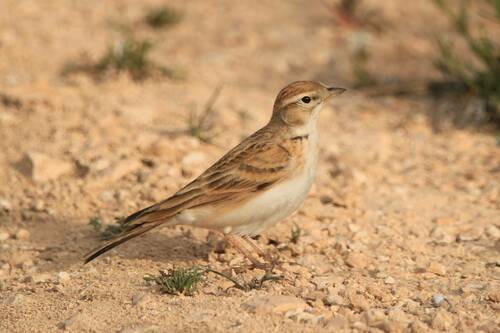 calhandrinha-galucha
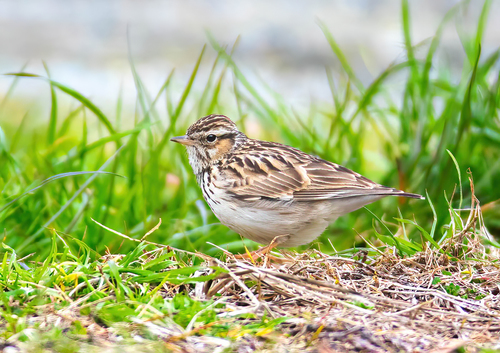 cotovia-das-árvores
Em resumo
A única marca de campo mais confiável para separar a calhandrinha-galucha da cotovia-das-árvores é o supercílio branco ousado da cotovia-das-árvores que se encontra na nuca, formando uma impressionante 'faixa de sobrancelha' pálida—uma característica que nunca é mostrada pela calhandrinha-galucha. Em voo, a cotovia-das-árvores exibe uma cauda curta com pontas brancas, mas carece das bordas brancas da cauda e da borda traseira da asa da cotovia, enquanto a cauda da calhandrinha-galucha é escura com menos branco óbvio. Estruturalmente, a cotovia-das-árvores é ligeiramente maior e mais compacta, com um bico mais curto e uma aparência de asas largas em voo; a calhandrinha-galucha é menor, mais delicada, com um bico pontudo e asas mais longas e estreitas. Ambas são marrons por cima e pálidas por baixo, mas os padrões da cabeça e as formas dos bicos das cotovias são fundamentais. A voz e o habitat podem ajudar, mas concentre-se no padrão da cabeça e na estrutura para a separação mais confiável.
Dicas de identificação
- O padrão da cabeça é fundamental: A cotovia-das-árvores sempre mostra um supercílio branco ousado que se encontra na nuca, formando uma 'faixa de sobrancelha' pálida—procure por isso em todas as idades e estações. O supercílio da calhandrinha-galucha é mais pálido, menos ousado e não se encontra na nuca.
- Forma do bico: A calhandrinha-galucha tem um bico forte, pontudo e rosado com um culmen cinza—visivelmente mais longo e mais fino do que o bico mais curto e grosso da cotovia-das-árvores. A cor do bico pode ser difícil de ver à distância, mas a forma é frequentemente visível.
- Forma e padrão da cauda: Em voo, a cotovia-das-árvores tem uma cauda curta com pontas brancas, mas sem bordas brancas na cauda; a cauda da calhandrinha-galucha é mais longa, mais escura e carece de bordas ou pontas brancas óbvias.
- Cresta: A cotovia-das-árvores tem uma pequena cresta, às vezes visível, mas geralmente é inconspícua. A calhandrinha-galucha não possui uma verdadeira cresta.
- Cor da coroa: Algumas calhandrinhas-galuchas em populações ocidentais mostram uma coroa ruiva, que nunca está presente na cotovia-das-árvores. No entanto, isso é variável e nem sempre confiável.
- Manchas no pescoço: Ambas as espécies podem mostrar manchas escuras nos lados do pescoço, então não use isso sozinho para identificação.
- Estrutura e aparência: A cotovia-das-árvores é mais robusta e compacta, com uma cauda mais curta e asas mais largas, especialmente óbvias em voo. A calhandrinha-galucha é menor, mais esbelta e mais delicada, com um bico mais longo e fino e asas mais estreitas.
- Estilo de voo: O voo de exibição da cotovia-das-árvores é flutuante e espiral, frequentemente circulando enquanto canta. Os bandos da calhandrinha-galucha voam em grupos apertados e sincronizados, especialmente no inverno.
- Plumagem acima e abaixo: Ambas são marrons por cima e pálidas por baixo, então isso não é um separador útil.
- Contexto de habitat: A cotovia-das-árvores é mais provável em florestas abertas, clareiras ou áreas de brejo com algumas árvores; a calhandrinha-galucha é encontrada em habitats abertos, secos e sem árvores, como estepes ou campos.
- Canção: A canção da cotovia-das-árvores é um 'lu-lu-lu' melodioso e repetido ou 'toolooeet', frequentemente emitido em voo. A canção da calhandrinha-galucha é um trinado seco ou uma melodia variável, menos musical.
- Tamanho do bando: Bandos grandes, compactos e sincronizados sugerem calhandrinha-galucha, especialmente no inverno; a cotovia-das-árvores é mais solitária ou encontrada em pares.
- Postura empoleirada: A cotovia-das-árvores frequentemente aparece mais ereta e compacta quando empoleirada; a calhandrinha-galucha está mais baixa em relação ao solo e é mais delicada.
- Contexto sazonal: Ambas as espécies estão presentes durante todo o ano em partes de sua área de distribuição, mas a cotovia-das-árvores é mais residente no oeste, enquanto a calhandrinha-galucha é mais migratória e forma bandos maiores no inverno.
- Sexo e idade: Os sexos são semelhantes em ambas as espécies; não há marcas específicas de idade fortes descritas, exceto pelo padrão de cabeça consistente na cotovia-das-árvores.
Tamanho
A cotovia-das-árvores é a maior das duas, medindo 13,5–15 cm de comprimento, enquanto a calhandrinha-galucha é menor que a cotovia e visivelmente mais petite que a cotovia-das-árvores. No campo, a cotovia-das-árvores parece mais robusta e compacta, com uma cauda mais curta e asas mais largas, enquanto a calhandrinha-galucha é mais delicada, com um bico mais fino e pontudo e uma construção geralmente mais esbelta. Essas diferenças são sutis, mas podem ser apreciadas com comparação direta ou experiência.
Plumagem
- Padrão de asa juvenil/imatura: Nenhuma marca de padrão de asa ou de voo específica para a idade é descrita para ambas as espécies nas fontes. Ambas mostram partes superiores geralmente marrons e partes inferiores pálidas em todas as idades, então o foco se desloca para o padrão da cabeça e da cauda.
- Padrão da cabeça: A cotovia-das-árvores sempre mostra um supercílio branco ousado que se encontra na nuca, criando uma 'faixa de sobrancelha' pálida—isso é único e visível em todas as plumagens e idades. A calhandrinha-galucha tem um supercílio pálido, mas não se encontra na nuca e é menos marcante.
- Padrão da cauda: A cotovia-das-árvores tem uma cauda curta com pontas brancas, mas carece de bordas brancas na cauda; a cauda da calhandrinha-galucha é escura com menos branco óbvio e parece mais longa e fina em voo.
- Bico: A calhandrinha-galucha tem um bico forte, pontudo e rosado com um culmen cinza; o bico da cotovia-das-árvores é mais curto e grosso.
- Coroa: Algumas calhandrinhas-galuchas no oeste mostram uma coroa ruiva, mas isso é variável e não está presente na cotovia-das-árvores.
- Manchas no pescoço: Ambas podem mostrar manchas escuras nos lados do pescoço, mas isso não é um separador forte.
- Cresta: A cotovia-das-árvores tem uma pequena cresta, muitas vezes inconspícua; a calhandrinha-galucha não tem uma cresta notável.
Comportamento
A calhandrinha-galucha frequentemente forma grandes bandos compactos e sincronizados no inverno, especialmente ao voar para a água ou empoleirar-se em solo aberto. A cotovia-das-árvores é mais solitária ou encontrada em pares durante a estação de reprodução, e seu voo de exibição é distinto: o macho flutua e espirala para cima, circulando enquanto canta a uma altura constante. Ambas as espécies podem cantar do chão ou de um poleiro, mas o voo de canção da cotovia-das-árvores é mais proeminente e flutuante. À noite, a calhandrinha-galucha empoleira-se no solo aberto, agachando-se em pequenas depressões.
Habitat
A cotovia-das-árvores prefere florestas abertas, clareiras em florestas de pinheiros, áreas de brejo e áreas com árvores ou mudas espalhadas, frequentemente em solo arenoso ou perturbado. É mais provável que seja encontrada em habitats semi-florestais ou de borda de floresta. A calhandrinha-galucha prefere solo aberto, seco e frequentemente árido com vegetação esparsa, como estepes, pastagens secas ou campos agrícolas, e é menos provável que esteja em áreas florestais ou arbustivas. A sobreposição de habitat é possível em áreas abertas, mas a cotovia-das-árvores raramente é encontrada longe de alguma cobertura arbórea, enquanto a calhandrinha-galucha a evita.
Voz
A canção da cotovia-das-árvores é um 'lu-lu-lu' melodioso e trinado, repetido ou 'toolooeet', frequentemente emitido em um voo de exibição. A canção da calhandrinha-galucha é mais variável, variando de um trinado seco a uma melodia mais imitativa, mas carece da qualidade musical e flautada da cotovia-das-árvores. Ambas as espécies podem cantar do chão ou de um poleiro, mas a canção da cotovia-das-árvores é mais distinta e musical.
calhandrinha-galucha · cotovia-das-árvores · Minhas aves difíceis