

greater green leafbird vs lesser green leafbird
Chloropsis sonnerati versus Chloropsis cyanopogon
Jogue um quiz com greater green leafbird e lesser green leafbird
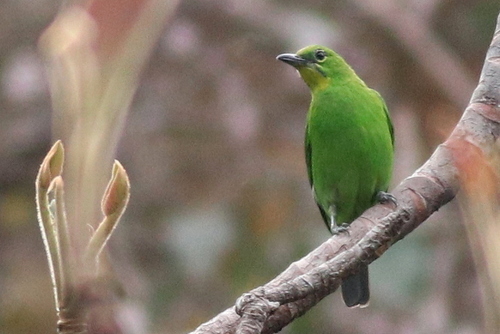 greater green leafbird
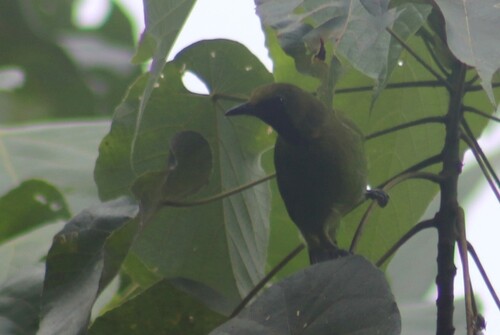 lesser green leafbird
Em resumo
A marca de campo mais confiável entre greater green leafbird e lesser green leafbird é a garganta e o anel ocular da fêmea: a fêmea greater apresenta uma garganta amarela e um anel ocular amarelo, enquanto a fêmea lesser não possui essas características. Para os machos, verifique a mancha preta na garganta: o macho lesser green leafbird tem uma borda amarela ao redor da garganta preta, que está ausente no macho greater. O greater também possui um bico visivelmente mais poderoso. Essas diferenças são sutis à distância, então concentre-se nos detalhes da garganta e do rosto quando possível. Diferenças estruturais, especialmente no bico, podem ajudar se a plumagem estiver obscurecida.
Dicas de identificação
- Garganta e anel ocular da fêmea (mais confiável para fêmeas): A fêmea greater green leafbird apresenta uma garganta amarela e um anel ocular amarelo, enquanto a fêmea lesser green leafbird não possui nenhum dos dois, apresentando um rosto e garganta verdes simples. Esta é a maneira mais rápida de separar as fêmeas a curta distância.
- Borda da mancha na garganta do macho: O macho lesser green leafbird tem uma mancha preta na garganta com uma borda amarela; a mancha preta na garganta do macho greater green leafbird não possui nenhuma borda amarela. Esta é uma marca chave para machos adultos.
- Estrutura do bico: O greater green leafbird tem um bico visivelmente mais poderoso e robusto em comparação com o lesser. Isso é melhor avaliado quando os pássaros estão lado a lado ou com experiência, mas pode ser útil se a cabeça estiver claramente visível.
- Padrão facial nas fêmeas: Procure pela combinação de garganta amarela e anel ocular amarelo nas fêmeas greater; as fêmeas lesser são mais uniformemente verdes nessas áreas.
- Armadilhas de plumagem: Ambas as espécies são predominantemente verdes, o que pode dificultar a separação à primeira vista. Sempre procure as sutis diferenças faciais e de garganta em vez de confiar apenas na cor geral.
- Sem padrões de asas distintivos para juvenis/imaturos: As notas não descrevem diferenças de padrões de asas ou de voo específicas para a idade, então não confie nessas características para separação em campo.
- Sobreposição de habitat: Ambas as espécies ocorrem em habitats florestais de planície semelhantes no Sudeste Asiático, então não use o habitat sozinho para identificá-las.
- Dimorfismo sexual: Ambas as espécies mostram diferenças entre machos e fêmeas, mas as marcas diagnósticas (borda da mancha na garganta em machos, garganta/anéis oculares amarelos em fêmeas) são consistentes dentro de cada sexo.
- Distância e iluminação: À distância ou em pouca luz, as sutis diferenças na garganta e no rosto podem ser difíceis de ver. Tente ter uma boa visão da área da cabeça e da garganta, especialmente nas fêmeas.
- Bandos mistos: Se você encontrar bandos de espécies mistas, preste atenção aos detalhes da cabeça e da garganta, pois ambas as espécies podem estar presentes juntas.
- Bico como um backup: Se as marcas de plumagem não estiverem claras, use o tamanho do bico como uma pista de apoio—o bico do greater é mais poderoso, mas isso é sutil e pode exigir experiência.
- Sem pistas vocais: As notas não fornecem diferenças vocais, então não confie em chamados ou canções para separação.
- Variação sazonal: Nenhuma diferença de plumagem sazonal é descrita, então as marcas chave devem ser confiáveis durante todo o ano.
- Faixa geográfica: Ambas as espécies podem ser encontradas nos mesmos países e habitats, então a faixa não ajuda na identificação.
- Quando em dúvida: Se as marcas diagnósticas da garganta ou do bico não estiverem visíveis, pode não ser possível separar as espécies com certeza a partir de uma visão breve ou ruim.
Tamanho
A comparação direta de tamanho não é detalhada nas notas fornecidas, mas o greater green leafbird é implicado como sendo mais robusto, especialmente em tamanho de bico, descrito como tendo um 'bico poderoso.' Isso sugere uma impressão ligeiramente mais volumosa em comparação com o lesser, embora o tamanho geral do corpo possa ser semelhante em campo.
Plumagem
Para fêmeas adultas, o greater green leafbird se destaca com uma garganta amarela e um anel ocular amarelo, enquanto a fêmea lesser não possui nenhum dos dois, apresentando um rosto e garganta verdes mais uniformes. Nos machos adultos, a diferença chave está na mancha da garganta: o macho lesser green leafbird tem uma mancha preta na garganta com borda amarela, enquanto o macho greater não possui essa borda amarela, apresentando uma mancha preta na garganta simples. Nenhuma diferença de padrão de asas ou de voo específica para a idade (juvenil ou imaturo) é descrita nas notas, então essas marcas não estão disponíveis para separação. Ambas as espécies, de outra forma, compartilham uma plumagem geralmente verde, o que pode dificultar visualizações rápidas.
Comportamento
Diferenças comportamentais não são descritas nas notas fornecidas. Ambas as espécies são leafbirds e provavelmente compartilham comportamentos semelhantes de forrageamento e empoleiramento, então não confie no comportamento para separação.
Habitat
Ambas as espécies habitam florestas tropicais ou subtropicais úmidas de planície, e suas faixas se sobrepõem no Sudeste Asiático (Brunei, Indonésia, Malásia, Mianmar, Cingapura e Tailândia). O habitat sozinho não é um separador confiável, pois ambas podem ser encontradas em ambientes florestais semelhantes.
greater green leafbird · lesser green leafbird · Minhas aves difíceis