

garajau-de-bico-amarelo vs polynesian storm-petrel
Thalasseus bergii versus Nesofregetta fuliginosa
Jogue um quiz com garajau-de-bico-amarelo e polynesian storm-petrel
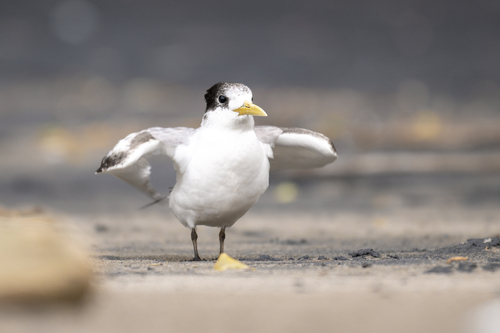 garajau-de-bico-amarelo
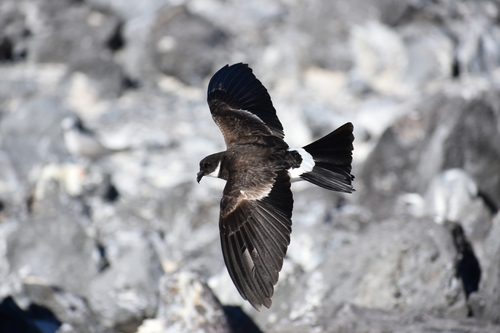 polynesian storm-petrel
Em resumo
A marca de campo mais confiável para separar o garajau-de-bico-amarelo do polynesian storm-petrel é a estrutura geral e o estilo de voo: o garajau-de-bico-amarelo é um garajau grande, com bico pesado, asas longas e pontudas e um voo forte e direto, enquanto o polynesian storm-petrel é muito menor, com asas largas e arredondadas, um bico preto curto e um voo distinto em zigue-zague e flutuante. Os juvenis de garajau-de-bico-amarelo apresentam uma asa superior variegada com barras escuras, ao contrário de qualquer storm-petrel. Em todas as plumagens, o bico amarelo-esverdeado e a crista negra desgrenhada do garajau são únicos, enquanto o bico preto, os pés pretos e as partes inferiores polimórficas do storm-petrel (geralmente com barriga branca) são distintivos. Essas espécies diferem tanto em tamanho, estrutura e voo que a confusão é rara, exceto em condições ruins ou com aves distantes e em movimento rápido.
Dicas de identificação
- Tamanho e forma: O garajau-de-bico-amarelo é muito maior e tem asas mais longas do que o polynesian storm-petrel; compare as proporções se vistos juntos ou com outras aves marinhas.
- Cor e forma do bico: O garajau tem um bico longo, reto e amarelo-esverdeado; o storm-petrel tem um bico curto, grosso e preto. A cor do bico é visível a uma distância moderada em boa luz.
- Forma da asa em voo: As asas do garajau são longas e pontudas, dando uma aparência afiada e angular; as asas do storm-petrel são largas e arredondadas, com uma aparência mais semelhante a uma pá.
- Estilo de voo: O garajau voa com batidas de asas fortes e diretas e planas; o storm-petrel tem um voo flutuante e em zigue-zague, frequentemente baixo sobre a água.
- Forma da cauda: Ambos têm caudas bifurcadas, mas a do garajau é mais longa e mais profundamente bifurcada; a do storm-petrel é mais curta e menos pronunciada.
- Asa superior juvenil/imatura: Os juvenis de garajau-de-bico-amarelo apresentam uma asa superior variegada com barras escuras e uma barra escura nas primárias internas; o storm-petrel nunca apresenta esse padrão em qualquer idade.
- Crista e padrão da cabeça: O garajau adulto tem uma crista negra desgrenhada e uma testa branca (reprodução), ou uma coroa branca com preto salpicado (não reprodução); o storm-petrel não tem crista e tem uma cabeça simples ou com a parte superior escura.
- Cor das pernas: O garajau tem pernas pretas, mas geralmente estão escondidas em voo; as pernas e pés pretos do storm-petrel podem ser visíveis quando se movendo sobre a água.
- Partes inferiores: O garajau é branco por baixo; o storm-petrel é variável, mas o branco geralmente é limitado à barriga e à garganta, não a toda a parte inferior.
- Polimorfismo da plumagem: Apenas o storm-petrel é polimórfico, com algumas aves quase totalmente escuras e outras com branco extenso; o garajau é consistente em padrão, exceto por idade e desgaste.
- Vocalizações: Qualquer chamada alta, áspera ou semelhante a um corvo indica garajau; o storm-petrel é quase sempre silencioso no mar.
- Contexto de habitat: O garajau é comum ao longo de costas e ilhas, frequentemente em bandos; o storm-petrel é estritamente pelágico, exceto em ilhas de reprodução remotas.
- Associação com outras aves: O garajau frequentemente se associa com outros garajaus e gaivotas; o storm-petrel geralmente é solitário ou em pequenos grupos, raramente com garajaus.
- Postura empoleirada: O garajau fica ereto com asas longas e cauda se estendendo bem além do corpo; o storm-petrel senta-se mais horizontalmente e parece compacto.
- Armadilhas: Garajaus distantes e voando rápido podem parecer menores, e storm-petrels com branco extenso podem superficialmente se assemelhar a pequenos garajaus, mas a estrutura, o bico e o estilo de voo são sempre confiáveis se vistos bem.
Tamanho
O garajau-de-bico-amarelo é uma ave muito maior: os adultos têm entre 46–49 cm de comprimento, com uma envergadura de 125–130 cm e pesam entre 325–397 g [wikipedia]. O polynesian storm-petrel pesa menos de um quarto da massa, com 56–86 g e cerca de 26 cm (10,2 in) de comprimento [wikipedia]. No campo, o garajau parece longo e esguio, com uma cabeça e bico grandes, enquanto o storm-petrel é compacto e leve, com uma cabeça proporcionalmente grande para seu corpo, mas uma presença geral muito menor.
Plumagem
Os juvenis de garajau-de-bico-amarelo têm uma asa superior fortemente variegada com barras escuras e uma barra escura nas penas de voo internas, um padrão não visto em polynesian storm-petrel de qualquer idade. Os adultos de garajau-de-bico-amarelo em plumagem de reprodução têm uma testa branca, crista negra brilhante e desgrenhada, e partes superiores cinza-batalha, enquanto em plumagem não reprodutiva a coroa torna-se branca com uma crista e máscara pretas salpicadas. Seu bico é sempre amarelo-esverdeado, nunca preto. O polynesian storm-petrel é altamente variável (polimórfico): algumas aves têm plumagem principalmente escura, outras têm branco extenso na barriga e na garganta, mas todas têm um bico preto e pés pretos. Suas asas são largas e arredondadas, e sua cauda é bifurcada, mas não tão longa ou profundamente bifurcada quanto a do garajau. Nenhum storm-petrel apresenta a combinação de testa branca, crista desgrenhada e bico amarelo do garajau. As partes inferiores do storm-petrel podem ser brancas ou escuras, mas o branco geralmente é confinado à barriga e à garganta, não a toda a parte inferior como no garajau.
Comportamento
O garajau-de-bico-amarelo voa com batidas de asas fortes e diretas e frequentemente plana ou paira antes de mergulhar para pegar peixes. É altamente vocal e geralmente visto em bandos, especialmente em colônias de reprodução ou locais de descanso. O polynesian storm-petrel tem um voo flutuante e em zigue-zague baixo sobre a água, frequentemente se movendo ou mergulhando para pegar comida da superfície. É solitário ou em pequenos grupos, raramente se associando com garajaus. Quando empoleirado, o garajau fica ereto com asas longas e cauda se estendendo bem além do corpo, enquanto o storm-petrel senta-se mais horizontalmente e parece muito menor e mais arredondado.
Habitat
O garajau-de-bico-amarelo é encontrado ao longo de costas e ilhas em regiões tropicais e subtropicais, frequentemente visto sobre águas abertas, praias e bancos de areia, especialmente perto de colônias de reprodução. O polynesian storm-petrel é estritamente pelágico fora da temporada de reprodução, vindo à terra apenas para nidificar em tocas ou fendas em rochas em ilhas remotas. Raramente é visto perto da costa, exceto perto de locais de reprodução. Se observado da terra, o garajau é muito mais provável, a menos que você esteja em uma ilha remota ou no mar.
Voz
O garajau-de-bico-amarelo é altamente vocal, especialmente em colônias, emitindo chamadas altas e raucosas semelhantes a corvos (kerrak), um korrkorrkorr no ninho, e um duro wep wep em voo. O polynesian storm-petrel é geralmente silencioso no mar e raramente é ouvido, exceto em locais de reprodução, onde pode emitir chamadas suaves. Qualquer chamada alta e áspera sugere garajau, não storm-petrel.
garajau-de-bico-amarelo · polynesian storm-petrel · Minhas aves difíceis