

Great Crested Tern vs Polynesian Storm-Petrel
Thalasseus bergii contro Nesofregetta fuliginosa
Fai un quiz con Great Crested Tern e Polynesian Storm-Petrel
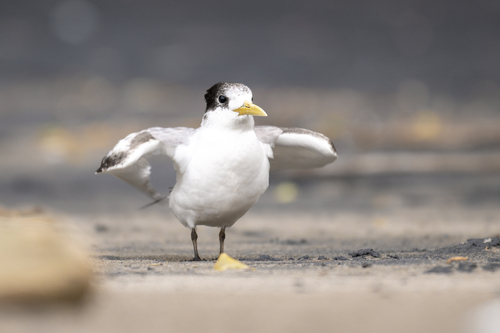 Great Crested Tern
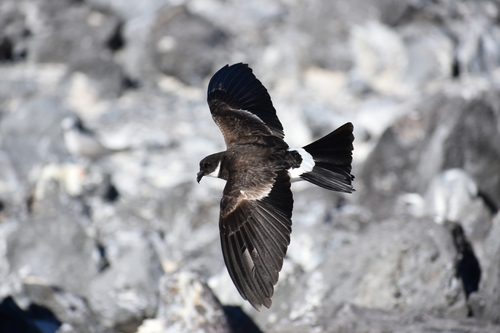 Polynesian Storm-Petrel
In breve
Il segno di campo più affidabile per separare il Great Crested Tern dal Polynesian Storm-Petrel è la struttura generale e lo stile di volo: il Great Crested Tern è un grande gabbiano con becco pesante, ali lunghe e appuntite e un volo forte e diretto, mentre il Polynesian Storm-Petrel è molto più piccolo, con ali larghe e arrotondate, un becco nero corto e un volo distintivo a zig-zag e fluttuante. I giovani Great Crested Tern mostrano un'ala superiore variegata con barre scure, a differenza di qualsiasi storm-petrel. In tutte le livree, il becco giallo-verde del gabbiano e la cresta nera e arruffata sono unici, mentre il becco nero, i piedi neri e le parti inferiori polimorfiche dello storm-petrel (spesso con ventre bianco) sono distintivi. Queste specie differiscono così fortemente in dimensioni, struttura e volo che la confusione è rara, tranne in condizioni sfavorevoli o con uccelli lontani e in rapido movimento.
Consigli di identificazione
- Dimensioni e forma: Il Great Crested Tern è molto più grande e con ali più lunghe rispetto al Polynesian Storm-Petrel; confronta le proporzioni se visti insieme o con altri uccelli marini.
- Colore e forma del becco: Il gabbiano ha un becco lungo, dritto e giallo-verde; lo storm-petrel ha un becco corto, tozzo e nero. Il colore del becco è visibile a distanza moderata in buona luce.
- Forma dell'ala in volo: Le ali del gabbiano sono lunghe e appuntite, dando un aspetto affilato e angolare; le ali dello storm-petrel sono larghe e arrotondate, con un aspetto più simile a una pagaia.
- Stile di volo: Il gabbiano vola con forti battiti d'ala diretti e spesso plana; lo storm-petrel ha un volo fluttuante e a zig-zag, spesso basso sull'acqua.
- Forma della coda: Entrambi hanno code forked, ma quella del gabbiano è più lunga e più profondamente forked; quella dello storm-petrel è più corta e meno pronunciata.
- Ala superiore giovanile/immatura: I giovani Great Crested Tern mostrano un'ala superiore variegata con barre scure e una barra scura sulle primarie interne; lo storm-petrel non mostra mai questo schema a qualsiasi età.
- Cresta e modello della testa: Il gabbiano adulto ha una cresta nera e arruffata e una fronte bianca (riproduzione), o una corona bianca con nero pepato (non riproduzione); lo storm-petrel non ha alcuna cresta e ha una testa semplice o con cappuccio scuro.
- Colore delle gambe: Il gabbiano ha gambe nere, ma queste sono solitamente nascoste in volo; le gambe e i piedi neri dello storm-petrel possono essere visibili quando si muovono sull'acqua.
- Parti inferiori: Il gabbiano è bianco sotto; lo storm-petrel è variabile, ma il bianco è solitamente limitato al ventre e alla gola, non a tutte le parti inferiori.
- Polimorfismo della livrea: Solo lo storm-petrel è polimorfico, con alcuni uccelli quasi interamente scuri e altri con ampie zone bianche; il gabbiano è coerente nel modello tranne che per età e usura.
- Vocalizzazioni: Qualsiasi richiamo forte, aspro o simile a un corvo indica il gabbiano; lo storm-petrel è quasi sempre silenzioso in mare.
- Contesto dell'habitat: Il gabbiano è comune lungo le coste e le isole, spesso in stormi; lo storm-petrel è strettamente pelagico tranne che in isole remote di riproduzione.
- Associazione con altri uccelli: Il gabbiano spesso si associa con altri gabbiani e gabbiani; lo storm-petrel è solitamente solitario o in piccoli gruppi, raramente con gabbiani.
- Postura in perching: Il gabbiano sta dritto con ali lunghe e coda che si estende bene oltre il corpo; lo storm-petrel si siede più orizzontalmente e appare compatto.
- Trappole: I gabbiani lontani e in volo veloce possono apparire più piccoli, e gli storm-petrel con ampie zone bianche possono superficialmente assomigliare a piccoli gabbiani, ma la struttura, il becco e lo stile di volo sono sempre affidabili se visti bene.
Taglia
Il Great Crested Tern è un uccello molto più grande: gli adulti sono lunghi 46–49 cm con un'apertura alare di 125–130 cm e pesano 325–397 g [wikipedia]. Il Polynesian Storm-Petrel è meno di un quarto della massa, a 56–86 g e circa 26 cm (10.2 in) di lunghezza [wikipedia]. Sul campo, il gabbiano appare lungo e snodato, con una grande testa e becco, mentre lo storm-petrel è compatto e sottile, con una testa proporzionalmente grande per il suo corpo ma una presenza complessiva molto più piccola.
Piumaggio
I giovani Great Crested Tern hanno un'ala superiore fortemente variegata con barre scure e una barra scura sulle piume di volo interne, un modello non visto nel Polynesian Storm-Petrel di qualsiasi età. Gli adulti Great Crested Tern in livrea di riproduzione hanno una fronte bianca, una cresta nera lucida e arruffata e parti superiori grigio corazzato, mentre in livrea non riproduttiva la corona diventa bianca con una cresta e una maschera nera pepata. Il loro becco è sempre giallo-verde, mai nero. Il Polynesian Storm-Petrel è altamente variabile (polimorfico): alcuni uccelli hanno una livrea per lo più scura, altri hanno ampie zone bianche sul ventre e sulla gola, ma tutti hanno un becco nero e piedi neri. Le loro ali sono larghe e arrotondate, e la loro coda è forked ma non così lunga o profondamente forked come quella del gabbiano. Nessuno storm-petrel mostra la combinazione di fronte bianca, cresta arruffata e becco giallo del gabbiano. Le parti inferiori dello storm-petrel possono essere bianche o scure, ma il bianco è solitamente limitato al ventre e alla gola, non a tutte le parti inferiori come nel gabbiano.
Comportamento
Il Great Crested Tern vola con forti battiti d'ala diretti e spesso plana o si libra prima di tuffarsi per pesci. È altamente vocale e di solito si vede in stormi, specialmente nelle colonie di riproduzione o nei dormitori. Il Polynesian Storm-Petrel ha un volo fluttuante e a zig-zag basso sull'acqua, spesso muovendosi o immergendosi per raccogliere cibo dalla superficie. È solitario o in piccoli gruppi, raramente associandosi con i gabbiani. Quando è in perching, il gabbiano sta dritto con ali lunghe e coda che si estende bene oltre il corpo, mentre lo storm-petrel si siede più orizzontalmente e appare molto più piccolo e rotondo.
Habitat
Il Great Crested Tern si trova lungo le coste e le isole nelle regioni tropicali e subtropicali, spesso visto sopra acque aperte, spiagge e banchi di sabbia, specialmente vicino alle colonie di riproduzione. Il Polynesian Storm-Petrel è strettamente pelagico al di fuori della stagione di riproduzione, venendo a terra solo per nidificare in tane o crepe rocciose su isole remote. È raramente visto vicino alla costa tranne che vicino ai siti di riproduzione. Se osservato dalla terra, il gabbiano è molto più probabile a meno che tu non sia su un'isola remota o in mare.
Voce
Il Great Crested Tern è altamente vocale, specialmente nelle colonie, emettendo forti richiami aspri simili a quelli di un corvo (kerrak), un korrkorrkorr al nido e un duro wep wep in volo. Il Polynesian Storm-Petrel è generalmente silenzioso in mare e raramente udito tranne che nei siti di riproduzione, dove può emettere richiami soft. Qualsiasi richiamo forte e aspro suggerisce il gabbiano, non lo storm-petrel.
Great Crested Tern · Polynesian Storm-Petrel · I miei uccelli difficili