

beija-flor-tesoura-verde vs crested barbet
Thalurania furcata versus Trachyphonus vaillantii
Jogue um quiz com beija-flor-tesoura-verde e crested barbet
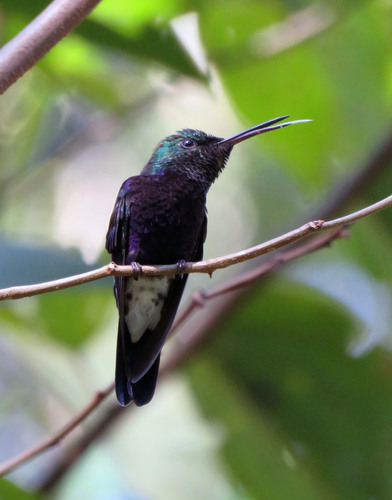 beija-flor-tesoura-verde
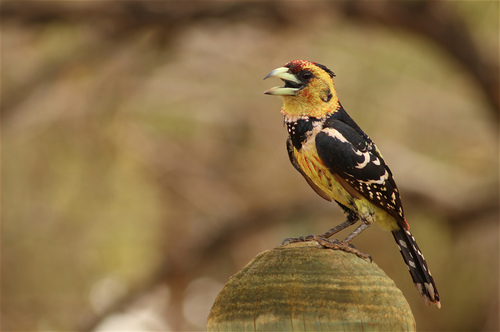 crested barbet
Em resumo
A marca de campo mais confiável para separar o beija-flor-tesoura-verde do crested barbet é a estrutura e coloração geral: o beija-flor-tesoura-verde é um beija-flor pequeno e esguio com um bico preto reto e plumagem iridescente verde-violeta, enquanto o crested barbet é um pássaro robusto e de bico grosso com um corpo boldamente padronizado em amarelo, vermelho, preto e branco e uma pequena crista preta. Não é provável que haja confusão de padrão de asa ou voo específica por idade, já que os dois diferem dramaticamente em forma e plumagem em todas as idades. Se vistos em voo, a cauda bifurcada azul-preta do beija-flor-tesoura-verde e o voo rápido e pairante contrastam fortemente com os saltos curtos e saltitantes do crested barbet e sua relutância em voar. O habitat e o comportamento também ajudam: os beija-flores-tesoura são alimentadores de néctar que frequentemente pairam em flores, enquanto os barbets forrageiam no chão ou pousam abertamente, chamando alto.
Dicas de identificação
- A estrutura é o separador mais rápido: O beija-flor-tesoura-verde é um beija-flor pequeno e esguio com um bico preto reto de comprimento médio; o crested barbet é um pássaro robusto e grosso com um bico cônico maciço e uma pequena crista preta. Essa diferença é óbvia a qualquer distância.
- Forma da cauda: O beija-flor-tesoura-verde tem uma cauda bifurcada e azul-preta (especialmente óbvia nos machos); a cauda do barbet é curta, com ponta quadrada e não bifurcada.
- Estilo de voo: Os beija-flores-tesoura pairam e se movem rapidamente, raramente pousando por muito tempo; os barbets saltitam no chão ou pousam, voando apenas curtas distâncias e nunca pairando.
- Cor e forma do bico: O bico do beija-flor-tesoura-verde é esguio e preto; o do barbet é grosso, pesado e pálido (cor não especificada, mas sempre muito mais robusto).
- Textura da plumagem: Os beija-flores-tesoura são iridescentes verde/violeta (machos) ou verde brilhante acima/pálido abaixo (fêmeas); os barbets têm padrões bold com amarelo, vermelho, preto e branco, com um rosto e barriga salpicados e uma ampla faixa negra no pescoço.
- Crista: Apenas o crested barbet tem uma pequena crista preta; os beija-flores-tesoura nunca mostram crista.
- Padrão do rosto: O rosto do barbet é salpicado de amarelo e vermelho com uma crista preta; o rosto do beija-flor-tesoura é verde liso ou verde bronze, às vezes com um gorget brilhante (macho).
- Partes inferiores: Os machos do beija-flor-tesoura têm uma barriga violeta; as fêmeas são pálidas abaixo. A barriga do barbet é amarela com manchas vermelhas, nunca lisa ou iridescente.
- Padrão das asas: As asas do barbet são pretas com manchas brancas; as asas do beija-flor-tesoura são escuras e lisas, sem branco ou manchas.
- Confusão juvenil: Mesmo os juvenis do beija-flor-tesoura são esverdeados acima e não têm nenhum padrão manchado ou salpicado; os juvenis dos barbets são sempre boldmente padronizados.
- Voz: Chamadas persistentes em trinado são exclusivas do crested barbet; os beija-flores-tesoura são em sua maioria silenciosos ou emitem chamadas finas e altas.
- Habitat e distribuição: Os beija-flores-tesoura são Neotropical (América do Sul); os barbets são Afrotropicais (África subsaariana). Se você conhece sua localização, isso geralmente é decisivo.
- Comportamento alimentar: Os beija-flores-tesoura visitam flores em busca de néctar, frequentemente pairando; os barbets se alimentam no chão ou nas árvores, comendo insetos, frutas e ovos.
- Comportamento de pouso: Os beija-flores-tesoura pousam brevemente e levemente; os barbets frequentemente pousam abertamente, chamando, ou saltitam no chão.
- Armadilhas: Não há risco realista de confundir essas espécies em campo, exceto em um quiz fotográfico ou coleção, devido à sua estrutura, comportamento e distribuição radicalmente diferentes.
Tamanho
Os beija-flores-tesoura são muito menores e mais leves, com machos medindo 9,5–12,9 cm e fêmeas 8–10,7 cm de comprimento, pesando 3–6 g. Em contraste, os crested barbets são visivelmente maiores e mais robustos (medidas exatas não fornecidas, mas são pássaros robustos e grossos). O corpo do beija-flor-tesoura é delicado e aerodinâmico, adequado para pairar ágil, enquanto o barbet é robusto com uma cabeça grande e bico grosso, construído para pousar e forragear no chão.
Plumagem
Não há sobreposição no padrão de asas ou voo entre essas espécies em qualquer idade. Os machos do beija-flor-tesoura são verdes metálicos acima com uma barriga violeta, uma cauda bifurcada azul-preta e uma garganta verde brilhante; as fêmeas são verdes brilhantes acima com partes inferiores cinzas pálidas e uma cauda com penas externas com ponta branca. Os juvenis são mais apagados, mas ainda esverdeados acima. Os crested barbets, em todas as idades, são boldamente marcados com um rosto salpicado de amarelo e vermelho, crista preta, barriga amarela com manchas vermelhas, asas pretas com manchas brancas e uma ampla faixa negra no pescoço. A plumagem do barbet é manchada e variada, nunca iridescente ou verde uniforme. A coloração do beija-flor-tesoura é lisa e iridescente, nunca manchada ou salpicada.
Comportamento
Os beija-flores-tesoura forrageiam por néctar pairando em flores em todos os níveis, às vezes defendendo áreas de flores ou fazendo linhas de armadilha. Eles são ágeis, quase sempre vistos em voo ou brevemente pousados. Os crested barbets são terrestres ou pousam abertamente, saltitando no chão ou chamando de galhos expostos. Os barbets são agressivos em relação a outros pássaros, frequentemente os perseguindo, e são relutantes em voar, geralmente voando apenas curtas distâncias. Sua alimentação inclui insetos, frutas e ovos, não néctar.
Habitat
Os beija-flores-tesoura são encontrados em uma ampla gama de habitats na maior parte da América do Sul continental (exceto Chile e Uruguai), tipicamente em áreas com abundantes plantas floridas. Os crested barbets estão restritos à África subsaariana, habitando florestas, savanas, jardins, matas e cursos d'água. Assim, a distribuição geográfica é um forte separador: essas espécies não se sobrepõem na natureza.
Voz
Os beija-flores-tesoura são geralmente silenciosos ou emitem chamadas finas e altas típicas dos beija-flores (não detalhadas nas notas). Os crested barbets são muito vocais, produzindo um trinado alto e distinto que pode continuar por longos períodos. Se você ouvir um trinado persistente, é diagnóstico para o crested barbet.
beija-flor-tesoura-verde · crested barbet · Minhas aves difíceis