

gralha-de-nuca-cinzenta vs corvo
Coloeus monedula versus Corvus corax
Jogue um quiz com gralha-de-nuca-cinzenta e corvo
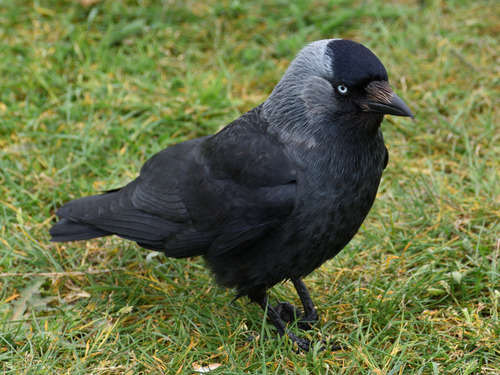 gralha-de-nuca-cinzenta
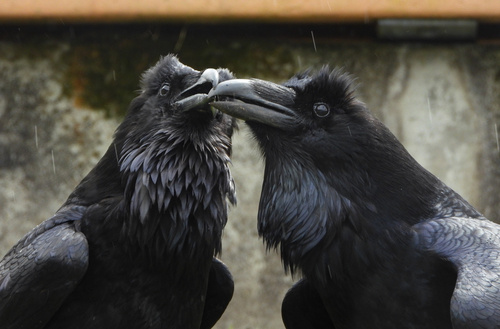 corvo
Em resumo
A marca de campo mais confiável para separar a gralha-de-nuca-cinzenta do corvo é o tamanho e a estrutura geral: a gralha é muito menor, com um bico curto e grosso e uma nuca cinza pálido distinta e íris prateada (em adultos), enquanto o corvo é maciço, totalmente preto, com um bico longo e pesado e garganta desgrenhada. Em voo, as gralhas mostram batidas de asas rápidas e profundas e um perfil compacto e de pescoço curto, enquanto os corvos planam com asas largas e uma cauda em forma de cunha. As gralhas juvenis são mais opacas e carecem da nuca pálida aguda do adulto, mas ainda permanecem muito menores e com olhos mais claros do que qualquer corvo. Se você ver um corvídeo de tamanho médio com uma nuca surpreendentemente pálida e olho prateado, é uma gralha; um enorme pássaro totalmente preto com uma cauda em forma de cunha e crocados profundos é um corvo.
Dicas de identificação
- O tamanho é decisivo: Se o pássaro estiver em qualquer lugar perto do tamanho de um corvo ou pombo, é uma gralha; se ele ofusca os corvos e parece enorme, é um corvo. Isso se aplica a todas as idades e estações.
- Estrutura do bico: As gralhas têm um bico curto e grosso; os corvos têm um bico longo, grosso e arqueado com cerdas proeminentes. O tamanho do bico é óbvio mesmo à distância em boa luz.
- Cor da nuca e do pescoço: As gralhas adultas têm uma nuca e bochechas de cinza pálido a prateado, contrastando com a touca e a garganta pretas. Os corvos são uniformemente pretos, sem pálido na nuca em qualquer idade.
- Cor dos olhos: As gralhas adultas têm íris prateadas ou esbranquiçadas impressionantes; os juvenis têm olhos azuis ou acastanhados. Os corvos de todas as idades têm olhos castanho-escuros ou azul-acinzentados, nunca pálidos.
- Penas da garganta: Os corvos mostram penas de garganta desgrenhadas e alongadas, especialmente ao chamar ou exibir. As gralhas têm uma garganta lisa.
- Formato da cauda em voo: As gralhas têm uma cauda curta, quadrada ou ligeiramente arredondada; os corvos têm uma cauda longa em forma de cunha, especialmente visível ao planar ou deslizar.
- Formato das asas e estilo de voo: As gralhas voam com batidas de asas rápidas e profundas e bandos compactos e apertados; suas asas são proporcionalmente mais estreitas e menos dedilhadas. Os corvos têm asas largas com primárias espalhadas ('dedos'), planam e deslizam com pouco batimento e raramente se reúnem de forma apertada.
- Brilho da plumagem: Ambos são brilhantes, mas as gralhas podem mostrar brilho roxo ou azul na coroa e um brilho verde-azulado na garganta e na cauda. Os corvos são pretos brilhantes por toda parte, sem áreas pálidas.
- Confusão juvenil: As gralhas jovens são mais opacas e menos marcadas, mas ainda mostram algum contraste na nuca e olhos mais claros. Os corvos jovens são opacos, totalmente pretos e maiores do que qualquer gralha.
- Pernas e pés: Ambos têm pernas pretas, não sendo um separador útil.
- Contexto do habitat: As gralhas são comuns em cidades, vilarejos e terras agrícolas; os corvos preferem áreas selvagens, abertas ou montanhosas. Em ambientes urbanos, um grande corvídeo é quase certamente uma gralha.
- Comportamento social: As gralhas são altamente sociais, frequentemente em bandos barulhentos e apertados. Os corvos geralmente estão sozinhos ou em pares, às vezes em grupos soltos.
- Vocalizações: As gralhas emitem chamados agudos e altos de 'jack'; os corvos emitem crocados profundos e ressonantes. Se você ouvir um crocado profundo, é um corvo.
- Postura empoleirada: As gralhas parecem eretas e compactas; os corvos são mais volumosos, com um bico mais pesado e garganta mais desgrenhada.
- Desgaste sazonal: O desbotamento da nuca pálida nas gralhas (especialmente nos machos) pode reduzir o contraste antes da muda, mas o tamanho e o bico permanecem diagnósticos.
Tamanho
O tamanho é o separador mais imediato: o corvo é um gigante entre os passeriformes, com uma média de cerca de 65,7 cm de comprimento e 947 g de massa [wikidata], enquanto a gralha-de-nuca-cinzenta é muito menor, tipicamente 34–39 cm de comprimento e cerca de 240 g [wikipedia]. O bico do corvo é proporcionalmente muito maior e mais pesado, e sua envergadura e volume estão em uma liga diferente. Mesmo à distância ou em voo, a gralha parece compacta, com um pescoço e cauda curtos, enquanto o corvo é longo, pesado e imponente.
Plumagem
- Pássaros juvenis/imaturos: As gralhas jovens são pretas sujas e opacas com um brilho esverdeado fraco, bases de penas marrons e uma nuca cinza escura; seus olhos são azul claros, tornando-se acastanhados antes de clarear por volta de um ano. Os corvos juvenis também são mais opacos do que os adultos, com íris azul-acinzentada e uma abertura rosada, mas permanecem totalmente pretos sem qualquer pálido na nuca ou pescoço. Assim, mesmo as gralhas imaturas tendem a mostrar algum contraste na nuca e olhos mais claros, enquanto os corvos jovens são uniformemente escuros.
- Adultos: As gralhas adultas têm uma touca e garganta pretas brilhantes com um brilho roxo ou azul, mas a característica marcante é a nuca e bochechas de cinza pálido a prateado, e uma íris prateada ou esbranquiçada. Os corvos são pretos brilhantes por toda parte, com uma garganta desgrenhada e uma íris castanho-escura. A base das penas do pescoço nos corvos é de um cinza pálido acastanhado, mas isso não é visível em campo. As gralhas têm um bico curto e preto; os corvos têm um bico maciço, arqueado e preto com longas cerdas. Ambos têm pernas pretas.
- Vistas de voo: As gralhas mostram asas inferiores cinzas uniformes e carecem das primárias dedilhadas e da cauda em forma de cunha do corvo. Os corvos têm asas largas com primárias espalhadas e uma cauda longa em forma de cunha, especialmente óbvia ao planar ou deslizar.
Comportamento
As gralhas são ágeis, sociais e frequentemente vistas em bandos apertados, voando com batidas de asas rápidas e abruptas e fazendo manobras rápidas e acrobáticas. No chão, elas andam rapidamente com uma postura ereta. Os corvos são mais solitários ou vistos em pares, frequentemente planando ou deslizando com pouco batimento, e podem realizar voos acrobáticos, mas com um estilo mais pesado e estável. Os corvos raramente se reúnem em bandos apertados como as gralhas, e sua forrageamento é mais frequentemente solitário ou em grupos soltos.
Habitat
Ambas as espécies são amplamente distribuídas, mas as gralhas são mais prováveis em ambientes urbanos, agrícolas e florestas abertas, frequentemente perto de habitações humanas. Os corvos preferem paisagens mais selvagens e abertas, montanhas, penhascos e áreas remotas, embora possam ser encontrados perto de assentamentos em algumas regiões. Ver um corvídeo em uma cidade ou vilarejo é muito mais provável que seja uma gralha, enquanto um enorme corvídeo em áreas remotas ou penhascos costeiros é provavelmente um corvo.
Voz
As gralhas têm um chamado agudo e metálico de 'jack' ou 'kya', frequentemente repetido em bandos tagarelas. Os corvos têm um crocado profundo e ressonante, muito mais baixo e sonoro do que qualquer som de gralha. A diferença é marcante: as gralhas são agudas e sociais, os corvos são profundos e solitários.