

Grajilla Occidental vs Cuervo Grande
Coloeus monedula frente a Corvus corax
Juega un quiz con Grajilla Occidental y Cuervo Grande
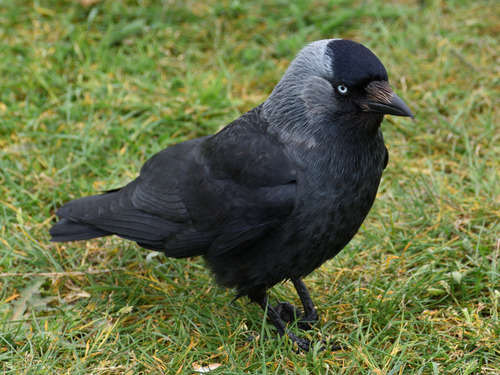 Grajilla Occidental
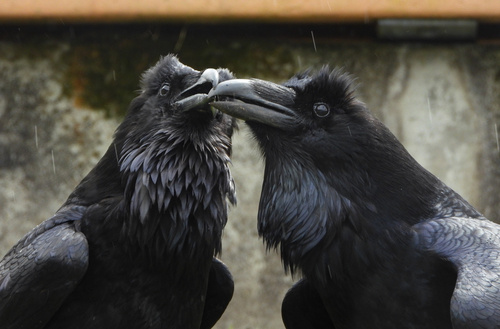 Cuervo Grande
En breve
La marca de campo más confiable para separar la Grajilla Occidental del Cuervo Grande es el tamaño y la estructura general: la Grajilla es mucho más pequeña, con un pico corto y robusto y una nuca gris pálido distintiva y un iris plateado (en adultos), mientras que el Cuervo es masivo, completamente negro, con un pico largo y pesado y una garganta desgreñada. En vuelo, las Grajillas muestran aleteos rápidos y profundos y un perfil compacto y de cuello corto, mientras que los Cuervos planean con alas anchas y una cola en forma de cuña. Las Grajillas juveniles son más apagadas y carecen de la nuca pálida aguda del adulto, pero siguen siendo mucho más pequeñas y con ojos más claros que cualquier Cuervo. Si ves un córvido de tamaño mediano con una nuca notablemente pálida y un ojo plateado, es una Grajilla; un ave enorme, completamente negra, con una cola en forma de cuña y un croar profundo es un Cuervo.
Consejos de identificación
- El tamaño es decisivo: Si el ave está cerca del tamaño de un cuervo o paloma, es una Grajilla; si eclipsa a los cuervos y parece enorme, es un Cuervo. Esto se aplica a todas las edades y estaciones.
- Estructura del pico: Las Grajillas tienen un pico corto y robusto; los Cuervos tienen un pico largo, grueso y arqueado con cerdas prominentes. El tamaño del pico es obvio incluso a distancia con buena luz.
- Color de la nuca y el cuello: Las Grajillas adultas tienen una nuca y mejillas de color gris pálido a plateado, contrastando con la capucha y la garganta negras. Los Cuervos son uniformemente negros sin pálido en la nuca a ninguna edad.
- Color de los ojos: Las Grajillas adultas tienen iris plateados o blanquecinos llamativos; los juveniles tienen ojos azules o marrones. Los Cuervos de todas las edades tienen ojos marrón oscuro o azul-grisáceo, nunca pálidos.
- Plumas de la garganta: Los Cuervos muestran plumas de garganta desgreñadas y alargadas, especialmente cuando llaman o exhiben. Las Grajillas tienen una garganta lisa.
- Forma de la cola en vuelo: Las Grajillas tienen una cola corta, cuadrada o ligeramente redondeada; los Cuervos tienen una cola larga en forma de cuña, especialmente visible cuando planean o se deslizan.
- Forma de las alas y estilo de vuelo: Las Grajillas vuelan con aleteos rápidos y profundos y en bandadas compactas y ajustadas; sus alas son proporcionalmente más estrechas y menos digitadas. Los Cuervos tienen alas anchas con primarias extendidas ('dedos'), planean y se deslizan con poco aleteo, y rara vez se agrupan estrechamente.
- Brillo del plumaje: Ambos son brillantes, pero las Grajillas pueden mostrar un brillo púrpura o azul en la corona y un brillo verde-azulado en la garganta y la cola. Los Cuervos son negros brillantes por todas partes, sin áreas pálidas.
- Confusión juvenil: Las Grajillas jóvenes son más apagadas y menos marcadas, pero aún muestran algo de contraste en la nuca y ojos más claros. Los Cuervos jóvenes son apagados, completamente negros y más grandes que cualquier Grajilla.
- Patas y pies: Ambos tienen patas negras, no son un separador útil.
- Contexto del hábitat: Las Grajillas son comunes en pueblos, ciudades y tierras agrícolas; los Cuervos prefieren áreas salvajes, abiertas o montañosas. En entornos urbanos, un córvido grande es casi seguramente una Grajilla.
- Comportamiento social: Las Grajillas son altamente sociales, a menudo en bandadas ruidosas y ajustadas. Los Cuervos suelen estar solos o en parejas, a veces en grupos sueltos.
- Vocalizaciones: Las Grajillas emiten agudos y metálicos llamados 'jack'; los Cuervos emiten croares profundos y resonantes. Si oyes un croar profundo, es un Cuervo.
- Postura posada: Las Grajillas parecen erguirse y compactas; los Cuervos son más voluminosos, con un pico más pesado y una garganta más desgreñada.
- Desgaste estacional: La desvanecimiento de la nuca pálida en las Grajillas (especialmente los machos) puede reducir el contraste antes de la muda, pero el tamaño y el pico siguen siendo diagnósticos.
Tamaño
El tamaño es el separador más inmediato: el Cuervo Grande es un gigante entre los paseriformes, promediando alrededor de 65.7 cm de longitud y 947 g de masa [wikidata], mientras que la Grajilla Occidental es mucho más pequeña, típicamente de 34 a 39 cm de longitud y alrededor de 240 g [wikipedia]. El pico del Cuervo es proporcionalmente mucho más grande y pesado, y su envergadura y volumen están en una liga diferente. Incluso a distancia o en vuelo, la Grajilla parece compacta, con un cuello y cola cortos, mientras que el Cuervo es largo, pesado e imponente.
Plumaje
- Aves juveniles/inmaduras: Las Grajillas jóvenes son de un negro sucio apagado con un tenue brillo verdoso, bases de plumas marrones y una nuca gris oscura; sus ojos son de un azul claro, que se tornan marrones antes de blanquearse alrededor de un año. Los Cuervos juveniles también son más apagados que los adultos, con un iris azul-grisáceo y una abertura rosada, pero permanecen completamente negros sin ningún pálido en la nuca o el cuello. Así, incluso las Grajillas inmaduras tienden a mostrar algo de contraste en la nuca y ojos más claros, mientras que los Cuervos jóvenes son uniformemente oscuros.
- Adultos: Las Grajillas adultas tienen una capucha y garganta negras brillantes con un brillo púrpura o azul, pero la característica destacada es la nuca y mejillas de color gris pálido a plateado, y un iris plateado o blanquecino. Los Cuervos son negros brillantes por todas partes, con una garganta desgreñada, y un iris marrón oscuro. La base de las plumas del cuello en los Cuervos es de un gris marrón pálido, pero esto no es visible en el campo. Las Grajillas tienen un pico corto y negro; los Cuervos tienen un pico negro masivo y arqueado con largas cerdas. Ambos tienen patas negras.
- Vistas de vuelo: Las Grajillas muestran alas inferiores uniformemente grises y carecen de las primarias digitadas y la cola en forma de cuña del Cuervo. Los Cuervos tienen alas anchas con primarias extendidas y una cola larga en forma de cuña, especialmente obvia cuando planean o se deslizan.
Comportamiento
Las Grajillas son ágiles, sociales y a menudo se ven en bandadas ajustadas, volando con aleteos rápidos y bruscos y realizando maniobras rápidas y acrobáticas. En el suelo, caminan con energía y postura erguida. Los Cuervos son más solitarios o se ven en parejas, a menudo planeando o deslizándose con poco aleteo, y pueden realizar vuelos acrobáticos pero con un estilo más pesado y estable. Los Cuervos rara vez se agrupan en bandadas ajustadas como las Grajillas, y su forrajeo es más a menudo solitario o en grupos sueltos.
Hábitat
Ambas especies son ampliamente distribuidas, pero las Grajillas son más probables en entornos urbanos, agrícolas y bosques abiertos, a menudo cerca de la vivienda humana. Los Cuervos prefieren paisajes más salvajes y abiertos, montañas, acantilados y áreas remotas, aunque pueden encontrarse cerca de asentamientos en algunas regiones. Ver un córvido en una ciudad o pueblo es mucho más probable que sea una Grajilla, mientras que un córvido enorme en tierras altas remotas o acantilados costeros es probablemente un Cuervo.
Voz
Las Grajillas tienen un llamado agudo y metálico 'jack' o 'kya', a menudo repetido en bandadas parlanchinas. Los Cuervos tienen un croar profundo y resonante, mucho más bajo y sonoro que cualquier sonido de Grajilla. La diferencia es notable: las Grajillas son agudas y sociales, los Cuervos son profundos y solitarios.