

ógea vs falcão-peregrino
Falco subbuteo versus Falco peregrinus
Jogue um quiz com ógea e falcão-peregrino
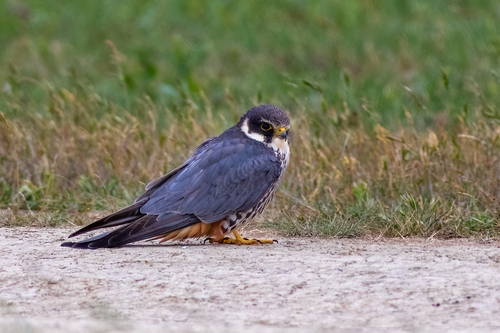 ógea
 falcão-peregrino
Em resumo
A marca de campo mais confiável para separar ógea de falcão-peregrino é o tamanho e a estrutura geral: a ógea é muito menor e mais esbelta, com asas longas e em forma de foice e uma cauda quadrada, enquanto o falcão-peregrino é um falcão grande e robusto, com asas mais largas e pontudas e uma cauda proporcionalmente mais curta. As ógeas adultas apresentam 'calças' e ventres ruivos distintos, que estão ausentes nos falcões-peregrinos, enquanto os falcões-peregrinos têm uma capuz preto ousado e partes inferiores fortemente listradas. As ógeas juvenis são mais marrons e mostram coxas listradas, enquanto os jovens falcões-peregrinos têm uma aparência marrom mais uniforme com menos contraste. O estilo de voo também difere: as ógeas frequentemente lembram andorinhas com seu voo ágil e flutuante, enquanto os falcões-peregrinos parecem mais poderosos e diretos.
Dicas de identificação
-
Tamanho e estrutura: O falcão-peregrino é muito maior e mais robusto que a ógea; a diferença de tamanho é óbvia quando vistos juntos ou com espécies familiares para escala. A ógea é esbelta e delicada, com asas longas, estreitas, em forma de foice e uma cauda quadrada; o falcão-peregrino é robusto, com asas largas e pontudas e uma cauda mais curta e arredondada.
-
Estilo de voo: A ógea frequentemente lembra uma andorinha gigante—flutuante, ágil e piscando em voo, às vezes planando com as asas para trás. O falcão-peregrino é mais direto e poderoso, com batidas de asas fortes e profundas e um voo menos flutuante.
-
Plumagem adulta: As ógeas adultas têm partes superiores cinza-ardósia, uma coroa escura, duas curtas listras de bigode, uma garganta branca limpa e distintas 'calças' e ventres ruivos. Os adultos do falcão-peregrino têm partes superiores azul-cinza, um capuz e bigode pretos ousados, garganta branca e partes inferiores fortemente listradas, sem ruivo nas coxas ou no ventre.
-
Plumagem juvenil/imatura: As ógeas juvenis são mais marrons acima, com uma aparência escamosa e coxas e ventres listrados. Os falcões-peregrinos juvenis são mais uniformemente marrons, com menos contraste e sem tons ruivos, e suas partes inferiores são listradas, mas menos acentuadas do que nas ógeas.
-
Padrão das partes inferiores: A ógea mostra listras pretas nas partes inferiores esbranquiçadas; o falcão-peregrino mostra listras horizontais pesadas nas partes inferiores brancas (especialmente os adultos).
-
Padrão facial: Ambos têm marcas de bigode, mas a do falcão-peregrino é mais larga e contrastante, formando um capuz preto ousado; a da ógea é mais sutil, com duas listras curtas e uma coroa escura menos extensa.
-
Coxas e ventre: As 'calças' ruivas e não listradas da ógea e o ventre são únicos e diagnósticos em adultos; as coxas e o ventre do falcão-peregrino são listrados e não têm ruivo.
-
Postura em repouso: A ógea parece esbelta, com asas longas e corpo leve quando empoleirada; o falcão-peregrino é robusto, com um peito largo, cabeça grande e pescoço grosso.
-
Dimorfismo sexual: O falcão-peregrino apresenta um forte dimorfismo de tamanho (fêmea muito maior que o macho); os sexos da ógea são semelhantes em tamanho e plumagem.
-
Contexto de habitat: A ógea é mais provável de ser encontrada em áreas abertas com árvores dispersas, especialmente em planícies; o falcão-peregrino é mais provável de ser encontrado em penhascos, edifícios altos ou paisagens abertas, e é comum em ambientes urbanos.
-
Comportamento alimentar: A ógea frequentemente captura e come insetos ou pequenos pássaros em voo, às vezes vista comendo em voo; o falcão-peregrino normalmente caça pássaros (às vezes mamíferos) com um mergulho em alta velocidade, raramente vista comendo em voo.
-
Comportamento em grupo: As ógeas podem migrar em pequenos grupos; os falcões-peregrinos geralmente são solitários ou em pares.
-
Voz: Não é diagnóstica com notas atuais.
-
Armadilhas: As ógeas juvenis podem ser confundidas com pequenos falcões devido à sua aparência mais marrom e listrada; sempre verifique se há coxas e ventre ruivos, e a forma esbelta geral. Os falcões-peregrinos juvenis podem parecer menos contrastantes do que os adultos, mas permanecem mais robustos e carecem de tons ruivos.
-
Quando em dúvida: Foque no tamanho, estrutura e na presença ou ausência de ruivo nas coxas e no ventre—esses são os marcadores de campo mais confiáveis em todas as idades.
Tamanho
A ógea é um pequeno falcão esbelto (massa corporal ~211 g), medindo 29–36 cm de comprimento com uma envergadura de 74–84 cm. O falcão-peregrino é muito maior e mais robusto (geralmente do tamanho de um corvo), com as fêmeas sendo especialmente consideravelmente maiores que os machos; a massa exata não é fornecida aqui, mas é substancialmente mais pesada e longa que a ógea. No campo, o falcão-peregrino parece robusto e com peito largo, enquanto a ógea é visivelmente mais delicada e esbelta.
Plumagem
-
Pássaros juvenis/imaturos: As ógeas juvenis são geralmente muito mais marrons acima, com uma aparência escamosa e coxas e coberturas de cauda listradas e amareladas. Suas partes inferiores são listradas, mas as 'calças' ruivas são menos claras e mais listradas do que nos adultos. Os falcões-peregrinos juvenis, por outro lado, são mais uniformemente marrons no geral, com menos contraste entre as partes superiores e inferiores, e não têm o ventre e as coxas ruivos. Suas partes inferiores também são listradas, mas tendem a ser mais uniformes e menos definidas do que nas ógeas.
-
Adultos: As ógeas adultas são cinza-ardósia acima, com uma coroa escura, duas curtas listras de bigode pretas, uma garganta branca limpa e coxas e ventre ruivos distintos e não listrados. O restante das partes inferiores é esbranquiçado com listras pretas. Os falcões-peregrinos são azul-cinza acima, com uma cabeça e bigode pretos ousados, garganta branca e partes inferiores brancas fortemente listradas (não listradas). As coxas e o ventre não são ruivos, mas são listrados como o restante das partes inferiores. Os sexos são semelhantes em ambas as espécies, mas as fêmeas do falcão-peregrino são muito maiores.
Comportamento
As ógeas são voadoras ágeis, semelhantes a andorinhas, frequentemente vistas caçando insetos e pequenos pássaros no ar, às vezes comendo em voo. Seu voo é flutuante, com batidas de asas rápidas e piscantes e planando que lembram andorinhas. Os falcões-peregrinos são voadores poderosos e diretos, frequentemente caçando de um poleiro alto ou planando antes de mergulhar em alta velocidade para atacar a presa no ar. Os falcões-peregrinos são menos propensos a serem vistos capturando insetos e mais frequentemente visam pássaros e ocasionalmente mamíferos, atacando com força e precisão.
Habitat
A ógea prefere áreas abertas, como terras agrícolas, pântanos, taiga, savanas e planícies com florestas dispersas. Elas são mais frequentemente vistas em paisagens abertas, especialmente onde há abundância de insetos e pequenos pássaros. Os falcões-peregrinos requerem espaço aberto para caçar e são encontrados sobre águas abertas, pântanos, vales, campos, tundra e cada vez mais em áreas urbanas, onde caçam pombos e outros pássaros da cidade. Ambas as espécies podem ser vistas em habitats abertos semelhantes, mas os falcões-peregrinos são mais propensos a serem encontrados em cidades e em penhascos.