

Alcotán Europeo vs Halcón Peregrino
Falco subbuteo frente a Falco peregrinus
Juega un quiz con Alcotán Europeo y Halcón Peregrino
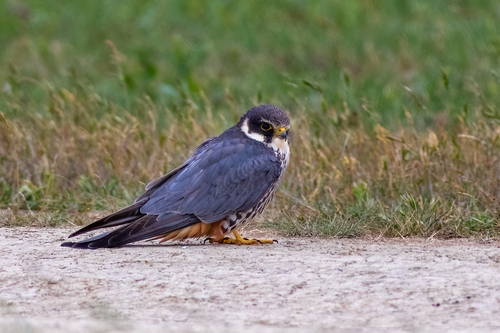 Alcotán Europeo
 Halcón Peregrino
En breve
La marca de campo más confiable para separar el Alcotán Europeo del Halcón Peregrino es el tamaño y la estructura general: el Alcotán es mucho más pequeño y esbelto, con alas largas y en forma de hoz y una cola cuadrada, mientras que el Halcón Peregrino es un halcón grande y robusto con alas más anchas y puntiagudas y una cola proporcionalmente más corta. Los Alcotanes adultos muestran distintivos 'pantalones' y ventrales rufo, que están ausentes en los Peregrinos, mientras que los Peregrinos tienen una capucha negra audaz y partes inferiores fuertemente barradas. Los Alcotanes juveniles son más marrones y muestran muslos estriados, mientras que los Peregrinos jóvenes tienen una apariencia marrón más uniforme con menos contraste. El estilo de vuelo también difiere: los Alcotanes a menudo recuerdan a los vencejos con su vuelo ágil y ligero, mientras que los Peregrinos parecen más poderosos y directos.
Consejos de identificación
-
Tamaño y estructura: El Halcón Peregrino es mucho más grande y robusto que el Alcotán Europeo; la diferencia de tamaño es obvia cuando se ven juntos o con especies familiares para escala. El Alcotán es esbelto y delicado, con alas largas, estrechas y en forma de hoz y una cola cuadrada; el Peregrino es robusto, con alas anchas y puntiagudas y una cola más corta y redondeada.
-
Estilo de vuelo: El Alcotán a menudo recuerda a un vencejo gigante—ligero, ágil y parpadeante en vuelo, a veces planeando con las alas hacia atrás. El Peregrino es más directo y poderoso, con fuertes y profundos aleteos y un vuelo menos ligero.
-
Plumaje adulto: Los Alcotanes adultos tienen partes superiores de color gris pizarra, una corona oscura, dos cortas franjas de bigote, una garganta blanca limpia y distintivos 'pantalones' y ventrales rufo. Los adultos Peregrinos tienen partes superiores de color azul grisáceo, una capucha y bigote negros audaces, garganta blanca y partes inferiores fuertemente barradas sin rufo en los muslos o el ventrículo.
-
Plumaje juvenil/inmaduro: Los Alcotanes juveniles son más marrones en la parte superior, con un aspecto escamoso y muslos y ventrículo estriados. Los Peregrinos juveniles son más uniformemente marrones, con menos contraste y sin tonos rufo, y sus partes inferiores están estriadas pero menos marcadas que en el Alcotán.
-
Patrón de partes inferiores: El Alcotán muestra estrías negras en partes inferiores blanquecinas; el Peregrino muestra una fuerte barrera horizontal en partes inferiores blancas (especialmente en adultos).
-
Patrón facial: Ambos tienen marcas de bigote, pero la del Peregrino es más ancha y contrastante, formando una capucha negra audaz; la del Alcotán es más sutil, con dos franjas cortas y una corona oscura menos extensa.
-
Muslos y ventrículo: Los 'pantalones' y el ventrículo rufo y sin estrías del Alcotán son únicos y diagnósticos en adultos; los muslos y el ventrículo del Peregrino están barrados y carecen de rufo.
-
Aspecto posado: El Alcotán parece esbelto, con alas largas y ligero cuando está posado; el Peregrino tiene un pecho robusto, con una cabeza grande y un cuello grueso.
-
Dimorfismo sexual: El Peregrino muestra un fuerte dimorfismo de tamaño (la hembra es mucho más grande que el macho); los sexos del Alcotán son similares en tamaño y plumaje.
-
Contexto de hábitat: El Alcotán es más probable que se encuentre en campos abiertos con árboles dispersos, especialmente en tierras bajas; el Peregrino es más probable que se encuentre en acantilados, edificios altos o paisajes abiertos, y es común en entornos urbanos.
-
Comportamiento alimentario: El Alcotán a menudo atrapa y come insectos o pequeños pájaros en vuelo, a veces se le ve comiendo en vuelo; el Peregrino típicamente caza aves (a veces mamíferos) con un picado a alta velocidad, rara vez se le ve comiendo en vuelo.
-
Comportamiento grupal: Los Alcotanes pueden migrar en pequeños grupos; los Peregrinos suelen ser solitarios o en parejas.
-
Voz: No es diagnóstica con notas actuales.
-
Trampas: Los Alcotanes juveniles pueden confundirse con halcones pequeños debido a su apariencia más marrón y estriada; siempre verifique los muslos y el ventrículo rufo, y la forma esbelta general. Los Peregrinos juveniles pueden parecer menos contrastantes que los adultos, pero siguen siendo más robustos y carecen de tonos rufo.
-
Cuando haya dudas: Concéntrese en el tamaño, la estructura y la presencia o ausencia de rufo en los muslos y el ventrículo—estas son las marcas de campo más confiables en todas las edades.
Tamaño
El Alcotán Europeo es un halcón pequeño y esbelto (masa corporal ~211 g), midiendo 29–36 cm de longitud con una envergadura de 74–84 cm. El Halcón Peregrino es mucho más grande y robusto (a menudo del tamaño de un cuervo), siendo las hembras especialmente considerablemente más grandes que los machos; la masa exacta no se proporciona aquí, pero es sustancialmente más pesada y larga que el Alcotán. En el campo, el Peregrino parece robusto y de pecho ancho, mientras que el Alcotán es notablemente más delicado y esbelto.
Plumaje
-
Aves juveniles/inmaduras: Los Alcotanes juveniles son generalmente mucho más marrones en la parte superior, con una apariencia escamosa y muslos y cobertores de cola estriados y de color marrón claro. Sus partes inferiores están estriadas, pero los 'pantalones' rufo son menos claros y más estriados que en los adultos. Los Peregrinos juveniles, en contraste, son más uniformemente marrones en general, con menos contraste entre las partes superiores e inferiores, y carecen del ventrículo y los muslos rufo. Sus partes inferiores también están estriadas pero tienden a ser más uniformes y menos definidas que en los Alcotanes.
-
Adultos: Los Alcotanes adultos son de color gris pizarra en la parte superior, con una corona oscura, dos cortas franjas de bigote negras, una garganta blanca limpia y striking rufous, unstreaked thighs and vent. El resto de las partes inferiores son blanquecinas con estrías negras. Los Peregrinos son de color azul grisáceo en la parte superior, con una cabeza y bigote negros audaces, garganta blanca y partes inferiores blancas fuertemente barradas (no estriadas). Los muslos y el ventrículo no son rufo, sino que están barrados como el resto de las partes inferiores. Los sexos son similares en ambas especies, pero las hembras del Peregrino son mucho más grandes.
Comportamiento
Los Alcotanes son voladores ágiles, similares a los vencejos, a menudo se les ve cazando insectos y pequeños pájaros en el aire, a veces comiendo en vuelo. Su vuelo es ligero, con aleteos rápidos y parpadeantes y planeos que recuerdan a los vencejos. Los Peregrinos son voladores poderosos y directos, a menudo cazando desde un alto posadero o planeando antes de lanzarse a alta velocidad para atacar a su presa en el aire. Es menos probable que se les vea atrapando insectos y más a menudo apuntan a aves y ocasionalmente mamíferos, atacando con fuerza y precisión.
Hábitat
El Alcotán Europeo prefiere campos abiertos como tierras agrícolas, pantanos, taiga, sabana y tierras bajas con bosques dispersos. Se les ve más a menudo en paisajes abiertos, especialmente donde hay abundantes insectos y pequeños pájaros. Los Halcones Peregrinos requieren espacio abierto para cazar y se encuentran sobre aguas abiertas, pantanos, valles, campos, tundra y cada vez más en áreas urbanas donde cazan palomas y otros pájaros de la ciudad. Ambas especies pueden verse en hábitats abiertos similares, pero los Peregrinos son más propensos a encontrarse en ciudades y en acantilados.