

Motmot

チゴハヤブサ 対 ハヤブサ

Falco subbuteo 対 Falco peregrinus

チゴハヤブサとハヤブサのクイズ
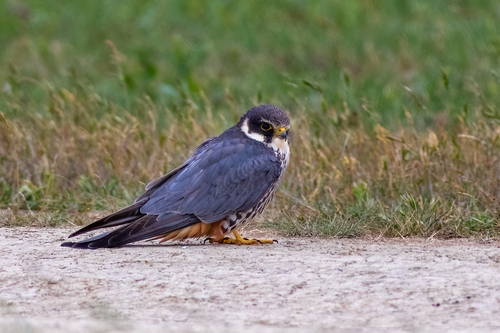
チゴハヤブサ (Falco subbuteo) チゴハヤブサ
ハヤブサ (Falco peregrinus) ハヤブサ

メディア

読み込み中…

要点

チゴハヤブサとハヤブサを区別する最も信頼できるフィールドマークは、全体のサイズと構造です:チゴハヤブサははるかに小さく、スリムで、長い鎌形の翼と四角い尾を持っていますが、ハヤブサは大きくて頑丈なタカで、より広く、尖った翼と相対的に短い尾を持っています。成鳥のチゴハヤブサは特徴的な赤褐色の「ズボン」と肛門を示し、ハヤブサにはそれがありません。一方、ハヤブサは大胆な黒いフードと重い横縞の腹部を持っています。幼鳥のチゴハヤブサはより茶色で、縞模様の太ももを示しますが、若いハヤブサはより均一な茶色の外観を持ち、コントラストが少ないです。飛行スタイルも異なります:チゴハヤブサはその敏捷で浮遊感のある飛行でしばしばスイフトを思い起こさせますが、ハヤブサはより力強く、直接的に見えます。

識別のコツ

  1. Size and structure: ハヤブサはチゴハヤブサよりもはるかに大きくて頑丈です;サイズの違いは、一緒に見たり、スケールのために馴染みのある種と一緒に見たときに明らかです。チゴハヤブサはスリムで繊細で、長く狭い鎌形の翼と四角い尾を持っています;ハヤブサは頑丈で、広く尖った翼と短くてより丸い尾を持っています。

  2. Flight style: チゴハヤブサはしばしば巨大なスイフトを思い起こさせます—浮遊感があり、敏捷で、飛行中にちらちらと動き、時には翼を後ろに引いて滑空します。ハヤブサはより直接的で力強く、強い深い翼の打撃と浮遊感の少ない飛行を持っています。

  3. Adult plumage: チゴハヤブサの成鳥はスレートグレーの上面、暗い冠、2本の短い口ひげのストライプ、きれいな白い喉、そして特徴的な赤褐色の「ズボン」と肛門を持っています。ハヤブサの成鳥は青灰色の上面、大胆な黒いフードと口ひげ、白い喉、そして太ももや肛門に赤褐色がない重い横縞の腹部を持っています。

  4. Juvenile/immature plumage: 幼鳥のチゴハヤブサは上面がより茶色で、スケール状の外観と縞模様のバフィーな太ももと肛門を持っています。幼鳥のハヤブサはより均一に茶色で、コントラストが少なく、赤褐色のトーンがなく、腹部は縞模様ですが、チゴハヤブサよりも鋭くありません。

  5. Underpart pattern: チゴハヤブサは白っぽい腹部に黒い縞模様を示します;ハヤブサは白い腹部に重い横縞を示します(特に成鳥の場合)。

  6. Facial pattern: 両者は口ひげのマークを持っていますが、ハヤブサの方が広く、コントラストが強く、大胆な黒いフードを形成しています;チゴハヤブサの方は微妙で、2本の短いストライプとあまり広範囲でない暗い冠を持っています。

  7. Thighs and vent: チゴハヤブサの赤褐色で縞模様のない「ズボン」と肛門は成鳥において独特で診断的です;ハヤブサの太ももと肛門は縞模様があり、赤褐色がありません。

  8. Perched jizz: チゴハヤブサは止まっているときにスリムで、長い翼を持ち、軽やかに見えます;ハヤブサは胸が重く、大きな頭と太い首を持っています。

  9. Sexual dimorphism: ハヤブサは強いサイズの二形性を示します(雌は雄よりもはるかに大きい);チゴハヤブサの雌雄はサイズと羽毛が似ています。

  10. Habitat context: チゴハヤブサは散在する木々のある開けた国にいる可能性が高く、特に低地で;ハヤブサは崖、高い建物、または開けた風景にいる可能性が高く、都市環境で一般的です。

  11. Feeding behavior: チゴハヤブサはしばしば空中で昆虫や小鳥を捕まえて食べ、時には飛行中に食べているのが見られます;ハヤブサは通常、高速で急降下して鳥(時には哺乳類)を狩り、飛行中に食べているのはめったに見られません。

  12. Group behavior: チゴハヤブサは小さな群れで移動することがあります;ハヤブサは通常、孤独またはペアでいます。

  13. Voice: 現在のメモでは診断的ではありません。

  14. Pitfalls: 幼鳥のチゴハヤブサはより茶色で縞模様の外観のために小型のタカと混同されることがあります;常に赤褐色の太ももと肛門、そして全体のスリムな形状を確認してください。幼鳥のハヤブサは成鳥よりもコントラストが少ないように見えることがありますが、依然としてより頑丈で赤褐色のトーンがありません。

  15. When in doubt: サイズ、構造、そして太ももと肛門の赤褐色の有無に焦点を当ててください—これらはすべての年齢において最も信頼できるフィールドマークです。

大きさ

チゴハヤブサは小さく、スリムなタカで(体重約211 g)、長さは29〜36 cm、翼幅は74〜84 cmです。ハヤブサははるかに大きく、頑丈です(しばしばカラスサイズ)、特に雌は雄よりもかなり大きいです;ここでは正確な体重は提供されていませんが、チゴハヤブサよりもかなり重く、長いです。フィールドでは、ハヤブサは頑丈で広い胸を持っているように見えますが、チゴハヤブサは明らかにより繊細でスリムです。

羽色

行動

チゴハヤブサは敏捷でスイフトのような飛行者で、空中で昆虫や小鳥を狩るのがよく見られ、時には飛行中に食べることもあります。彼らの飛行は浮遊感があり、素早くちらちらとした翼の打撃とスイフトを思い起こさせる滑空があります。ハヤブサは力強く、直接的な飛行者で、高い止まり木から狩りをしたり、高速で急降下して空中の獲物を攻撃することがよくあります。ハヤブサは昆虫を捕まえるのが見られることは少なく、より頻繁に鳥や時には哺乳類を狙い、力強く正確に攻撃します。

生息環境

チゴハヤブサは農地、湿地、タイガ、サバンナ、散在する森のある低地などの開けた国を好みます。彼らは特に昆虫や小鳥が豊富な開けた風景でよく見られます。ハヤブサは狩りのために開けたスペースを必要とし、開けた水域、湿地、谷、野原、ツンドラ、そしてますます都市部で見られ、そこでハトや他の都市の鳥を狩ります。両種は似たような開けた生息地で見られますが、ハヤブサは都市や崖で見られる可能性が高いです。

より良い説明を送る

比較と同じ項目を使ってください。文章はすぐに公開されます。

The most reliable field mark to separate Eurasian Hobby from Peregrine Falcon is overall size and structure: the Hobby is much smaller and slimmer, with long, sickle-shaped wings and a square tail, while the Peregrine is a large, robust falcon with broader, more pointed wings and a proportionally shorter tail. Adult Hobbies show distinctive rufous 'trousers' and vent, which are absent in Peregrines, while Peregrines have a bold black hood and heavily barred underparts. Juvenile Hobbies are browner and show streaked thighs, whereas young Peregrines have a more uniform brownish appearance with less contrast. Flight style also differs: Hobbies often recall swifts with their agile, buoyant flight, while Peregrines appear more powerful and direct.

  1. Size and structure: Peregrine Falcon is much larger and bulkier than Eurasian Hobby; size difference is obvious when seen together or with familiar species for scale. Hobby is slim and delicate, with long, narrow, sickle-shaped wings and a square tail; Peregrine is robust, with broad, pointed wings and a shorter, more rounded tail.

  2. Flight style: Hobby often recalls a giant swift—buoyant, agile, and flickering in flight, sometimes gliding with wings swept back. Peregrine is more direct and powerful, with strong, deep wingbeats and less buoyant flight.

  3. Adult plumage: Hobby adults have slate-grey upperparts, a dark crown, two short moustache stripes, a clean white throat, and distinctive rufous 'trousers' and vent. Peregrine adults have blue-grey upperparts, a bold black hood and moustache, white throat, and heavily barred underparts with no rufous on the thighs or vent.

  4. Juvenile/immature plumage: Juvenile Hobbies are browner above, with a scaled look and streaked, buffy thighs and vent. Juvenile Peregrines are more uniformly brownish, with less contrast and no rufous tones, and their underparts are streaked but less sharply than in Hobby.

  5. Underpart pattern: Hobby shows black streaks on whitish underparts; Peregrine shows heavy, horizontal barring on white underparts (especially adults).

  6. Facial pattern: Both have moustache marks, but Peregrine's is broader and more contrasting, forming a bold black hood; Hobby's is subtler, with two short stripes and a less extensive dark crown.

  7. Thighs and vent: Hobby's rufous, unstreaked 'trousers' and vent are unique and diagnostic in adults; Peregrine's thighs and vent are barred and lack rufous.

  8. Perched jizz: Hobby appears slim, long-winged, and lightly built when perched; Peregrine is heavy-chested, with a large head and thick neck.

  9. Sexual dimorphism: Peregrine shows strong size dimorphism (female much larger than male); Hobby sexes are similar in size and plumage.

  10. Habitat context: Hobby is more likely in open country with scattered trees, especially in lowlands; Peregrine is more likely on cliffs, tall buildings, or open landscapes, and is common in urban settings.

  11. Feeding behavior: Hobby often catches and eats insects or small birds on the wing, sometimes seen eating in flight; Peregrine typically hunts birds (sometimes mammals) with a high-speed stoop, rarely seen eating in flight.

  12. Group behavior: Hobbies may migrate in small groups; Peregrines are usually solitary or in pairs.

  13. Voice: Not diagnostic with current notes.

  14. Pitfalls: Juvenile Hobbies can be confused with small falcons due to their browner, streaked appearance; always check for rufous thighs and vent, and overall slim shape. Juvenile Peregrines can look less contrasting than adults but remain bulkier and lack rufous tones.

  15. When in doubt: Focus on size, structure, and the presence or absence of rufous on the thighs and vent—these are the most reliable field marks in all ages.

Eurasian Hobby is a small, slim falcon (body mass ~211 g), measuring 29–36 cm in length with a wingspan of 74–84 cm. Peregrine Falcon is much larger and bulkier (often crow-sized), with females especially being considerably bigger than males; exact mass not provided here, but it is substantially heavier and longer than Hobby. In the field, Peregrine appears robust and broad-chested, while Hobby is noticeably more delicate and slender.

  • Juvenile/immature birds: Juvenile Hobbies are generally much browner above, with a scaled appearance and streaked, buffy thighs and undertail coverts. Their underparts are streaked, but the rufous 'trousers' are less clear and more streaked than in adults. Juvenile Peregrines, by contrast, are more uniformly brownish overall, with less contrast between upperparts and underparts, and lack the rufous vent and thighs. Their underparts are also streaked but tend to be more uniform and less sharply defined than in Hobbies.

  • Adults: Adult Hobbies are slate-grey above, with a dark crown, two short black moustache stripes, a clean white throat, and striking rufous, unstreaked thighs and vent. The rest of the underparts are whitish with black streaks. Peregrines are blue-grey above, with a bold black head and moustache, white throat, and heavily barred white underparts (not streaked). The thighs and vent are not rufous but are barred like the rest of the underparts. Sexes are similar in both species, but Peregrine females are much larger.

Hobbies are agile, swift-like fliers, often seen hawking insects and small birds in the air, sometimes eating on the wing. Their flight is buoyant, with quick, flickering wingbeats and gliding reminiscent of swifts. Peregrines are powerful, direct fliers, often hunting from a high perch or soaring before stooping at high speed to strike prey in mid-air. Peregrines are less likely to be seen catching insects and more often target birds and occasionally mammals, striking with force and precision.

Eurasian Hobby prefers open country such as farmland, marshes, taiga, savannah, and lowlands with scattered woods. They are most often seen in open landscapes, especially where there are abundant insects and small birds. Peregrine Falcons require open space for hunting and are found over open water, marshes, valleys, fields, tundra, and increasingly in urban areas where they hunt pigeons and other city birds. Both species can be seen in similar open habitats, but Peregrines are more likely to be found in cities and on cliffs.

変更を破棄しますか?

保存していない編集があります。今離れると失われます。

チゴハヤブサ · ハヤブサ · 苦手な鳥