

eastern chanting-goshawk vs açor-palrador
Melierax poliopterus versus Micronisus gabar
Jogue um quiz com eastern chanting-goshawk e açor-palrador
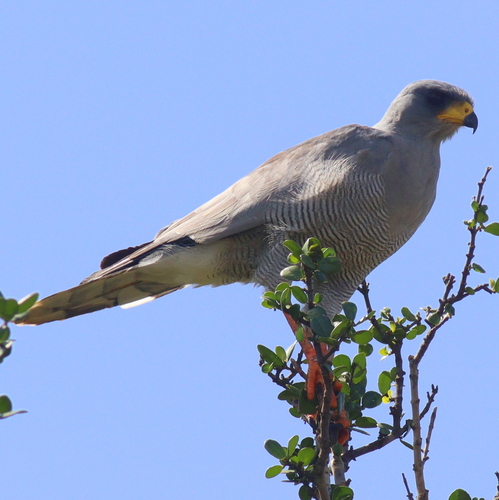 eastern chanting-goshawk
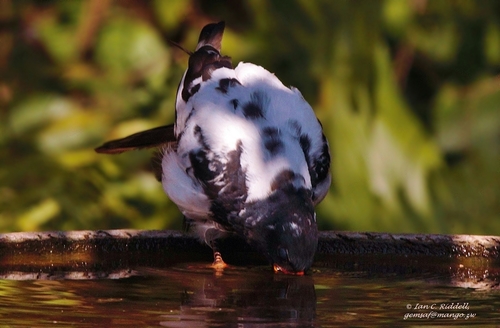 açor-palrador
Em resumo
A marca de campo mais confiável entre o eastern chanting-goshawk e o açor-palrador é o tamanho e a estrutura: o eastern chanting-goshawk é muito maior, com uma construção mais robusta, asas mais largas e uma cauda mais curta e graduada, enquanto o açor-palrador é pequeno, esbelto e de cauda longa. As plumagens juvenis podem ser confusas, mas o juvenil do eastern chanting-goshawk tem menos barras nas coberturas da cauda e na região do rabo, e pernas mais longas do que o açor. Em voo, o eastern chanting-goshawk exibe uma barriga branca impressionante e forros de asa brancos com pontas de asa escuras, enquanto o açor (na morfologia pálida) é mais uniformemente barrado embaixo e tem uma região do rabo branca conspícua. Empoleirado, a cor das pernas e do cera, a forma da cauda e a robustez geral ajudam. O açor é frequentemente solitário ou em pares, enquanto o eastern chanting-goshawk pode ser visto em grupos.
Dicas de identificação
- Tamanho e robustez: O eastern chanting-goshawk é muito maior e mais pesado do que o açor-palrador. Se você ver um rapinante robusto, quase do tamanho de um gavião, é o eastern chanting-goshawk; um gavião pequeno e esbelto é o açor.
- Forma e comprimento da cauda: O eastern chanting-goshawk tem uma cauda mais curta e graduada (as penas centrais mais longas que as externas), enquanto o açor tem uma cauda mais longa e mais uniforme. Em voo ou empoleirado, observe as proporções da cauda em relação ao corpo.
- Comprimento e cor das pernas: Ambos têm pernas longas, mas as do eastern chanting-goshawk são especialmente longas e laranja-vermelhas em adultos (amarelas em adultos do açor). As pernas do juvenil do eastern chanting-goshawk são mais longas do que as do juvenil do açor. As pernas do açor são amarelas em imaturos, vermelhas em adultos.
- Cor do cera: O adulto do eastern chanting-goshawk tem um cera amarelo, o adulto do açor tem um cera vermelho. O juvenil do açor tem um cera amarelo, então isso nem sempre é confiável para idade.
- Plumagem embaixo em voo (adulto): O eastern chanting-goshawk mostra uma barriga branca e forros de asa brancos com pontas de asa escuras, criando um contraste impressionante. O açor (morfologia pálida) é mais uniformemente barrado embaixo, sem esse contraste acentuado.
- Rabo branco: O açor-palrador (tanto adulto quanto juvenil, morfologia pálida) tem uma região do rabo branca conspícua, visível em voo e frequentemente quando empoleirado. O eastern chanting-goshawk tem uma região do rabo branca ou levemente barrada em juvenis, mas é menos proeminente e não tão limpa quanto a do açor.
- Coberturas da cauda (juvenil): O juvenil do eastern chanting-goshawk tem barras fracas ou nenhuma nas coberturas da cauda, enquanto o juvenil do açor tem coberturas da cauda mais pesadamente barradas. Esta é uma marca chave para separar os jovens pássaros.
- Barrados na barriga e no peito (juvenil): O juvenil do eastern chanting-goshawk tem listras marrons na garganta e no peito, e barras marrons nas coberturas da barriga, mas o padrão geral é mais arrumado do que o do açor, que é mais marrom e desordenado embaixo.
- Morfologia escura: Apenas o açor-palrador tem uma morfologia quase preta; qualquer gavião pequeno totalmente escuro é o açor.
- Forma da asa e estilo de voo: O eastern chanting-goshawk tem asas mais largas e batidas de asa rasas e retas, frequentemente planando com asas planas ou levemente em forma de C. O açor é mais parecido com um accipiter, com voo mais rápido e ágil e asas mais estreitas.
- Comportamento social: Grupos de chanting goshawks (mais de 2-3 pássaros juntos) são quase sempre eastern chanting-goshawk. O açor é geralmente solitário ou em pares.
- Preferência de empoleiramento: O eastern chanting-goshawk frequentemente se empoleira em rochas expostas ou no topo de montanhas; o açor prefere os topos de árvores espinhosas, especialmente acácias.
- Habitat: Em áreas muito abertas, secas ou rochosas, especialmente na África Oriental, o eastern chanting-goshawk é mais provável. Em áreas florestadas ou de acácia espinhosa, especialmente fora da África Oriental, o açor é mais provável.
- Voz: Se você ouvir um chamado melódico ou repetidos chamados 'pereu-pereu', é o eastern chanting-goshawk. Os chamados do açor não são descritos aqui.
- Armadilhas: O juvenil do eastern chanting-goshawk pode ser confundido com o juvenil do açor-cantador, mas em comparação com o açor, as pernas mais longas, menos barras nas coberturas da cauda e o tamanho maior são chaves. Quando em dúvida, use uma combinação de tamanho, forma da cauda, cor das pernas e padrão da região do rabo.
Tamanho
O eastern chanting-goshawk é vastamente maior: a massa corporal média é de 735g, com um comprimento de 49-55 cm e uma envergadura de 96-110 cm. O açor-palrador é muito menor, com uma média de 165g, comprimento de 28-36 cm e uma envergadura de cerca de 63 cm. A diferença é imediatamente óbvia se vistos juntos ou com escala: o eastern chanting-goshawk é um grande e robusto rapinante, enquanto o açor é um pequeno e esbelto gavião semelhante a um accipiter. A fêmea do açor pode se aproximar do menor macho do eastern chanting-goshawk em tamanho, mas a sobreposição é mínima.
Plumagem
O juvenil do eastern chanting-goshawk é marrom opaco por cima com um supercílios pálido, partes inferiores brancas com listras marrons na garganta e no peito, barras marrons nas coberturas da barriga, e barras fracas ou nenhuma nas coberturas da cauda. A região do rabo é branca, às vezes parcialmente barrada ou sem marcas, e a cauda é marrom com barras mais escuras amplamente espaçadas. O juvenil do açor-palrador (morfologia pálida) é mais marrom no geral, com barras mais desordenadas no peito, cera e pernas amarelas, e uma região do rabo branca conspícua. As coberturas da cauda são mais pesadamente barradas do que no eastern chanting-goshawk. O adulto do eastern chanting-goshawk é overall cinza pálido com barriga e forros de asa brancos, pontas de asa escuras, e uma cauda negra por cima com branca embaixo e barras cinzas; as pernas são laranja-vermelhas, cera amarela. O adulto do açor-palrador (morfologia pálida) é cinza por cima, branco e cinza barrado embaixo, com uma região do rabo branca e cauda cinza escura, barrada; as pernas e o cera são vermelhos. A morfologia escura do açor é quase totalmente preta, o que nunca é igualado pelo eastern chanting-goshawk. Em voo, o eastern chanting-goshawk aparece branco embaixo com cabeça cinza e pontas de asa escuras, enquanto o açor é mais uniformemente barrado e mostra uma região do rabo branca impressionante.
Comportamento
O eastern chanting-goshawk é frequentemente visto em grupos, às vezes até 16, e frequentemente caça cooperativamente, racionando presas entre os membros do grupo. Ele se empoleira conspicuamente em topos de montanhas ou afloramentos rochosos e caça mergulhando de perches expostos, frequentemente após lagartos. Seu voo é caracterizado por batidas de asa rasas e retas e planagens com asas planas ou levemente em forma de C. O açor-palrador é geralmente solitário ou em pares, especialmente durante a reprodução, e é mais secreto. Ele caça pequenos pássaros, forçando-os a sair das árvores em perseguições persistentes e enérgicas, ou mergulhando de um poleiro. O açor é conhecido por seus ataques destrutivos a ninhos de tecelões e por usar teias de aranha na construção do ninho.
Habitat
O eastern chanting-goshawk prefere semideserto, arbustos secos e pastagens florestadas até 2000 m, tipicamente na África Oriental (sul da Etiópia, Djibuti, oeste da Somália, leste do Quênia, nordeste da Tanzânia e Uganda adjacente). O açor-palrador é mais amplamente distribuído na África e na Arábia, e não está tão intimamente ligado a habitats abertos e áridos; é frequentemente encontrado em áreas florestadas, especialmente acácia espinhosa, e é menos provável de ser visto em grandes grupos ou em terrenos muito abertos.
Voz
O eastern chanting-goshawk emite um chamado melódico ('rhee-opee-opee-opee') e um curto 'kleee-yeu', com chamados ligeiramente mais agudos do que o semelhante açor-cantador. Durante a nidificação, ele emite um repetido 'pereu-pereu-pereu-repee-repee-repee'. As vocalizações do açor-palrador não são descritas nas notas fornecidas, portanto não são diagnósticas aqui.
eastern chanting-goshawk · açor-palrador · Minhas aves difíceis