

papa-formiga-de-bando vs chestnut-backed antbird
Microrhopias quixensis versus Poliocrania exsul
Jogue um quiz com papa-formiga-de-bando e chestnut-backed antbird
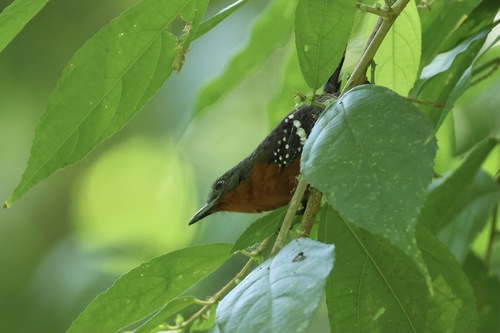 papa-formiga-de-bando
 chestnut-backed antbird
Em resumo
A marca de campo mais confiável entre papa-formiga-de-bando e chestnut-backed antbird é o tamanho geral e a estrutura do corpo: o papa-formiga-de-bando é muito menor e mais esguio, com uma cauda longa e graduada e manchas brancas proeminentes nas asas e na cauda, enquanto o chestnut-backed antbird é maior, com corpo mais pesado e ricamente castanho por cima, com um anel ocular azul nu. Em todas as plumagens, o papa-formiga-de-bando apresenta marcas brancas fortes nas coberturas das asas e na cauda, especialmente em voo, enquanto o chestnut-backed antbird é de um castanho profundo por cima, com apenas algumas manchas brancas nas coberturas das asas em certas subespécies. Os sexos diferem em ambos, mas a fêmea do papa-formiga é ruiva por baixo com uma garganta escura, enquanto a fêmea do antbird é marrom por baixo com uma garganta escura mais opaca. Se você ver um pássaro pequeno e ativo com manchas brancas ousadas nas asas, é o papa-formiga; um pássaro maior e mais arredondado com um anel ocular azul e partes superiores castanhas é o antbird.
Dicas de identificação
- Tamanho e Estrutura: O papa-formiga-de-bando é muito menor e mais esguio que o chestnut-backed antbird. Se o pássaro parecer pequeno e delicado, especialmente em um bando misto, é provável que seja o papa-formiga. O antbird é visivelmente mais robusto e arredondado.
- Forma e Comprimento da Cauda: O papa-formiga-de-bando tem uma cauda longa e graduada com pontas brancas (especialmente óbvias em voo ou quando aberta). O chestnut-backed antbird tem uma cauda mais curta e uniforme, castanha por igual com pouca ou nenhuma branca.
- Padrão das Asas (Todas as Idades): O papa-formiga-de-bando sempre mostra manchas brancas ousadas nas coberturas das asas maiores e às vezes em outras coberturas. Estas são grandes e óbvias, especialmente quando o pássaro agita suas asas ou em voo. O chestnut-backed antbird pode mostrar algumas pontas brancas nas coberturas das asas em certas subespécies (notavelmente machos de P. e. cassini e P. e. maculifer), mas estas são menores, menos extensas e nunca tão marcantes quanto as do papa-formiga. A maioria das subespécies de antbird não apresenta branco óbvio na asa.
- Cor das Partes Superiores: O papa-formiga-de-bando (macho) é principalmente preto por cima; a fêmea é cinza escura. O chestnut-backed antbird (ambos os sexos) é de um castanho profundo por cima, incluindo as asas e a cauda. Este rico castanho nunca está presente no papa-formiga.
- Partes Inferiores (Diferenças Sexuais): A fêmea do papa-formiga-de-bando tem partes inferiores ruivas-castanhas com uma garganta preta, criando um contraste acentuado. A fêmea do chestnut-backed antbird é marrom por baixo com uma garganta preta mais opaca, sem o brilhante ruivo do papa-formiga.
- Anel Ocular: O chestnut-backed antbird de ambos os sexos tem uma mancha de pele nua azul clara ao redor do olho, visível a curta distância. O papa-formiga-de-bando não tem pele nua azul ao redor do olho.
- Bico e Face: Ambos têm bicos escuros, mas o bico do antbird parece mais pesado e a face mais arredondada devido ao anel ocular azul e à forma da cabeça.
- Comportamento: O papa-formiga-de-bando é mais ativo, agitando as asas e a cauda para exibir manchas brancas, e frequentemente se junta a bandos mistos. O chestnut-backed antbird é mais lento, mais secreto e geralmente forrageia sozinho ou em pares perto do chão.
- Preferência de Habitat: O papa-formiga-de-bando é mais provável de ser encontrado na borda da floresta, em crescimento secundário ou em níveis médios; o chestnut-backed antbird está ligado ao sub-bosque denso e úmido, frequentemente perto do chão.
- Variação de Subespécies: Algumas subespécies de papa-formiga-de-bando têm mais ou menos branco nas asas/cauda ou tonalidades ruivas ligeiramente diferentes por baixo, mas todas mostram alguma branca e uma cauda longa. Algumas subespécies de chestnut-backed antbird têm coberturas das asas com pontas brancas (machos), mas nunca o branco ousado do papa-formiga, e sempre mantêm partes superiores castanhas.
- Dimorfismo Sexual: Ambas as espécies são dimórficas sexualmente, mas a fêmea do papa-formiga é muito mais brilhante por baixo (ruiva-castanha) do que a do antbird (marrom). O macho do papa-formiga é todo preto com manchas brancas; o macho do antbird é castanho por cima e escuro por baixo.
- Visão em Voo: Em voo, o papa-formiga-de-bando exibe branco nas asas e na cauda; o chestnut-backed antbird aparece principalmente castanho com pouco ou nenhum branco, exceto por pequenas pontas de coberturas em alguns machos.
- Contexto de Bando Misto: Se visto com outros pequenos papa-formigas ou tanagers em um bando em movimento rápido, suspeite do papa-formiga-de-bando. Se sozinho ou com o parceiro em um denso matagal, suspeite do chestnut-backed antbird.
- Aarmadilha Potencial: Não confie apenas na presença de branco na asa, pois algumas subespécies de antbird mostram pequenas pontas brancas nas coberturas. Foque no tamanho geral, na forma da cauda e na extensão do castanho por cima.
- Quando em Dúvida: Se você ver um anel ocular azul nu, é o chestnut-backed antbird. Se você ver um pássaro pequeno com uma cauda longa e com pontas brancas e manchas brancas ousadas nas asas, é o papa-formiga-de-bando.
Tamanho
O papa-formiga-de-bando é significativamente menor e mais leve, com uma massa corporal de cerca de 7,9 g e um comprimento de 10–12,5 cm [wikidata, wikipedia]. O chestnut-backed antbird é muito maior e mais robusto, pesando cerca de 29 g e medindo 14–15 cm [wikipedia]. No campo, o papa-formiga parece delicado e esguio, enquanto o antbird é visivelmente mais robusto e arredondado. Essa diferença de tamanho é frequentemente aparente mesmo à distância ou em bandos mistos.
Plumagem
Nenhum padrão de asa juvenil ou imaturo específico para a idade é descrito para nenhuma das espécies, então concentre-se nas diferenças entre adultos e sexos. O papa-formiga-de-bando (macho) é principalmente preto com grandes pontas brancas nas coberturas das asas maiores e branco na cauda, visíveis tanto empoleirado quanto em voo. A fêmea é cinza escura por cima, com garganta preta e partes inferiores ruivas-castanhas, com o mesmo padrão de asas e cauda branco que o macho. As subespécies variam na quantidade e tamanho de branco nas asas e cauda e na tonalidade de ruivo por baixo nas fêmeas, mas todas mostram algumas manchas brancas. O chestnut-backed antbird (ambos os sexos) é de um castanho profundo por cima (cabeça, costas, asas e cauda), com uma cabeça e partes inferiores preto-ardósia nos machos e cabeça/garganta preto-mais opaca com partes inferiores marrons nas fêmeas. Ambos os sexos têm um anel ocular azul claro nu, ausente no papa-formiga. Algumas subespécies de antbird têm coberturas das asas com pontas brancas (notavelmente machos de P. e. cassini e P. e. maculifer), mas nunca o branco ousado e extenso do papa-formiga, e suas partes superiores permanecem castanhas. As fêmeas de antbird nunca mostram o contraste acentuado ruivo/preto das fêmeas de papa-formiga. A longa cauda graduada do papa-formiga com pontas brancas é única; a cauda do antbird é mais curta e uniformemente castanha.
Comportamento
O papa-formiga-de-bando é mais ativo e ágil, frequentemente forrageando em pares ou pequenos grupos, agitando sua cauda e asas para revelar manchas brancas. Ele se move rapidamente através dos níveis inferiores e médios da floresta, frequentemente em bandos mistos. O chestnut-backed antbird é mais secreto, tipicamente forrageando perto do chão ou em sub-bosques densos, movendo-se lentamente e deliberadamente. É menos provável que se junte a bandos mistos e é frequentemente detectado por seu canto ou chamadas, em vez de por movimento.
Habitat
Ambas as espécies ocorrem na América Central e no norte da América do Sul, mas o papa-formiga-de-bando tem uma faixa mais ampla, incluindo o México e mais da América do Sul. Em áreas sobrepostas, o papa-formiga-de-bando prefere bordas de floresta, crescimento secundário e níveis inferiores a médios de floresta úmida, enquanto o chestnut-backed antbird está mais estritamente ligado ao sub-bosque denso e úmido, especialmente perto do chão. Se você encontrar o pássaro forrageando alto ou na borda da floresta, é mais provável que seja o papa-formiga; se estiver profundamente em um sub-bosque escuro e emaranhado, provavelmente é o antbird.
papa-formiga-de-bando · chestnut-backed antbird · Minhas aves difíceis