

Motmot

シロボシアリサザイ 対 クリセアリドリ

Microrhopias quixensis 対 Poliocrania exsul

シロボシアリサザイとクリセアリドリのクイズ
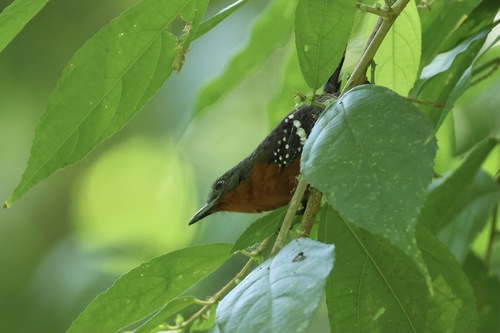
シロボシアリサザイ (Microrhopias quixensis) シロボシアリサザイ
クリセアリドリ (Poliocrania exsul) クリセアリドリ

メディア

読み込み中…

要点

シロボシアリサザイとクリセアリドリの間で最も信頼できるフィールドマークは、全体のサイズと体の構造です:シロボシアリサザイははるかに小さく、スリムで、長く段階的な尾と翼と尾に目立つ白い斑点があります。一方、クリセアリドリは大きく、重い体を持ち、上面は豊かな栗色で青い裸のアイリングがあります。すべての羽色において、シロボシアリサザイは翼の覆い羽と尾に強い白いマークを示し、特に飛行中に顕著です。一方、クリセアリドリは上面が深い栗色で、特定の亜種では翼の覆い羽にわずかに白があります。両者の性別は異なりますが、アントレンの雌は下が赤褐色で喉が暗いのに対し、アントバードの雌は下が茶色で喉が鈍い暗色です。小さくて活発な鳥を見たら、それはアントレンです;大きくて丸みを帯びた鳥で青いアイリングと栗色の上面を持つのはアントバードです。

識別のコツ

  1. Size and Build: シロボシアリサザイはクリセアリドリよりもはるかに小さく、スリムです。特に混合群れの中で鳥が小さくて繊細に見える場合、それはおそらくアントレンです。アントバードは明らかにより大きく、丸みを帯びています。
  2. Tail Shape and Length: シロボシアリサザイは白い先端を持つ長く段階的な尾を持っています(特に飛行中や扇状に広げたときに明らかです)。クリセアリドリは短く、より均一な尾を持ち、均一に栗色で白はほとんどありません。
  3. Wing Pattern (All Ages): シロボシアリサザイは常に大きな翼の覆い羽に大胆な白い斑点を示し、時には他の覆い羽にも見られます。これらは大きく明白で、特に鳥が翼をひらひらさせたり飛行中に顕著です。クリセアリドリは特定の亜種(特にP. e. cassiniとP. e. maculiferの雄)で翼の覆い羽に白い先端を示すことがありますが、これらは小さく、広がりが少なく、アントレンのように目立つことはありません。ほとんどのアントバードの亜種は翼に明白な白を欠いています。
  4. Upperparts Color: シロボシアリサザイ(雄)は主に上面が黒で、雌は黒っぽい灰色です。クリセアリドリ(両性)は上面が深い栗色で、翼と尾も含まれます。この豊かな栗色はアントレンには決して存在しません。
  5. Underparts (Sex Differences): 雌のシロボシアリサザイは赤褐色の下部と黒い喉を持ち、鋭いコントラストを生み出します。雌のクリセアリドリは下が茶色で鈍い黒っぽい喉を持ち、アントレンの明るい赤褐色は欠いています。
  6. Eye-ring: クリセアリドリの両性は目の周りに淡い青い裸の皮膚のパッチを持ち、近くで見ることができます。シロボシアリサザイは目の周りに裸の青い皮膚を欠いています。
  7. Bill and Face: 両者は暗いくちばしを持っていますが、アントバードのくちばしはより重く見え、青いアイリングと頭の形状のため顔が丸く見えます。
  8. Behavior: シロボシアリサザイはより活発で、翼と尾をひらひらさせて白い斑点を見せ、しばしば混合群れに参加します。クリセアリドリは遅く、より秘密主義で、通常は地面近くで単独またはペアで採餌します。
  9. Habitat Preference: シロボシアリサザイは森林の端、二次成長、または中層で見られる可能性が高く、クリセアリドリは密で湿った下層に結びついており、しばしば地面近くにいます。
  10. Subspecies Variation: 一部のシロボシアリサザイの亜種は翼や尾に白が多かったり少なかったり、雌の下部の赤褐色の色合いがわずかに異なったりしますが、すべて白い斑点と長い尾を示します。一部のクリセアリドリの亜種は白い先端の翼の覆い羽を持っています(雄)が、アントレンのような大胆な白は決してなく、常に栗色の上面を保持します。
  11. Sexual Dimorphism: 両種は性的二形性を持っていますが、アントレンの雌はアントバードの雌よりもはるかに明るい(赤褐色)です。雄のアントレンはすべて黒で白い斑点があり、雄のアントバードは上面が栗色で下が黒っぽいです。
  12. Flight View: 飛行中、シロボシアリサザイは翼と尾に白を見せ、クリセアリドリは主に栗色に見え、白はほとんどないか、特定の雄の小さな覆い羽の先端を除いて見られません。
  13. Mixed Flock Context: 他の小さなアントレンやタンジャーと一緒に速く動く群れで見られた場合、シロボシアリサザイを疑ってください。密な茂みの中で単独または伴侶と一緒にいる場合、クリセアリドリを疑ってください。
  14. Potential Pitfall: 翼に白があることだけに頼らないでください。一部のアントバードの亜種は小さな白い覆い羽の先端を示します。全体のサイズ、尾の形、上面の栗色の広がりに焦点を当ててください。
  15. When in Doubt: 青い裸のアイリングが見えたら、それはクリセアリドリです。長い白い先端の尾と大胆な白い翼の斑点を持つ小さな鳥が見えたら、それはシロボシアリサザイです。

大きさ

シロボシアリサザイはかなり小さく、軽量で、体重は約7.9g、長さは10〜12.5cmです [wikidata, wikipedia]。クリセアリドリははるかに大きく、重く、体重は約29g、長さは14〜15cmです [wikipedia]。フィールドでは、アントレンは優雅でスリムに見え、アントバードは明らかにより頑丈で丸みを帯びた体を持っています。このサイズの差は、距離があっても混合群れの中でもしばしば明らかです。

羽色

どちらの種にも年齢特有の幼鳥や未熟な翼のパターンは記載されていないため、成鳥と性別の違いに焦点を当てます。シロボシアリサザイ(雄)は主に黒で、より大きな翼の覆い羽に大きな白い先端と尾に白があります。雌は上面が黒っぽい灰色で、黒い喉を持ち、下部は赤褐色で、雄と同じ白い翼と尾のパターンを持っています。亜種は翼と尾の白の量とサイズ、雌の下部の赤褐色の色合いにおいて異なりますが、すべて白い斑点を示します。クリセアリドリ(両性)は上面が深い栗色(頭、背中、翼、尾)で、雄はスレートブラックの頭と下部を持ち、雌は鈍い黒っぽい頭/喉と茶色の下部を持っています。両性は淡い青い裸のアイリングを持ち、アントレンには欠けています。一部のアントバードの亜種は白い先端の翼の覆い羽を持っています(特にP. e. cassiniとP. e. maculiferの雄)が、アントレンのような大胆で広範な白は決してなく、上面は栗色のままです。雌のアントバードは雌のアントレンの鋭い赤褐色/黒のコントラストを示すことはありません。アントレンの長く段階的な尾は独特で、アントバードの尾は短く、均一に栗色です。

行動

シロボシアリサザイはより活発で敏捷で、しばしばペアや小さな群れで採餌し、尾と翼をひらひらさせて白い斑点を見せます。森林の下層や中層を素早く移動し、しばしば混合群れの中で見られます。クリセアリドリはより秘密主義で、通常は地面近くや密な下層で採餌し、ゆっくりと意図的に移動します。混合群れに参加する可能性は低く、動きよりもその歌や鳴き声で検出されることが多いです。

生息環境

両種は中南米および南アメリカ北部に生息していますが、シロボシアリサザイはメキシコや南アメリカのより広い範囲を含む広い範囲を持っています。重複する地域では、シロボシアリサザイは森林の端、二次成長、湿った森林の下層から中層を好み、クリセアリドリは特に地面近くの密で湿った森林の下層に厳密に結びついています。鳥が高い場所や森林の端で採餌しているのを見つけた場合、それはおそらくアントレンです;暗く絡み合った下層の奥深くにいる場合、それはおそらくアントバードです。

より良い説明を送る

比較と同じ項目を使ってください。文章はすぐに公開されます。

The most reliable field mark between Dot-winged Antwren and Chestnut-backed Antbird is overall size and body structure: Dot-winged Antwren is much smaller and slimmer, with a long, graduated tail and prominent white spots on the wings and tail, while Chestnut-backed Antbird is larger, heavier-bodied, and richly chestnut above with a blue bare eye-ring. In all plumages, Dot-winged Antwren shows strong white markings on the wing coverts and tail, especially in flight, whereas Chestnut-backed Antbird is deep chestnut above with only some white on the wing coverts in certain subspecies. Sexes differ in both, but the antwren female is rufous below with a dark throat, while the antbird female is brown below with a duller dark throat. If you see a small, active bird with bold white wing spots, it's the antwren; a larger, rounder bird with a blue eye-ring and chestnut upperparts is the antbird.

  1. Size and Build: Dot-winged Antwren is much smaller and slimmer than Chestnut-backed Antbird. If the bird appears tiny and delicate, especially in a mixed flock, it's likely the antwren. The antbird is noticeably bulkier and rounder.
  2. Tail Shape and Length: Dot-winged Antwren has a long, graduated tail with white tips (especially obvious in flight or when fanned). Chestnut-backed Antbird has a shorter, more even tail, uniformly chestnut with little or no white.
  3. Wing Pattern (All Ages): Dot-winged Antwren always shows bold white spots on the greater wing coverts and sometimes on other coverts. These are large and obvious, especially when the bird flicks its wings or in flight. Chestnut-backed Antbird may show some white tips on wing coverts in certain subspecies (notably males of P. e. cassini and P. e. maculifer), but these are smaller, less extensive, and never as striking as the antwren's. Most antbird subspecies lack obvious white in the wing.
  4. Upperparts Color: Dot-winged Antwren (male) is mostly black above; female is blackish gray. Chestnut-backed Antbird (both sexes) is deep chestnut above, including the wings and tail. This rich chestnut is never present in the antwren.
  5. Underparts (Sex Differences): Female Dot-winged Antwren has rufous-chestnut underparts with a black throat, creating a sharp contrast. Female Chestnut-backed Antbird is brown below with a duller blackish throat, lacking the bright rufous of the antwren.
  6. Eye-ring: Chestnut-backed Antbird of both sexes has a pale blue bare skin patch around the eye, visible at close range. Dot-winged Antwren lacks any bare blue skin around the eye.
  7. Bill and Face: Both have dark bills, but the antbird's bill appears heavier and the face rounder due to the blue eye-ring and head shape.
  8. Behavior: Dot-winged Antwren is more active, flicking wings and tail to flash white spots, and often joins mixed flocks. Chestnut-backed Antbird is slower, more secretive, and usually forages alone or in pairs near the ground.
  9. Habitat Preference: Dot-winged Antwren is more likely at forest edge, second growth, or mid-levels; Chestnut-backed Antbird is tied to dense, humid understory, often near the ground.
  10. Subspecies Variation: Some Dot-winged Antwren subspecies have more or less white on wings/tail or slightly different rufous shades below, but all show some white and a long tail. Some Chestnut-backed Antbird subspecies have white-tipped wing coverts (males), but never the bold white of the antwren, and always retain chestnut upperparts.
  11. Sexual Dimorphism: Both species are sexually dimorphic, but the antwren's female is much brighter below (rufous-chestnut) than the antbird's (brown). Male antwren is all black with white spots; male antbird is chestnut above and blackish below.
  12. Flight View: In flight, Dot-winged Antwren flashes white in the wings and tail; Chestnut-backed Antbird appears mostly chestnut with little or no white, except for small covert tips in some males.
  13. Mixed Flock Context: If seen with other small antwrens or tanagers in a fast-moving flock, suspect Dot-winged Antwren. If alone or with mate in dense thicket, suspect Chestnut-backed Antbird.
  14. Potential Pitfall: Do not rely solely on the presence of white in the wing, as some antbird subspecies show small white covert tips. Focus on overall size, tail shape, and the extent of chestnut above.
  15. When in Doubt: If you see a blue bare eye-ring, it's Chestnut-backed Antbird. If you see a small bird with a long, white-tipped tail and bold white wing spots, it's Dot-winged Antwren.

Dot-winged Antwren is significantly smaller and lighter, with a body mass of about 7.9 g and a length of 10–12.5 cm [wikidata, wikipedia]. Chestnut-backed Antbird is much larger and bulkier, weighing around 29 g and measuring 14–15 cm [wikipedia]. In the field, the antwren appears dainty and slim, while the antbird is noticeably more robust and round-bodied. This size gap is often apparent even at a distance or in mixed flocks.

No age-specific juvenile or immature wing patterns are described for either species, so focus on adult and sex differences. Dot-winged Antwren (male) is mostly black with large white tips on the greater wing coverts and white on the tail, visible both perched and in flight. The female is blackish gray above, black-throated, and rufous-chestnut below, with the same white wing and tail pattern as the male. Subspecies vary in the amount and size of white on wings and tail and in the shade of rufous below in females, but all show some white spots. Chestnut-backed Antbird (both sexes) is deep chestnut above (head, back, wings, and tail), with a slate-black head and underparts in males and duller blackish head/throat with brown underparts in females. Both sexes have a pale blue bare eye-ring, absent in the antwren. Some antbird subspecies have white-tipped wing coverts (notably P. e. cassini and P. e. maculifer males), but never the bold, extensive white of the antwren, and their upperparts remain chestnut. Female antbirds never show the sharp rufous/black contrast of female antwrens. The antwren's long, graduated tail with white tips is unique; the antbird's tail is shorter and uniformly chestnut.

Dot-winged Antwren is more active and agile, often foraging in pairs or small groups, flicking its tail and wings to reveal white spots. It moves quickly through lower and mid-levels of forest, often in mixed flocks. Chestnut-backed Antbird is more secretive, typically foraging near the ground or in dense understory, moving slowly and deliberately. It is less likely to join mixed flocks and is often detected by its song or calls rather than by movement.

Both species occur in Central and northern South America, but Dot-winged Antwren has a broader range, including Mexico and more of South America. In overlapping areas, Dot-winged Antwren favors forest edges, second growth, and lower to mid-levels of humid forest, while Chestnut-backed Antbird is more strictly tied to dense, humid forest understory, especially near the ground. If you find the bird foraging high or at forest edge, it's more likely the antwren; if deep in dark, tangled understory, it's probably the antbird.

変更を破棄しますか?

保存していない編集があります。今離れると失われます。

シロボシアリサザイ · クリセアリドリ · 苦手な鳥