

açor-cantador vs pale chanting-goshawk
Melierax metabates versus Melierax canorus
Jogue um quiz com açor-cantador e pale chanting-goshawk
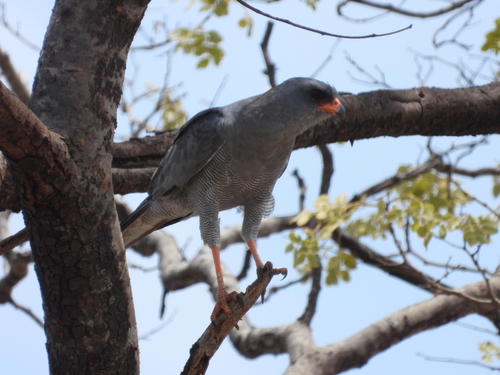 açor-cantador
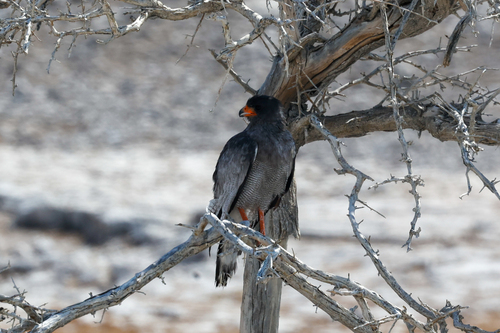 pale chanting-goshawk
Em resumo
Imaturos açor-cantador e pale chanting-goshawk são mais facilmente separados em voo pela coloração das partes inferiores e das asas: os juvenis de pale chanting-goshawk apresentam partes inferiores ruivas e um rabo branco, enquanto os juvenis de açor-cantador são mais marrons no geral, mais semelhantes a um gavião, e não possuem os tons ruivos. Os adultos diferem na tonalidade de cinza e na extensão do branco no rabo e nas secundárias, com o Pale sendo mais claro e apresentando um rabo branco e secundárias claras, enquanto o Dark é um cinza mais escuro por cima e não possui um rabo branco distinto. A estrutura e a cor das partes nuas são semelhantes, mas o Pale é ligeiramente maior e mais propenso a ser visto em habitats abertos e áridos, empoleirado em postes. Foque na cor do rabo, no tom das partes inferiores e no contraste das penas de voo para a separação mais confiável em campo, especialmente em aves imaturas.
Dicas de identificação
- Partes inferiores juvenis/imaturos: O juvenil de pale chanting-goshawk apresenta partes inferiores ruivas e um rabo branco, enquanto o juvenil de açor-cantador é mais marrom no geral, não possui tons ruivos e não tem rabo branco. Esta é a única marca mais confiável para imaturos em voo.
- Cor do rabo (todas as idades): O Pale apresenta um rabo branco distinto tanto em adultos quanto em imaturos; o Dark não possui um rabo branco, aparecendo uniformemente cinza escuro por cima.
- Sombra das partes superiores em adultos: O adulto Pale é visivelmente mais claro, especialmente na cabeça e no peito superior, enquanto o Dark é um cinza mais profundo e escuro no geral.
- Contraste das penas de voo (adultos): Em voo, o adulto Pale possui secundárias muito claras (quase brancas) contrastando com primárias pretas e asas cinzas; a asa do Dark é mais uniformemente escura, com primárias pretas, mas sem um painel claro marcante.
- Padrão da cauda: Ambos têm listras pretas e brancas, mas as penas centrais da cauda do Pale são pretas com ponta branca, e as penas externas são listradas de cinza e branco; a cauda do Dark é amplamente listrada de preto e branco, mas carece do mesmo contraste.
- Listras nas partes inferiores (adultos): Ambos têm partes inferiores finamente listradas, mas as do Pale são listradas de cinza escuro e branco, enquanto as do Dark são brancas com finas listras pretas (exceto o peito cinza).
- Cor das partes nuas: Ambos têm cera e pernas laranja-avermelhadas, mas o Pale também possui pele facial vermelha e um bico que é vermelho na base e cinza escuro na ponta. Estes são sutis e muitas vezes não visíveis à distância.
- Cor dos olhos (imaturos): O imaturo Pale tem olhos amarelos claros, enquanto o adulto Pale tem olhos castanho escuro. A cor dos olhos do Dark não é especificada nas notas.
- Tamanho e estrutura: O Pale é ligeiramente maior e mais robusto, mas isso é sutil e nem sempre confiável em campo. Ambos têm pernas longas e posturas eretas.
- Comportamento de empoleiramento: O Pale é frequentemente visto empoleirado em postes à beira da estrada em áreas abertas; o Dark é menos provável de ser visto em tais ambientes expostos e áridos.
- Contexto do habitat: No sul da África, especialmente em semi-desertos abertos e secos, o Pale é esperado; em habitats mais arborizados ou variados, especialmente fora do sul da África, o Dark é mais provável.
- Vocalização: Apenas o chamado do Pale é descrito (um assobio melodioso); se ouvido, isso apoia o Pale, mas a falta de vocalização não é útil.
- Aparência semelhante a um gavião (juvenis): O juvenil Dark pode parecer um gavião (Buteo), mas com uma cauda mais longa e asas mais largas; os juvenis de Pale são mais claros por baixo e têm um rabo branco.
- Local do ninho: O Pale pode fazer ninhos em postes ou pilastras, além de árvores; o Dark faz ninhos apenas em árvores.
- Estrutura do grupo: Se você observar um trio de adultos em um ninho (raro), isso sugere Pale, já que a poliandria é registrada para esta espécie.
Tamanho
O pale chanting-goshawk tem um peso médio ligeiramente maior (810g vs 758.5g para o Dark) e é descrito como maior no geral. Ambos são gaviões de tamanho médio, de pernas longas e com posturas eretas. A diferença é sutil e nem sempre aparente em campo, mas o Pale pode parecer um pouco mais robusto e com asas mais longas, especialmente quando empoleirado. Os sexos são semelhantes em ambos, embora as fêmeas de açor-cantador possam ser mais pesadas que os machos.
Plumagem
- Juvenis/Imaturos:
- Pale Chanting-Goshawk: Partes superiores marrons com um rabo branco marcante e cauda listrada de preto; partes inferiores são ruivas, e a garganta é branca com listras escuras. Em voo, a parte inferior da asa e a cauda são brancas com listras pretas, e as secundárias são muito claras (quase brancas à distância).
- açor-cantador: Os juvenis são mais marrons no geral, assemelhando-se a um gavião, mas com um perfil de cauda longa e asas largas. Eles não possuem o rabo branco e as partes inferiores ruivas do Pale; em vez disso, as partes inferiores são brancas, finamente listradas de preto, e as partes superiores são cinza-escuro.
- Adultos:
- Pale: Cabeça e peito superior cinza claro, rabo branco, partes inferiores finamente listradas de cinza escuro e branco, primárias pretas, secundárias muito claras (quase brancas) e asas cinzas. O padrão da cauda é com ponta preta e branca, e as penas externas são listradas de cinza e branco.
- Dark: Cabeça, peito e partes superiores uniformemente mais escuras; partes inferiores brancas com finas listras pretas (exceto o peito, que é cinza); cauda amplamente listrada de preto e branco, mas sem um rabo branco distinto. Ambos têm cera e pernas laranja-avermelhadas, mas a pele facial do Pale também é vermelha.
Comportamento
Ambas as espécies caçam de postes e mergulham sobre a presa, mas o pale chanting-goshawk é especialmente notado por ser conspícuo em postes à beira da estrada e em terrenos abertos. O açor-cantador pode seguir mamíferos ou pessoas para capturar presas perturbadas por seu movimento. Ambos são nidificadores territoriais, construindo ninhos de gravetos em árvores, mas o Pale também pode usar postes ou pilastras. A estrutura social pode diferir: o Pale às vezes forma trios poliândricos, especialmente em áreas ricas em presas, enquanto o Dark é tipicamente monogâmico.
Habitat
O pale chanting-goshawk é residente das regiões secas e abertas de semi-deserto do sul da África, com menos de 75 cm de precipitação anual, e é comumente visto em áreas muito abertas, frequentemente em postes à beira da estrada. O açor-cantador tem uma faixa mais ampla em toda a África subsaariana e na Arábia do Sul, favorecendo savanas, florestas e habitats mais variados, e está menos ligado a áreas áridas abertas. Se você ver um chanting-goshawk em verdadeiro semi-deserto ou empoleirado em um poste no sul da África, o Pale é muito mais provável.
Voz
Apenas o chamado do pale chanting-goshawk é descrito nas notas: um assobio melodioso, 'kleeu-kleeu-kleeu-ku-ku-ku', dado de um poleiro no topo das árvores, especialmente durante a época de reprodução. As diferenças vocais não são bem cobertas para o Dark nessas notas, então a voz não é uma marca de campo primária para separação aqui.
açor-cantador · pale chanting-goshawk · Minhas aves difíceis