

curve-billed thrasher vs bendire's thrasher
Toxostoma curvirostre versus Toxostoma bendirei
Jogue um quiz com curve-billed thrasher e bendire's thrasher
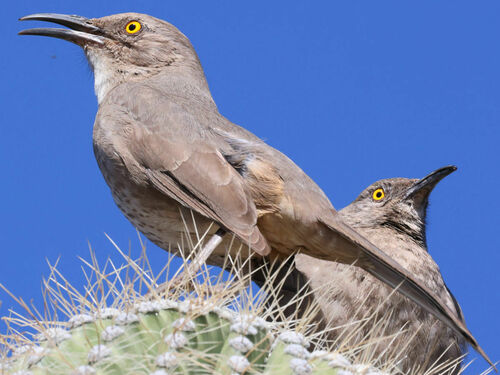 curve-billed thrasher
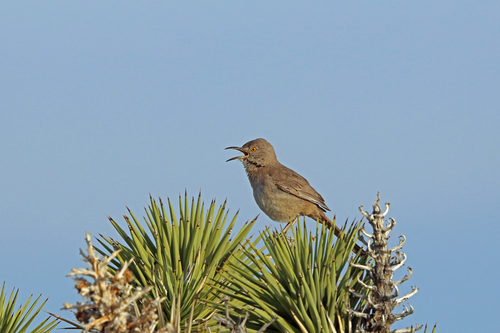 bendire's thrasher
Em resumo
A marca de campo mais confiável entre o curve-billed thrasher e o bendire's thrasher é o bico: o curve-billed tem um bico longo, uniformemente curvado e totalmente escuro, enquanto o bendire's apresenta um bico mais curto com uma borda inferior mais reta e uma base pálida na mandíbula inferior. A cor dos olhos pode ajudar—o bendire's geralmente tem olhos amarelos brilhantes, enquanto o curve-billed tende a ser laranja—mas ambos podem apresentar tons intermediários. No peito, o curve-billed normalmente apresenta manchas maiores e mais arredondadas, enquanto o bendire's tem marcas menores e mais afiadas em forma de ponta de flecha. Pássaros juvenis e imaturos são especialmente complicados, mas a forma do bico e a cor da base permanecem as pistas mais consistentes.
Dicas de identificação
- Forma e cor do bico: O curve-billed thrasher tem um bico longo, suavemente e uniformemente curvado e totalmente escuro; o bendire's tem um bico mais curto, com a mandíbula superior curvada, mas a mandíbula inferior quase reta e frequentemente mostrando uma base pálida. Esta é a marca mais confiável em todas as idades.
- Cor dos olhos: O bendire's geralmente apresenta olhos amarelos brilhantes, enquanto os do curve-billed são tipicamente laranja a dourado. No entanto, ambos podem apresentar tons intermediários (amarelo-laranja, vermelho-laranja), então use com cautela, especialmente em luz fraca ou em pássaros jovens.
- Manchas no peito: O curve-billed geralmente tem manchas maiores, arredondadas e marrom-acinzentadas no peito; o bendire's apresenta marcas menores, mais afiadas e em forma de ponta de flecha. Isso é mais útil em adultos e subspecies orientais do curve-billed, mas tenha cuidado com sobreposições e variações individuais.
- Padrão da cauda: O bendire's frequentemente apresenta pontas brancas nas penas da cauda, especialmente quando abertas; isso é menos óbvio ou ausente no curve-billed.
- Plumagem juvenil: Os jovens curve-billed não têm pontas pálidas na cauda e apresentam um tom ruivo nas partes superiores e no peito, com penas abdominais desordenadas. Os juvenis do bendire's são menos bem descritos, mas a forma do bico e a cor da base permanecem as melhores pistas.
- Coloração geral: O bendire's é geralmente mais pálido por baixo, com listras escuras fracas em vez de manchas marcantes; o curve-billed é mais uniformemente marrom-acinzentado acima e abaixo, com manchas mais distintas (especialmente nas subspecies orientais).
- Habitat: O curve-billed é comum em ambientes suburbanos, desertos arbustivos e áreas de cactos; o bendire's prefere campos abertos com yucca espalhada ou cercas vivas e evita vegetação densa e áreas suburbanas. Use o habitat como uma pista de apoio, não como uma marca primária.
- Comportamento: Ambos forrageiam no chão, mas o curve-billed é mais tolerante à presença humana e frequentemente visto em paisagens suburbanas. O bendire's é mais secreto e se mantém em áreas abertas e menos vegetadas.
- Vocalizações: Ouça o chamado agudo 'whit-wheet' do curve-billed, que é diagnóstico; a canção do bendire's é mais melódica e contínua, com uma nota de 'chuck'. Chamadas são frequentemente a maneira mais fácil de separá-los quando vistos de forma precária.
- Tamanho e estrutura: Ambos são semelhantes em tamanho, mas o curve-billed pode parecer ligeiramente mais robusto e com corpo mais pesado, com uma cauda proporcionalmente mais curta. O bendire's pode parecer mais esguio e com cauda mais longa, mas isso é sutil e não confiável sozinho.
- Variação entre subspecies: Esteja ciente de que as subspecies do curve-billed podem variar em manchas, faixas nas asas e tom geral, o que pode obscurecer algumas marcas de plumagem. Sempre priorize a cor do bico e dos olhos em relação ao padrão do peito em casos ambíguos.
- Confusão com a idade: Os bendire's imaturos podem ser confundidos com jovens curve-billed devido ao comprimento do bico; concentre-se na forma e na cor da base do bico, não apenas no comprimento.
- Empoleirado vs. em voo: A maioria das marcas é visível quando empoleirados; em voo, procure o padrão da cauda (pontas brancas no bendire's), mas a forma do bico pode ser mais difícil de julgar.
- Iluminação e distância: À distância ou em luz fraca, a cor do bico e a cor dos olhos podem ser difíceis de avaliar. Tente obter múltiplos ângulos e visões, e use uma combinação de marcas.
- Quando em dúvida: Se você não consegue ver claramente a base do bico ou a cor dos olhos, e as manchas no peito são ambíguas, considere o habitat e ouça as chamadas para apoiar sua identificação.
Tamanho
Ambas as espécies são thrashers de tamanho médio com caudas longas e proporções gerais semelhantes. O bendire's thrasher tem uma média de cerca de 62 gramas de massa [wikidata], mas comparações diretas de massa para o curve-billed estão ausentes. No campo, o curve-billed frequentemente parece ligeiramente mais robusto e com corpo mais pesado, mas isso é sutil e não confiável para pássaros individuais. Ambos têm caudas longas, mas a do curve-billed é proporcionalmente mais curta em comparação com outros thrashers, e a cauda do bendire's pode parecer mais longa e mais esguia.
Plumagem
Pássaros juvenis e imaturos de ambas as espécies podem ser confusos, mas algumas diferenças persistem. Os juvenis do curve-billed não têm pontas pálidas nas retrizes (penas da cauda) e apresentam um tom ruivo nas partes superiores e no peito, com penas abdominais desordenadas. Os juvenis do bendire's são menos bem descritos, mas a diferença chave está no bico: mesmo os jovens curve-billed apresentam um bico longo, suavemente curvado e totalmente escuro, enquanto os jovens bendire's têm um bico mais curto com uma base pálida na mandíbula inferior e uma borda inferior mais reta. No peito, o curve-billed (especialmente subspecies orientais) apresenta manchas maiores e mais arredondadas, enquanto o bendire's tem marcas menores, mais afiadas e em forma de ponta de flecha. A variação entre subspecies no curve-billed pode afetar as manchas e as faixas nas asas, mas as partes inferiores do bendire's são geralmente mais pálidas com listras escuras fracas em vez de manchas marcantes. Em ambas, as partes superiores são marrom-acinzentadas, mas o bendire's tende a ser mais pálido no geral, especialmente nas partes inferiores. As pontas da cauda são frequentemente brancas no bendire's, uma característica menos óbvia no curve-billed.
Comportamento
Ambas as espécies são mimídeos que forrageiam no chão, frequentemente vistos correndo ou pulando em solo aberto. O curve-billed é mais propenso a ser visto em ambientes suburbanos, mostrando alguma tolerância à presença humana, enquanto o bendire's tende a evitar vegetação densa e prefere campos abertos com yucca espalhada ou cercas vivas. Em voo, ambos mostram caudas longas e asas curtas e arredondadas, mas o contexto comportamental (como a proximidade com habitações humanas) pode fornecer pistas de apoio.
Habitat
O curve-billed thrasher é o thrasher do deserto mais comum em grande parte de sua área de distribuição, frequentemente encontrado em áreas suburbanas, desertos arbustivos e áreas de cactos. O bendire's thrasher prefere habitats de campo mais abertos com yucca espalhada ou cercas agrícolas, e é menos provável de ser encontrado em ambientes densos de mesquite ou suburbanos. A sobreposição de habitat ocorre, mas o bendire's é geralmente mais restrito a áreas abertas e menos vegetadas.
Voz
O curve-billed thrasher é famoso por seu chamado abrupto e ousado 'whit-wheet', frequentemente dado de altos poleiros. Sua canção é variada, imitando e agradável, mas menos melódica e contínua do que a do bendire's. O bendire's thrasher entrega uma canção mais melódica e contínua com uma nota característica de 'chuck'. Embora ambos possam imitar outros pássaros, o chamado do curve-billed é geralmente o mais distinto e facilmente reconhecido no campo.
curve-billed thrasher · bendire's thrasher · Minhas aves difíceis