

Motmot

マルハシツグミモドキ 対 スナイロツグミモドキ

Toxostoma curvirostre 対 Toxostoma bendirei

マルハシツグミモドキとスナイロツグミモドキのクイズ
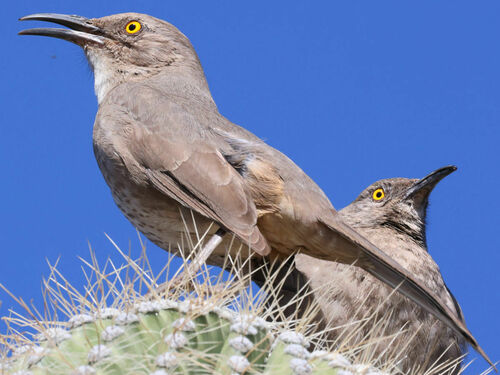
マルハシツグミモドキ (Toxostoma curvirostre) マルハシツグミモドキ
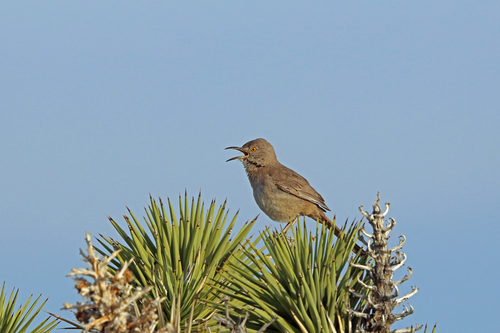
スナイロツグミモドキ (Toxostoma bendirei) スナイロツグミモドキ

メディア

読み込み中…

要点

マルハシツグミモドキとスナイロツグミモドキの最も信頼できるフィールドマークはくちばしです:マルハシツグミモドキは長く、均等に曲がった全体が暗色のくちばしを持ち、スナイロツグミモドキは短いくちばしを持ち、下のエッジがまっすぐで、下あごの基部が淡い色をしています。目の色も役立ちます—スナイロツグミモドキは通常明るい黄色の目を持ち、マルハシツグミモドキはオレンジ色に傾きますが、両方とも中間的な色合いを示すことがあります。胸部では、マルハシツグミモドキは通常、大きく丸い斑点を示し、スナイロツグミモドキは小さく鋭い矢じり型の模様を持っています。幼鳥や未成熟の鳥は特に難しいですが、くちばしの形と基部の色は最も一貫した手がかりです。

識別のコツ

  1. Bill shape and color: マルハシツグミモドキは長く、滑らかで均等に曲がった全体が暗色のくちばしを持ち、スナイロツグミモドキは短いくちばしを持ち、上あごは曲がっていますが、下あごはほぼまっすぐで、しばしば淡い基部を示します。これはすべての年齢で最も信頼できるマークです。
  2. Eye color: スナイロツグミモドキは通常明るい黄色の目を示し、マルハシツグミモドキは通常オレンジから金色です。しかし、両方とも中間的な色合い(黄オレンジ、赤オレンジ)を示すことがあるため、特に光が悪い場合や若い鳥に対しては注意して使用してください。
  3. Breast spotting: マルハシツグミモドキは通常、胸に大きく丸い灰褐色の斑点を持ち、スナイロツグミモドキは小さく鋭い矢じり型の模様を示します。これは成鳥や東部のマルハシツグミモドキの亜種に最も有用ですが、重複や個体差に注意してください。
  4. Tail pattern: スナイロツグミモドキは尾羽の先端に白い部分を示すことが多く、特に扇状に広げたときに顕著です;これはマルハシツグミモドキではあまり明白でないか、存在しません。
  5. Juvenile plumage: 若いマルハシツグミモドキは尾に淡い先端を欠き、上面と胸に赤褐色の洗いを持ち、腹部の羽毛は乱れています。幼いスナイロツグミモドキはあまりよく記述されていませんが、くちばしの形と基部の色が最良の手がかりです。
  6. Overall coloration: スナイロツグミモドキは一般的に下側が淡く、はっきりした斑点ではなく淡い暗い筋が見られます;マルハシツグミモドキは上面と下面がより均一に灰褐色で、より明確な斑点があります(特に東部の亜種で)。
  7. Habitat: マルハシツグミモドキは郊外の環境、茂みの多い砂漠、サボテンの群生地で一般的です;スナイロツグミモドキは散発的なユッカや生け垣のある開けた草原を好み、密な植生や郊外の地域を避けます。生息地は補助的な手がかりとして使用し、主要なマークとしては使用しないでください。
  8. Behavior: 両者は地面で餌を探しますが、マルハシツグミモドキは人間の存在に対してより寛容で、郊外の風景でよく見られます。スナイロツグミモドキはより秘密主義で、開けた、植生の少ない地域に留まります。
  9. Vocalizations: マルハシツグミモドキの鋭い「ウィット・ウィート」という呼び声を聞いてください。これは診断的です;スナイロツグミモドキの歌はより旋律的で連続的で、「チャック」という音を持っています。呼び声は、見えにくいときにそれらを区別する最も簡単な方法です。
  10. Size and structure: 両者はサイズが似ていますが、マルハシツグミモドキはややがっしりとした体型に見えることがあり、尾は相対的に短いです。スナイロツグミモドキはより細身で尾が長く見えることがありますが、これは微妙で単独では信頼できません。
  11. Subspecies variation: マルハシツグミモドキの亜種は斑点、翼の帯、全体の色調が異なることがあり、これが羽毛のマークを隠すことがあります。あいまいな場合は、常に胸のパターンよりもくちばしと目の色を優先してください。
  12. Confusion with age: 未成熟のスナイロツグミモドキはくちばしの長さのために若いマルハシツグミモドキと間違えられることがあります;くちばしの形と基部の色に焦点を当て、長さだけに注目しないでください。
  13. Perched vs. in flight: ほとんどのマークは止まっているときに見えます;飛んでいるときは尾のパターン(スナイロツグミモドキの白い先端)を探してくださいが、くちばしの形は判断が難しいかもしれません。
  14. Lighting and distance: 遠くからや光が悪いときは、くちばしの色と目の色を評価するのが難しいことがあります。複数の角度と視点を得るようにし、マークの組み合わせを使用してください。
  15. When in doubt: くちばしの基部や目の色がはっきり見えず、胸の斑点があいまいな場合は、生息地を考慮し、識別をサポートするために呼び声を聞いてください。

大きさ

両種は中型のツグミで、長い尾と似た全体の比率を持っています。スナイロツグミモドキは平均して約62グラムの質量を持ちますが、マルハシツグミモドキの直接的な質量比較は不足しています。フィールドでは、マルハシツグミモドキはしばしばややがっしりとした体型に見えますが、これは微妙で単独の鳥には信頼できません。両者は長い尾を持っていますが、マルハシツグミモドキの尾は他のツグミと比較して相対的に短く、スナイロツグミモドキの尾は長く細く見えることがあります。

羽色

両種の幼鳥や未成熟の鳥は混乱を招くことがありますが、いくつかの違いは残ります。マルハシツグミモドキの幼鳥は尾羽に淡い先端を欠き、上面と胸に赤褐色の洗いを持ち、腹部の羽毛は乱れています。スナイロツグミモドキの幼鳥はあまりよく記述されていませんが、主な違いはくちばしにあります:若いマルハシツグミモドキは長く、滑らかに曲がった全体が暗色のくちばしを示し、若いスナイロツグミモドキは下あごの基部が淡い色で、下のエッジがまっすぐな短いくちばしを持っています。胸部では、マルハシツグミモドキ(特に東部の亜種)は大きく丸い斑点を示し、スナイロツグミモドキは小さく鋭い矢じり型の模様を持っています。マルハシツグミモドキの亜種の変異は斑点や翼の帯に影響を与えることがありますが、スナイロツグミモドキの下側は一般的に淡く、はっきりした斑点ではなく淡い暗い筋があります。両者の上面は灰褐色ですが、スナイロツグミモドキは全体的に淡い傾向があり、特に下側で顕著です。尾の先端はスナイロツグミモドキではしばしば白く、これはマルハシツグミモドキではあまり明白ではありません。

行動

両種は地面で餌を探すミミズクで、開けた地面を走ったり跳ねたりしているのがよく見られます。マルハシツグミモドキは郊外の環境で見られる可能性が高く、人間の存在に対してある程度の寛容さを示しますが、スナイロツグミモドキは密な植生を避け、散発的なユッカや生け垣のある開けた草原を好みます。飛んでいるとき、両者は長い尾と短く丸い翼を示しますが、行動の文脈(人間の居住地への近接など)が補助的な手がかりを提供することがあります。

生息環境

マルハシツグミモドキはその範囲の多くで最も一般的な砂漠のツグミで、郊外の地域、茂みの多い砂漠、サボテンの群生地でよく見られます。スナイロツグミモドキは散発的なユッカや農業用の生け垣のあるより開けた草原の生息地を好み、密なメスキートや郊外の環境では見られにくいです。生息地の重複はありますが、スナイロツグミモドキは一般的に開けた、植生の少ない地域に制限されています。

声

マルハシツグミモドキはその突然で派手な「ウィット・ウィート」という呼び声で有名で、高い止まり木からよく発せられます。その歌は多様で、模倣的で心地よいですが、スナイロツグミモドキよりも旋律的で連続的ではありません。スナイロツグミモドキは特徴的な「チャック」という音を持つより旋律的で連続的な歌を届けます。両者は他の鳥を模倣することができますが、マルハシツグミモドキの呼び声は通常、フィールドでより特徴的で認識しやすいです。

より良い説明を送る

比較と同じ項目を使ってください。文章はすぐに公開されます。

The most reliable field mark between Curve-billed and Bendire's Thrashers is the bill: Curve-billed has a long, evenly curved all-dark bill, while Bendire's shows a shorter bill with a straighter lower edge and a pale base to the lower mandible. Eye color can help—Bendire's usually has bright yellow eyes, while Curve-billed tends toward orange—but both can show intermediate shades. On the breast, Curve-billed typically shows larger, rounder spots, while Bendire's has smaller, sharper arrowhead-shaped markings. Juvenile and immature birds are especially tricky, but bill shape and base color remain the most consistent clues.

  1. Bill shape and color: Curve-billed Thrasher has a long, smoothly and evenly curved all-dark bill; Bendire's has a shorter bill, with the upper mandible curved but the lower mandible nearly straight and often showing a pale base. This is the most reliable mark at all ages.
  2. Eye color: Bendire's usually shows bright yellow eyes, while Curve-billed's are typically orange to golden. However, both can show intermediate shades (yellow-orange, red-orange), so use with caution, especially in poor light or on young birds.
  3. Breast spotting: Curve-billed usually has larger, rounder, grayish-brown spots on the breast; Bendire's shows smaller, sharper, arrowhead-shaped markings. This is most useful on adults and eastern Curve-billed subspecies, but beware of overlap and individual variation.
  4. Tail pattern: Bendire's often shows white tips to the tail feathers, especially when fanned; this is less obvious or absent in Curve-billed.
  5. Juvenile plumage: Young Curve-billed lack pale tips on the tail and have a rufous wash to the upperparts and chest, with unkempt abdominal feathers. Juvenile Bendire's are less well described, but bill shape and base color remain the best clues.
  6. Overall coloration: Bendire's is generally paler below, with faint dark streaks rather than bold spots; Curve-billed is more uniformly grayish-brown above and below, with more distinct spotting (especially in eastern subspecies).
  7. Habitat: Curve-billed is common in suburban settings, brushy desert, and cactus stands; Bendire's prefers open grassland with scattered yucca or hedgerows and avoids dense vegetation and suburban areas. Use habitat as a supporting clue, not a primary mark.
  8. Behavior: Both forage on the ground, but Curve-billed is more tolerant of human presence and often seen in suburban landscapes. Bendire's is more secretive and sticks to open, less vegetated areas.
  9. Vocalizations: Listen for the Curve-billed's sharp 'whit-wheet' call, which is diagnostic; Bendire's song is more melodic and continuous, with a 'chuck' note. Calls are often the easiest way to separate them when seen poorly.
  10. Size and structure: Both are similar in size, but Curve-billed may appear slightly bulkier and heavier-bodied, with a proportionally shorter tail. Bendire's can look more slender and longer-tailed, but this is subtle and unreliable alone.
  11. Subspecies variation: Be aware that Curve-billed subspecies can vary in spotting, wing bars, and overall tone, which may obscure some plumage marks. Always prioritize bill and eye color over breast pattern in ambiguous cases.
  12. Confusion with age: Immature Bendire's can be mistaken for young Curve-billed due to bill length; focus on the shape and base color of the bill, not just length.
  13. Perched vs. in flight: Most marks are visible when perched; in flight, look for tail pattern (white tips in Bendire's), but bill shape may be harder to judge.
  14. Lighting and distance: At a distance or in poor light, bill color and eye color can be hard to assess. Try to get multiple angles and views, and use a combination of marks.
  15. When in doubt: If you cannot see the bill base or eye color clearly, and breast spotting is ambiguous, consider the habitat and listen for calls to support your identification.

Both species are medium-sized thrashers with long tails and similar overall proportions. Bendire's Thrasher averages about 62 grams in mass [wikidata], but direct mass comparisons for Curve-billed are lacking. In the field, Curve-billed often appears slightly bulkier and heavier-bodied, but this is subtle and unreliable for single birds. Both have long tails, but the Curve-billed's is proportionally shorter compared to other thrashers, and Bendire's tail may appear longer and more slender.

Juvenile and immature birds of both species can be confusing, but some differences persist. Curve-billed juveniles lack pale tips on the rectrices (tail feathers) and have a rufous wash to the upperparts and chest, with unkempt abdominal feathers. Bendire's juveniles are less well described, but the key difference is in the bill: even young Curve-billed show a long, smoothly curved, all-dark bill, while young Bendire's have a shorter bill with a pale base to the lower mandible and a straighter lower edge. On the breast, Curve-billed (especially eastern subspecies) shows larger, rounder spots, while Bendire's has smaller, sharper, arrowhead-shaped markings. Subspecies variation in Curve-billed can affect spotting and wing bars, but Bendire's underparts are generally paler with faint dark streaks rather than bold spots. In both, upperparts are grayish-brown, but Bendire's tends to be paler overall, especially on the underparts. Tail tips are often white in Bendire's, a feature less obvious in Curve-billed.

Both species are ground-foraging mimids, often seen running or hopping on open ground. Curve-billed is more likely to be seen in suburban settings, showing some tolerance for human presence, while Bendire's tends to avoid dense vegetation and prefers open grassland with scattered yucca or hedgerows. In flight, both show long tails and short, rounded wings, but behavioral context (such as proximity to human habitation) can provide supporting clues.

Curve-billed Thrasher is the most common desert thrasher across much of its range, often found in suburban areas, brushy desert, and cactus stands. Bendire's Thrasher prefers more open grassland habitats with scattered yucca or agricultural hedgerows, and is less likely to be found in dense mesquite or suburban environments. Habitat overlap does occur, but Bendire's is generally more restricted to open, less vegetated areas.

Curve-billed Thrasher is famous for its abrupt, brash 'whit-wheet' call, often given from high perches. Its song is varied, mimicking, and pleasant, but less melodic and continuous than Bendire's. Bendire's Thrasher delivers a more melodic, continuous song with a characteristic 'chuck' note. While both can mimic other birds, the Curve-billed's call is usually the more distinctive and easily recognized in the field.

変更を破棄しますか?

保存していない編集があります。今離れると失われます。

マルハシツグミモドキ · スナイロツグミモドキ · 苦手な鳥