

crested goshawk vs gavião-japonês
Lophospiza trivirgata versus Tachyspiza gularis
Jogue um quiz com crested goshawk e gavião-japonês
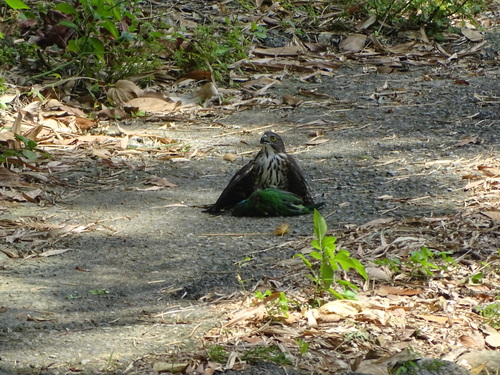 crested goshawk
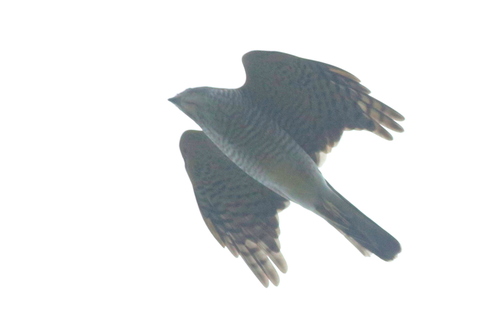 gavião-japonês
Em resumo
A marca de campo mais confiável entre o crested goshawk e o gavião-japonês é a presença de uma crista curta e óbvia no crested goshawk, que nunca é mostrada pelo gavião-japonês. Em voo, ambos podem parecer semelhantes, mas o goshawk é visivelmente maior e mais robusto, com asas mais largas e uma cauda mais longa, enquanto o gavião-japonês é menor, mais compacto e tem pernas e dedos relativamente mais longos e finos. As plumagens juvenis são sutilmente diferentes: os juvenis de goshawk têm partes inferiores amareladas com listras ruivas e franjas pálidas na cabeça, enquanto os juvenis de gavião-japonês apresentam partes inferiores cremosas com listras e manchas marrom-avermelhadas, e um supercílio branco distinto. Os machos adultos de ambas as espécies têm partes inferiores barradas, mas as do goshawk são ruivas e as do gavião-japonês são mais marrom-cinza, com um tom marrom-avermelhado nos lados do peito do gavião-japonês. As fêmeas de ambas são mais marrons na parte superior, mas o goshawk é novamente maior e apresenta uma crista. Use tamanho, estrutura e especialmente a crista para separação rápida; verifique o padrão das partes inferiores e as marcas da cabeça para confirmação, especialmente em aves jovens.
Dicas de identificação
- Procure por uma crista: O crested goshawk sempre mostra uma crista curta e óbvia, especialmente quando alerta ou empoleirado. O gavião-japonês nunca tem crista. Esta é a melhor marca de campo em qualquer idade.
- Tamanho e robustez: O goshawk é muito maior e mais robusto, especialmente nas fêmeas. Se a ave parecer pequena e compacta, suspeite do gavião-japonês; se grande e poderosa, o goshawk é mais provável.
- Forma da asa e da cauda em voo: O goshawk tem asas curtas e largas e uma cauda longa, dando uma aparência ampla e em forma de remo. O gavião-japonês tem pontas de asas mais pontiagudas, uma cauda mais curta e um perfil mais compacto.
- Estilo de voo: O goshawk usa batidas lentas e poderosas e planagens; o gavião-japonês é mais rápido, mais ágil e pode mostrar voos de exibição ondulantes.
- Pernas e dedos: O gavião-japonês tem pernas e dedos visivelmente mais longos e finos, frequentemente visíveis quando empoleirados ou manipulando presas. As pernas do goshawk são proporcionalmente mais curtas e mais grossas.
- Partes inferiores juvenis: O juvenil de goshawk é amarelo por baixo com listras ruivas e franjas pálidas na cabeça; o juvenil de gavião-japonês é cremoso por baixo com listras marrom-avermelhadas, manchas e um supercílio branco e uma mancha na nuca.
- Padrão da cabeça do macho adulto: O goshawk apresenta uma coroa marrom escura, lados da cabeça cinzas e listras pretas na bigode e na garganta; o macho do gavião-japonês tem uma nuca branca, manchas nas bochechas marrom-cinzas e uma linha sutil na garganta.
- Barrado das partes inferiores adultas: Os machos de goshawk têm listras e barras ruivas; os machos de gavião-japonês têm barrados marrom-cinzas com um tom marrom-avermelhado nos lados do peito. As fêmeas de ambas são mais marrons, mas o goshawk é maior e tem crista.
- Padrão da cauda: A cauda do gavião-japonês tem quatro bandas escuras distintas; a cauda do goshawk é menos distintamente barrada.
- Cor dos olhos: Os machos adultos de gavião-japonês têm olhos vermelho-alaranjados; as fêmeas têm olhos amarelos. Os juvenis têm olhos marrons. A cor dos olhos do goshawk não é especificada nas notas, então use com cautela.
- Supercílio e mancha na nuca: O juvenil de gavião-japonês mostra um supercílio e uma mancha na nuca brancos claros, ausentes no goshawk.
- Listra na garganta: Ambas as espécies mostram uma listra na garganta, mas é mais óbvia na fêmea do gavião-japonês e nos machos do goshawk é preta e ousada.
- Contexto do habitat: Se em floresta tropical profunda e madura, o goshawk é mais provável; em habitats mistos ou de borda, especialmente na Ásia Oriental, o gavião-japonês pode ser esperado.
- Vocalização: Se você ouvir um chamado de 'kiki-kik-kik...' tagarelando, suspeite do gavião-japonês, mas a ausência de chamadas não é diagnóstica.
- Dimorfismo sexual: Ambas as espécies mostram diferenças de tamanho entre os sexos, mas a diferença é mais pronunciada no goshawk. Sempre considere a possibilidade de uma grande fêmea de gavião-japonês versus um pequeno macho de goshawk, mas use a crista e a estrutura para confirmação.
Tamanho
O crested goshawk é significativamente maior: 30–46 cm de comprimento, com fêmeas muito maiores que machos. O gavião-japonês é muito menor, 23–30 cm de comprimento, com uma envergadura de 46–58 cm. O goshawk é mais robusto e pesado em geral, enquanto o gavião-japonês é mais delicado e compacto. Ambas as espécies são dimórficas sexualmente, mas a diferença de tamanho é muito maior no goshawk. No campo, um crested goshawk parecerá visivelmente maior e mais poderoso, especialmente quando empoleirado ou planando.
Plumagem
- Juvenis:
- Os juvenis de crested goshawk têm partes inferiores amareladas com listras ruivas no peito e barras na barriga, franjas pálidas nas penas da cabeça e uma aparência geralmente mais amarelada por baixo.
- Os juvenis de gavião-japonês têm partes inferiores cremosas com listras marrom-avermelhadas no peito, manchas no abdômen, barrados nos lados e um supercílio branco distinto e uma mancha na nuca. Suas partes superiores são marrons escuras, e seus olhos são marrons (não amarelos como nos adultos).
- Machos adultos:
- Os machos de crested goshawk têm uma coroa marrom escura, lados da cabeça cinzas, listras pretas na bigode e na garganta, partes inferiores pálidas com listras e barras ruivas, e uma crista curta e visível.
- Os machos de gavião-japonês têm partes superiores preto-ardósia, nuca branca, partes inferiores esbranquiçadas com barrados marrom-cinzas e marrom-avermelhados, um leve tom marrom-avermelhado nos lados do peito, e uma linha sutil na garganta. Sua cauda tem quatro bandas escuras.
- Fêmeas adultas:
- As fêmeas de crested goshawk são maiores, mais marrons na cabeça, e têm listras e barras marrons nas partes inferiores, com uma crista.
- As fêmeas de gavião-japonês são marrons acima, brancas abaixo com barrados marrom-cinzas, e têm uma listra na garganta mais óbvia, mas não têm crista.
- Em voo:
- O goshawk mostra asas mais largas e uma cauda mais longa, com um padrão de batida lenta e poderosa. O gavião-japonês é mais compacto, com pontas de asas pontiagudas e uma cauda mais curta, e parece mais ágil e rápido em voo.
Comportamento
O crested goshawk normalmente voa com um padrão de batida lenta, batida lenta, planagem reta, reminiscentes de Accipiters maiores. Ele é adaptado para manobrar através de florestas densas com asas curtas e largas e uma cauda longa. O gavião-japonês é mais ágil e rápido, com voo ondulante, círculos altos e exibições de dança no céu durante a reprodução. Empoleirado, o goshawk parece mais robusto e ereto, frequentemente mostrando sua crista, enquanto o gavião-japonês é mais elegante, com pernas e dedos mais longos frequentemente visíveis.
Habitat
Ambas as espécies são rapinantes florestais, mas o crested goshawk é amplamente distribuído na Ásia tropical e está mais associado a florestas densas e maduras ou áreas arborizadas. O gavião-japonês se reproduz na Ásia Oriental (Rússia, Coreia, Japão, China) e também é encontrado em habitats florestais, mas pode ser mais provável de ser encontrado em habitats mistos ou de borda durante a migração. O habitat sozinho não é diagnóstico onde os intervalos se sobrepõem, mas o goshawk está mais estritamente ligado a florestas profundas.
Voz
O gavião-japonês ocasionalmente emite um chamado tagarelando 'kiki-kik-kik...', especialmente em exibição ou alarme. Nenhuma vocalização distinta é descrita para o crested goshawk nas notas fornecidas, então a voz não é um separador forte na maioria das situações de campo.