

Crested Goshawk vs Japanese Sparrowhawk
Lophospiza trivirgata contro Tachyspiza gularis
Fai un quiz con Crested Goshawk e Japanese Sparrowhawk
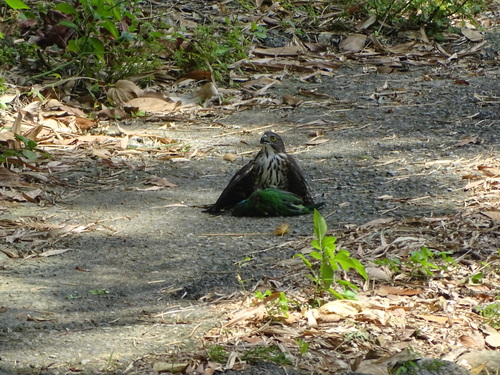 Crested Goshawk
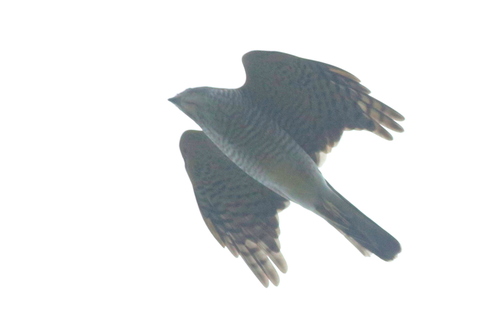 Japanese Sparrowhawk
In breve
Il segno distintivo più affidabile tra Crested Goshawk e Japanese Sparrowhawk è la presenza di una cresta corta e evidente sul Crested Goshawk, che non è mai presente nel Japanese Sparrowhawk. In volo, entrambi possono sembrare simili, ma il Goshawk è notevolmente più grande e massiccio, con ali più larghe e una coda più lunga, mentre il Sparrowhawk è più piccolo, più compatto e ha zampe e dita relativamente più lunghe e slanciate. Le piume giovanili sono leggermente diverse: i Goshawk giovani hanno parti inferiori color crema con striature ruggine e frange chiare sulla testa, mentre i Sparrowhawk giovani mostrano parti inferiori color crema con striature e macchie rosso-brune e un supercilium bianco distintivo. I maschi adulti di entrambe le specie hanno parti inferiori barrate, ma quelle del Goshawk sono ruggine e quelle del Sparrowhawk sono più grigio-marroni, con una sfumatura rosso-bruna sui lati del petto del Sparrowhawk. Le femmine di entrambe sono più marroni sopra, ma il Goshawk è di nuovo più grande e mostra una cresta. Usa dimensione, struttura e soprattutto la cresta per una separazione rapida; controlla il pattern delle parti inferiori e le marcature della testa per conferma, specialmente nei giovani uccelli.
Consigli di identificazione
- Look for a crest: Il Crested Goshawk mostra sempre una cresta corta e evidente, specialmente quando è all'erta o posato. Il Japanese Sparrowhawk non ha mai una cresta. Questo è il segno distintivo migliore a qualsiasi età.
- Size and bulk: Il Goshawk è molto più grande e massiccio, specialmente nelle femmine. Se l'uccello sembra piccolo e compatto, sospetta il Sparrowhawk; se è grande e potente, è più probabile che sia un Goshawk.
- Wing and tail shape in flight: Il Goshawk ha ali corte e larghe e una coda lunga, dando un aspetto largo e a forma di pala. Il Sparrowhawk ha punte delle ali più appuntite, una coda più corta e un profilo più compatto.
- Flight style: Il Goshawk utilizza battiti lenti e potenti e planate; il Sparrowhawk è più veloce, più agile e può mostrare voli di esibizione ondulati.
- Legs and toes: Il Sparrowhawk ha zampe e dita visibilmente più lunghe e slanciate, spesso visibili quando è posato o maneggia la preda. Le zampe del Goshawk sono proporzionalmente più corte e più spesse.
- Juvenile underparts: Il Goshawk giovane è color crema sotto con striature ruggine e frange chiare sulla testa; il Sparrowhawk giovane è color crema sotto con striature rosso-brune, macchie e un supercilium bianco e una macchia sulla nuca.
- Adult male head pattern: Il Goshawk mostra una corona marrone scuro, lati della testa grigi e strisce nere moustachial e della gola; il maschio del Sparrowhawk ha una nuca bianca, macchie grigio-marroni sulle guance e una linea sottile sulla gola.
- Adult underpart barring: I maschi del Goshawk hanno striature e barre ruggine; i maschi del Sparrowhawk hanno barre grigio-marroni con una sfumatura rosso-bruna sui lati del petto. Le femmine di entrambe sono più marroni, ma il Goshawk è più grande e ha la cresta.
- Tail pattern: La coda del Sparrowhawk ha quattro bande scure distinte; la coda del Goshawk è meno distintamente barrata.
- Eye color: I maschi adulti del Sparrowhawk hanno occhi rosso-arancio; le femmine hanno occhi gialli. I giovani hanno occhi marroni. Il colore degli occhi del Goshawk non è specificato nelle note, quindi usalo con cautela.
- Supercilium and nape patch: Il giovane Sparrowhawk mostra un chiaro supercilium bianco e una macchia sulla nuca, assente nel Goshawk.
- Throat stripe: Entrambe le specie mostrano una striscia sulla gola, ma è più evidente nella femmina del Sparrowhawk e nei maschi del Goshawk è nera e audace.
- Habitat context: Se si trova in una foresta tropicale profonda e matura, è più probabile che sia un Goshawk; in habitat misti o di margine, specialmente in Asia orientale, ci si può aspettare un Sparrowhawk.
- Vocalization: Se senti un chiacchierio 'kiki-kik-kik...', sospetta il Sparrowhawk, ma l'assenza di richiami non è diagnostica.
- Sexual dimorphism: Entrambe le specie mostrano differenze di dimensioni tra i sessi, ma la differenza è più pronunciata nel Goshawk. Considera sempre la possibilità di una grande femmina di Sparrowhawk rispetto a un piccolo maschio di Goshawk, ma usa la cresta e la struttura per conferma.
Taglia
Il Crested Goshawk è significativamente più grande: 30–46 cm di lunghezza, con femmine molto più grandi dei maschi. Il Japanese Sparrowhawk è molto più piccolo, lungo 23–30 cm, con un'apertura alare di 46–58 cm. Il Goshawk è più massiccio e pesante nel complesso, mentre il Sparrowhawk è più delicato e compatto. Entrambe le specie sono sessualmente dimorfiche, ma il divario di dimensioni è molto maggiore nel Goshawk. Sul campo, un Crested Goshawk apparirà notevolmente più grande e potente, specialmente quando è posato o in volo.
Piumaggio
- Juveniles:
- I giovani Crested Goshawk hanno parti inferiori color crema con striature ruggine sul petto e barre sull'addome, frange chiare sulle piume della testa e un aspetto generalmente più chiaro sotto.
- I giovani Japanese Sparrowhawk hanno parti inferiori color crema con striature rosso-brune sul petto, macchie sull'addome, barre sui lati e un supercilium bianco distintivo e una macchia sulla nuca. Le loro parti superiori sono marrone scuro e i loro occhi sono marroni (non gialli come negli adulti).
- Adult males:
- I maschi Crested Goshawk hanno una corona marrone scuro, lati della testa grigi, strisce nere moustachial e della gola, parti inferiori chiare con striature e barre ruggine e una cresta corta e visibile.
- I maschi Japanese Sparrowhawk hanno parti superiori grigio-nerastre, nuca bianca, parti inferiori chiare con barre grigio-marroni e rosso-brune, una leggera sfumatura rosso-bruna sui lati del petto e una linea sottile sulla gola. La loro coda ha quattro bande scure.
- Adult females:
- Le femmine Crested Goshawk sono più grandi, più marroni sulla testa e hanno striature e barre marroni sulle parti inferiori, con una cresta.
- Le femmine Japanese Sparrowhawk sono marroni sopra, bianche sotto con barre grigio-marroni e hanno una striscia sulla gola più evidente, ma non hanno alcuna cresta.
- In flight:
- Il Goshawk mostra ali più larghe e una coda più lunga, con un battito lento e potente. Il Sparrowhawk è più compatto, con punte delle ali appuntite e una coda più corta, e appare più agile e rapido in volo.
Comportamento
Il Crested Goshawk vola tipicamente con un battito lento, un battito lento e un pattern di planata dritta, che ricorda i più grandi Accipiters. È adattato per manovrare attraverso foreste dense con ali corte e larghe e una coda lunga. Il Japanese Sparrowhawk è più agile e rapido, con volo ondulato, circling alto e voli di esibizione durante la riproduzione. Posato, il Goshawk appare più massiccio e più eretto, mostrando spesso la sua cresta, mentre il Sparrowhawk è più snello, con zampe e dita più lunghe spesso visibili.
Habitat
Entrambe le specie sono rapaci forestali, ma il Crested Goshawk è ampiamente distribuito in Asia tropicale ed è più associato a foreste dense e mature o aree boschive. Il Japanese Sparrowhawk nidifica in Asia orientale (Russia, Corea, Giappone, Cina) ed è anche trovato in habitat forestali, ma potrebbe essere più probabile incontrarlo in habitat misti o di margine durante la migrazione. L'habitat da solo non è diagnostico dove le gamme si sovrappongono, ma il Goshawk è più strettamente legato alla foresta profonda.
Voce
Il Japanese Sparrowhawk occasionalmente emette un richiamo chiacchieroso 'kiki-kik-kik...', specialmente in esibizione o allerta. Non è stata descritta alcuna vocalizzazione distintiva per il Crested Goshawk nelle note fornite, quindi la voce non è un forte separatore nella maggior parte delle situazioni sul campo.
Crested Goshawk · Japanese Sparrowhawk · I miei uccelli difficili