
trinta-réis-boreal vs trinta-réis-de-bando
Sterna hirundo versus Thalasseus sandvicensis
Jogue um quiz com trinta-réis-boreal e trinta-réis-de-bando
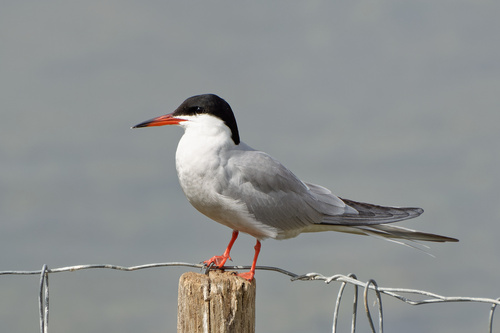 trinta-réis-boreal
 trinta-réis-de-bando
Em resumo
A marca de campo mais confiável para separar o trinta-réis-boreal do trinta-réis-de-bando é o bico: o trinta-réis-boreal tem um bico esguio laranja-avermelhado com uma ponta preta (adultos, exceto algumas subespécies), enquanto o trinta-réis-de-bando apresenta um bico preto mais longo e robusto com uma ponta amarela distinta (adultos) ou totalmente escuro em juvenis. Em voo, o trinta-réis-de-bando parece visivelmente mais claro e maior, com uma crista mais longa e desgrenhada e um estilo de voo mais flutuante e lânguido, enquanto o trinta-réis-boreal é mais compacto com um voo mais rápido e direto. As aves juvenis e imaturas são melhor separadas pela cor do bico e pelo padrão escamoso nas costas e asas dos jovens trinta-réis-de-bando. Ambas as espécies podem ser encontradas juntas nas costas, mas o trinta-réis-de-bando é geralmente mais marinho e menos provável de ser encontrado no interior. A voz também é um bom separador: o trinta-réis-de-bando emite um 'kear-ik' alto e áspero, enquanto o trinta-réis-boreal tem um chamado mais agudo e penetrante.
Dicas de identificação
- Cor e forma do bico (adultos): O trinta-réis-boreal tem um bico esguio laranja-avermelhado com uma ponta preta (exceto em algumas subespécies de bico preto), enquanto o trinta-réis-de-bando tem um bico preto mais longo e robusto com uma ponta amarela. Esta é a marca mais confiável em adultos.
- Cor do bico (juvenis): O juvenil trinta-réis-de-bando tem um bico grosso totalmente escuro (às vezes amarelado na base), enquanto o juvenil trinta-réis-boreal tem um bico mais esguio e escuro sem amarelo ou uma base grossa.
- Tamanho e estrutura: O trinta-réis-de-bando é maior, com pescoço mais longo e mais pesado, apresentando uma aparência mais robusta. O trinta-réis-boreal é menor, mais compacto e tem pernas e bico mais curtos.
- Crista: O trinta-réis-de-bando apresenta uma longa crista negra desgrenhada, especialmente na plumagem de reprodução, enquanto o trinta-réis-boreal tem uma touca preta limpa e plana, sem crista.
- Padrão das asas superiores (adultos): As asas superiores do trinta-réis-de-bando são muito cinzas claras com largas bordas brancas nas primárias internas (usando uma 'ponta de gancho' no final do verão). O trinta-réis-boreal mostra um cunho mais escuro nas primárias à medida que a temporada de reprodução avança.
- Partes superiores juvenis/imaturas: O juvenil trinta-réis-de-bando tem um padrão escamoso nas costas e asas, ausente no trinta-réis-boreal. Esta é uma marca chave para aves jovens.
- Cauda: Ambas têm caudas bifurcadas, mas a do trinta-réis-de-bando é menos profundamente bifurcada e tem pontas escuras em juvenis, enquanto a cauda do trinta-réis-boreal é mais longa e mais pontuda em adultos.
- Cor das pernas: O trinta-réis-boreal tem pernas vermelhas brilhantes (adultos), enquanto as pernas do trinta-réis-de-bando são pretas e mais curtas.
- Estilo de voo: O trinta-réis-de-bando voa com batidas lentas e flutuantes e longos deslizamentos, frequentemente parecendo lânguido. O trinta-réis-boreal tem batidas mais rápidas, diretas e rígidas.
- Plumagem na temporada não reprodutiva: O trinta-réis-de-bando desenvolve uma testa muito branca após a muda pós-reprodutiva, mais extensa do que no trinta-réis-boreal.
- Voz: O trinta-réis-de-bando emite um 'kear-ik' alto e áspero ou 'kerr ink'; o chamado do trinta-réis-boreal é mais agudo e penetrante.
- Habitat: O trinta-réis-de-bando é quase sempre costeiro ou marinho, raramente encontrado no interior. O trinta-réis-boreal pode ser encontrado em lagos e rios interiores, bem como nas costas.
- Postura em poleiro: O trinta-réis-de-bando fica mais alto, com pescoço mais longo e crista mais desgrenhada; o trinta-réis-boreal é mais compacto e elegante.
- Desgaste das primárias (final do verão): A borda branca das primárias do trinta-réis-de-bando se desgasta para uma 'ponta de gancho', uma marca sutil, mas útil, no final do verão.
- Armadilhas: Cuidado com aves distantes—tamanho e cor do bico podem ser difíceis de julgar. Em bandos mistos, sempre verifique primeiro a cor do bico e a forma da crista, depois procure por tamanho e estilo de voo.
Tamanho
O trinta-réis-de-bando é claramente maior: 36–41 cm de comprimento com uma envergadura de 95–105 cm e pesando 200–300 g ([wikipedia]). O trinta-réis-boreal é menor e mais leve, com um bico e pernas mais curtos, e uma estrutura geral menos robusta ([wikipedia], [avonet]). A diferença de tamanho é geralmente óbvia quando vistas lado a lado, mas pode ser complicada à distância ou com aves solitárias.
Plumagem
- Juvenil/Primeiro-inverno: Os juvenis trinta-réis-de-bando têm um padrão escamoso nas costas e asas, pontas escuras na cauda e um bico totalmente escuro (às vezes amarelado na base). Os juvenis trinta-réis-boreal não têm esse padrão escamoso e têm uma asa superior mais suave, com menos contraste e um dorso mais claro. O bico em jovens trinta-réis-boreal é escuro, mas não tão grosso ou longo quanto o do trinta-réis-de-bando.
- Adulto em reprodução: Os adultos trinta-réis-boreal têm uma touca preta, partes superiores cinzas claras, partes inferiores brancas e um bico esguio laranja-avermelhado com uma ponta preta. Os adultos trinta-réis-de-bando têm uma crista negra desgrenhada, asas superiores cinzas muito claras, partes inferiores brancas e um bico longo e preto com uma ponta amarela.
- Adulto não reprodutivo: Ambas as espécies desenvolvem branco na testa, mas a testa do trinta-réis-de-bando se torna extensivamente branca após a muda pós-reprodutiva, enquanto a touca do trinta-réis-boreal recua menos dramaticamente. O trinta-réis-de-bando permanece mais claro no geral, com uma crista mais longa e proeminente e um bico mais robusto.
- Voo: O trinta-réis-de-bando parece muito claro em voo, com largas bordas brancas na membrana interna das primárias (usando uma 'ponta de gancho' no final do verão), enquanto o trinta-réis-boreal tem mais contraste na asa, especialmente um cunho escuro nas primárias à medida que a temporada avança.
Comportamento
O trinta-réis-de-bando é mais marinho, frequentemente visto se alimentando mais longe da costa e raramente aventurando-se para o interior. Seu voo é flutuante e gracioso, com longos deslizamentos e batidas de asas lânguidas. O trinta-réis-boreal é mais versátil, frequentemente encontrado em lagos e rios interiores, bem como nas costas, e tem um voo mais rápido e direto com batidas de asas mais rígidas. Quando empoleirado, o trinta-réis-de-bando frequentemente fica mais alto e parece ter um pescoço mais longo, com uma crista mais desgrenhada, enquanto o trinta-réis-boreal é mais compacto e elegante.
Habitat
O trinta-réis-boreal se reproduz e se alimenta em uma gama mais ampla de habitats, incluindo lagos interiores, rios e áreas costeiras em regiões temperadas e subárticas. O trinta-réis-de-bando é mais estritamente costeiro, reproduzindo-se em colônias em praias de areia ou seixos e se alimentando principalmente no mar. Sobreposições podem ocorrer em locais costeiros, mas o trinta-réis-de-bando é muito menos provável de ser encontrado no interior.
Voz
O trinta-réis-de-bando tem um chamado distinto, alto e áspero descrito como 'kear-ik' ou 'kerr ink', que é muito diferente do chamado mais agudo e penetrante 'kree-ar' ou 'krrr' do trinta-réis-boreal. Se você ouvir um chamado áspero e estridente entre os trinta-réis, é provável que seja o trinta-réis-de-bando; o chamado do trinta-réis-boreal é mais fino e abrupto.
trinta-réis-boreal · trinta-réis-de-bando · Minhas aves difíceis