

common tailorbird vs ashy tailorbird
Orthotomus sutorius versus Orthotomus ruficeps
Jogue um quiz com common tailorbird e ashy tailorbird
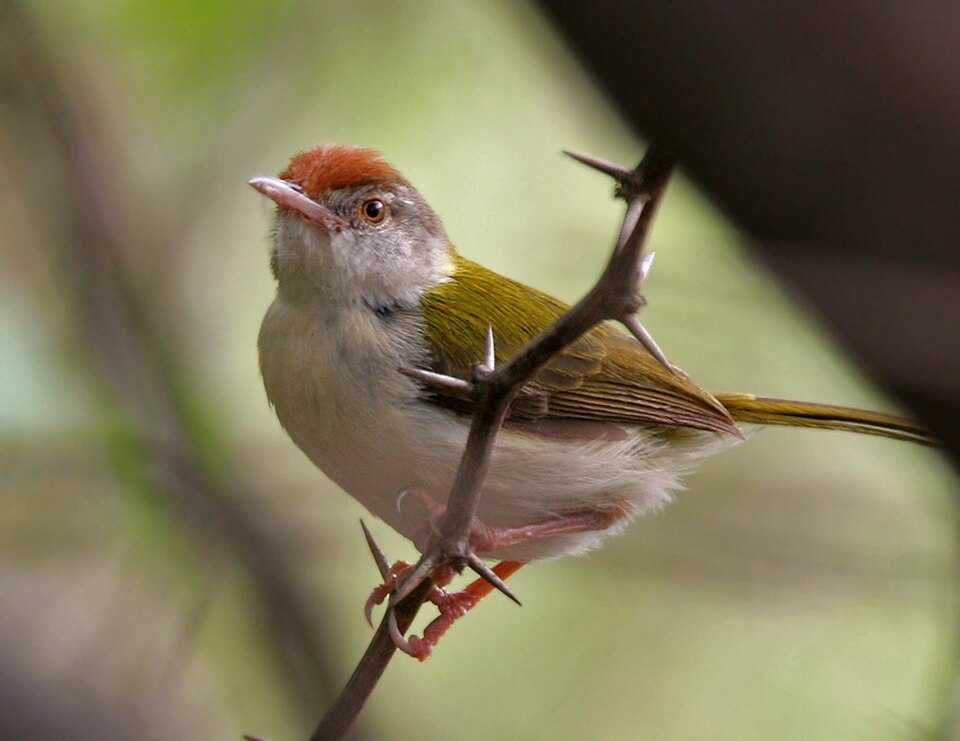 common tailorbird
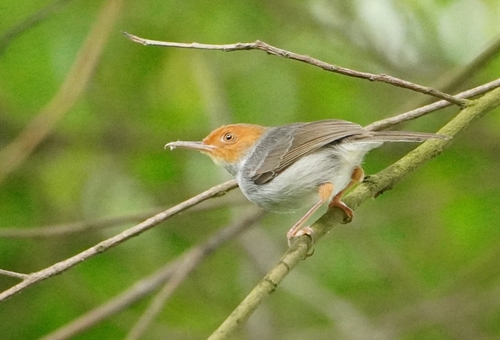 ashy tailorbird
Em resumo
A marca de campo mais confiável para separar o common tailorbird do ashy tailorbird é a cor e o padrão da cabeça e das partes superiores: o common tailorbird apresenta uma coroa ruiva brilhante com partes superiores verde-oliva e partes inferiores cremosas, enquanto os machos do ashy tailorbird têm um rosto e uma coroa frontal castanho-ruivos, mas um dorso cinza-ashy distintamente e uma cauda cinza mais clara, com a fêmea sendo ainda mais clara e sem o ruivo na garganta. Os juvenis de ambas as espécies são mais apagados, mas os juvenis do ashy tailorbird não apresentam vermelho na cabeça e têm partes superiores verde-oliva, o que pode confundi-los com os imaturos do common tailorbird. Estruturalmente, ambos são pequenos, ativos e com caudas longas, mas o common tailorbird tende a parecer mais brilhante e verde no geral, especialmente em jardins urbanos, enquanto o ashy tailorbird é mais cinza-ashy e tipicamente encontrado em bordas de florestas ou plantações. As vocalizações não são descritas em detalhes para o ashy tailorbird, mas o common tailorbird é conhecido por seus altos e repetidos chamados cheeup. Use a cor da cabeça, a cor do dorso e o contexto do habitat como suas pistas principais, especialmente em pássaros mais apagados.
Dicas de identificação
- Cor da cabeça e do rosto (machos adultos): O common tailorbird apresenta uma coroa ruiva brilhante (não o rosto), enquanto o macho do ashy tailorbird tem ruivo-castanho se estendendo sobre o rosto, queixo e coroa frontal. Se o ruivo estiver apenas na coroa, é common; se cobrir o rosto e o queixo, é ashy.
- Dorso e partes superiores: O common tailorbird é verde-oliva por cima, enquanto o ashy tailorbird é cinza-ashy (macho) ou cinza mais claro (fêmea). Um dorso esverdeado aponta para common; um cinza para ashy.
- Partes inferiores: O common tailorbird tem partes inferiores brancas cremosas; o ashy tailorbird vai de cinza-ashy na garganta a quase branco na barriga (macho) ou tem uma lavagem cinza clara (fêmea).
- Cor da cauda: O common tailorbird tem uma cauda esverdeada; a cauda do ashy tailorbird é cinza mais clara.
- Confusão juvenil: O juvenil do ashy tailorbird não apresenta ruivo na cabeça e tem partes superiores verde-oliva, potencialmente se assemelhando a um common tailorbird apagado. Procure a ausência de qualquer coroa ruiva e as partes superiores mais uniformes em juvenis de ashy.
- Diferenças sexuais (Ashy): A fêmea do ashy tailorbird não tem ruivo no queixo/garganta e é mais clara no geral. Os sexos do common tailorbird são quase idênticos, exceto por penas centrais da cauda um pouco mais longas em machos em época de reprodução (não confiável em campo).
- Cor do bico: O ashy tailorbird tem um maxilar superior marrom-casca e um maxilar inferior da cor de chifre, com um bico longo e ligeiramente curvado. O bico do common tailorbird é afiado com uma ponta curva, mas a cor não é descrita como distintiva.
- Forma da cauda e comportamento: Ambas as espécies têm caudas longas, muitas vezes levantadas, mas o common tailorbird é especialmente semelhante a um wren em postura e movimento da cauda.
- Contexto do habitat: Em jardins urbanos densos, o common tailorbird é mais provável. Em bordas de florestas, crescimento secundário ou plantações, especialmente no Sudeste Asiático, suspeite do ashy tailorbird.
- Vocalização: Se você ouvir um chamado alto e repetido cheeup-cheeup-cheeup, é provável que seja um common tailorbird. A ausência desse chamado não confirma ashy.
- Brilho da plumagem: O common tailorbird é geralmente mais brilhante e verde; o ashy tailorbird é mais apagado, cinza e mais sutil, especialmente em fêmeas e juvenis.
- Sobreposição de distribuição: Em áreas onde ambas ocorrem, use a cor da cabeça e do dorso como suas principais marcas de campo.
- Localização do ninho (se observado): Ambos costuram folhas, mas o ashy tailorbird tipicamente faz ninhos baixos (abaixo de 1m acima do solo), enquanto a colocação do ninho do common tailorbird é mais variável.
- Marcas sazonais: Apenas os machos em reprodução do common tailorbird mostram penas centrais da cauda alongadas, mas isso é sutil e nem sempre visível.
- Variação de subespécies (Ashy): Algumas subespécies do ashy tailorbird variam na vermelhidão da cabeça e na tonalidade de cinza no dorso, então sempre verifique múltiplas marcas de campo.
Tamanho
Ambas as espécies são warblers muito pequenas com massa semelhante (common tailorbird ~7.5g, ashy tailorbird ~7.0g [wikidata]). O comprimento é ligeiramente variável no common tailorbird (10–14 cm), enquanto o ashy tailorbird é listado como 7 cm, mas isso pode ser uma subestimação ou uma diferença nas convenções de medição. No campo, o tamanho não é um separador confiável; ambos são pássaros minúsculos e ativos com caudas longas.
Plumagem
-
Pássaros juvenis/imaturos: Ambas as espécies são mais apagadas do que os adultos. O juvenil do ashy tailorbird não apresenta vermelho na cabeça e tem partes superiores verde-oliva, o que pode fazê-lo se parecer com um common tailorbird apagado, mas note que os juvenis do ashy tailorbird não mostrarão a coroa ruiva ou as partes inferiores cremosas brilhantes do common tailorbird.
-
Machos adultos: O common tailorbird tem uma coroa ruiva brilhante (não se estendendo para o rosto), partes superiores verde-oliva e partes inferiores brancas cremosas. O macho do ashy tailorbird tem um rosto, queixo e coroa frontal castanho-ruivos, mas o resto da cabeça e do dorso são cinza-ashy, com o cinza clareando para branco na barriga. A cauda é cinza mais clara (não verde-oliva).
-
Fêmeas adultas: As fêmeas do ashy tailorbird são mais claras no geral, com um queixo e garganta brancos, uma lavagem cinza clara no peito e partes superiores mais claras. As fêmeas do common tailorbird se parecem com os machos, exceto pela falta de penas centrais da cauda alongadas na época de reprodução (o que é uma marca sutil e não confiável).
-
Contraste chave: O common tailorbird é sempre de dorso verde com uma coroa ruiva, enquanto o ashy tailorbird é cinza-ashy por cima com ruivo apenas no rosto e na coroa frontal (macho) ou nenhum (fêmea/juvenil). As partes inferiores são cremosas no common, cinza claro a branco no ashy.
Comportamento
Ambas as espécies são warblers ativas e insetívoras que forrageiam em vegetação baixa, muitas vezes escondidas, mas às vezes visíveis enquanto agitam suas longas caudas. O common tailorbird é especialmente familiar em jardins urbanos e é frequentemente detectado por seus altos chamados. O ashy tailorbird é mais provável de ser visto em pares ou pequenos grupos familiares, forrageando do sub-bosque da floresta até o dossel, e é notado por se adaptar bem a habitats perturbados, como plantações de óleo de palma. Ambas as espécies constroem ninhos 'costurados' usando folhas e fibras vegetais.
Habitat
O common tailorbird é um residente comum de jardins urbanos, parques e florestas abertas em toda a Ásia tropical e subtropical, muitas vezes em estreita proximidade com humanos. O ashy tailorbird é encontrado no Sudeste Asiático, preferindo bordas de florestas, crescimento secundário, plantações e às vezes jardins, mas é especialmente notado por prosperar em plantações de óleo de palma e habitats perturbados. Se você estiver em um jardim urbano denso, o common tailorbird é mais provável; em bordas de florestas ou plantações, o ashy tailorbird é mais provável.
Voz
O common tailorbird tem um chamado alto e repetido cheeup-cheeup-cheeup que é frequentemente a maneira mais fácil de detectar sua presença. Nenhuma vocalização distintiva é descrita para o ashy tailorbird nas notas disponíveis, então a voz não é um separador confiável, a menos que você conheça bem o chamado do common tailorbird.