

gralha-preta vs gralha-cinzenta
Corvus corone versus Corvus cornix
Jogue um quiz com gralha-preta e gralha-cinzenta
 gralha-preta
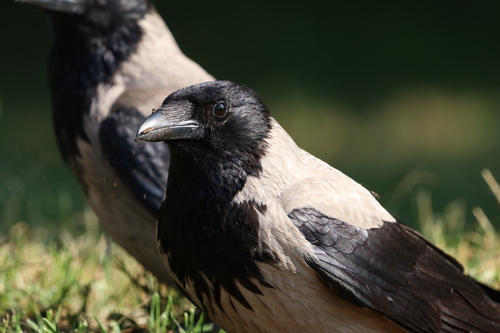 gralha-cinzenta
Em resumo
A maneira mais confiável de separar a gralha-preta da gralha-cinzenta em campo é pela plumagem geral: a gralha-preta é completamente preta com um brilho esverdeado ou purpurado, enquanto a gralha-cinzenta tem um corpo cinza-ash com um contraste acentuado, cabeça, asas, cauda e coxas pretas. Esse contraste é visível em todas as idades, exceto para juvenis muito jovens, que são mais escuros, mas ainda mostram alguma diferença. Ambas as espécies são semelhantes em tamanho e estrutura, mas a gralha-preta é frequentemente um pouco mais robusta. Juvenis de gralha-preta podem parecer mais marrons com olhos azuis, enquanto juvenis de gralha-cinzenta são mais apagados do que os adultos, mas ainda mostram o padrão cinza e preto. A voz e o comportamento são semelhantes, mas diferenças sutis nos chamados e hábitos sociais podem ajudar em casos ambíguos.
Dicas de identificação
- A plumagem geral é a marca de campo chave: A gralha-preta é toda preta com um brilho verde ou roxo; a gralha-cinzenta tem um corpo cinza-ash contrastante com cabeça, asas, cauda e coxas pretas. Isso é visível em toda iluminação e em todas as idades, exceto os juvenis mais jovens.
- Diferenças juvenis: Jovens gralhas-pretas são marrons com olhos azuis, mas ainda não apresentam cinza; gralhas-cinzentas juvenis são mais apagadas, mas mantêm o padrão cinza e preto, exceto por filhotes recém-nascidos que são mais pretos do que os adultos.
- Visões de voo: Em voo, a gralha-cinzenta mostra um contraste claro entre o corpo cinza claro e as asas e cauda pretas, enquanto a gralha-preta é uniformemente preta por cima e por baixo.
- Sem padrões distintos na parte superior da asa ou na borda de cauda: Nenhuma das espécies apresenta painéis de asa específicos por idade ou marcas na borda de cauda que sejam diagnósticas; confie na coloração geral.
- Bico, pernas e pés: Ambas as espécies têm bicos e pernas pretas; estes não são úteis para separação.
- Cor da íris: A gralha-cinzenta tem íris marrom escuro, enquanto a da gralha-preta é mais escura, mas isso raramente é visível em campo.
- Estrutura: A gralha-preta pode parecer um pouco mais robusta e com bico mais pesado, mas isso é sutil e não confiável para a maioria dos observadores.
- Tamanho: Ambas as espécies são semelhantes em comprimento e massa; o tamanho não é um separador confiável, exceto que a gralha-preta pode parecer um pouco mais volumosa.
- Voz: Ambas emitem chamados profundos e crocantes; o chamado da gralha-preta é descrito como ligeiramente mais profundo e mais gutural, mas isso não é uma marca de campo forte.
- Comportamento: A gralha-preta é mais frequentemente solitária, enquanto a gralha-cinzenta pode ser vista em pares ou pequenos grupos, mas ambas podem se juntar a bandos mistos de corvídeos.
- Distribuição: Na Europa ocidental, uma gralha toda preta é quase sempre a gralha-preta; na Europa setentrional e oriental, uma gralha cinza e preta é a gralha-cinzenta. Em zonas de contato, híbridos podem ocorrer e podem mostrar plumagem intermediária.
- Habitat: Ambas as espécies usam habitats semelhantes; não confie no habitat para separação onde ambas ocorrem.
- Estação e sexo: Nenhuma diferença de plumagem sazonal ou sexual é útil para separação; ambos os sexos parecem semelhantes em ambas as espécies, embora os machos de gralha-cinzenta possam ser ligeiramente maiores.
- Cuidado com híbridos: Em zonas de sobreposição, tenha cuidado com aves com plumagem preta/cinza intermediária ou manchada, que podem ser híbridos.
- Armadilhas comuns: Não confunda a gralha-preta com a gralha-calva (que tem uma base de bico pálida e coxas mais peludas) ou com o corvo (que é muito maior, com um bico mais pesado e cauda em forma de cunha). A gralha-cinzenta é única entre as gralhas europeias pelo seu padrão cinza e preto.
Tamanho
Ambas as espécies são muito próximas em tamanho, com comprimentos de 48–52 cm (19–20 in) para ambas. A gralha-preta tem uma envergadura de 84–100 cm e pesa 400–600 g, enquanto a gralha-cinzenta tem uma envergadura média de 105 cm e um peso típico de cerca de 510 g. A gralha-preta pode parecer um pouco mais robusta, mas isso é sutil e nem sempre confiável em campo. Os sexos são semelhantes em ambas, embora os machos de gralha-cinzenta tendam a ser ligeiramente maiores do que as fêmeas.
Plumagem
- Juvenis: Juvenis de gralha-preta são mais marrons no geral com olhos azuis, escurecendo à medida que envelhecem; juvenis de gralha-cinzenta são mais apagados do que os adultos, mas ainda mostram o padrão característico cinza e preto, embora aves recém-nascidas sejam muito mais pretas do que seus pais.
- Adultos: A gralha-preta é completamente preta, incluindo bico, pernas e pés, com um brilho verde ou roxo. A gralha-cinzenta tem um corpo cinza-ash distinto com cabeça, garganta, asas, cauda e coxas pretas. As áreas cinzas na gralha-cinzenta têm eixos de penas escuros, dando uma aparência estriada. Ambas têm bicos e pernas pretas, mas a íris da gralha-cinzenta é marrom escura, enquanto a da gralha-preta é mais escura.
- Visões de voo: O contraste entre cinza e preto da gralha-cinzenta é visível em voo de cima e de baixo, enquanto a gralha-preta permanece uniformemente preta. Nenhum padrão distinto na parte superior da asa ou na borda de cauda é descrito para nenhuma das espécies além dessa coloração geral.
Comportamento
A gralha-preta é geralmente mais solitária, frequentemente vista sozinha ou em pares, embora possa ser sociável em dormidas de inverno. A gralha-cinzenta é semelhante em comportamento, mas ambas as espécies podem se alimentar juntas com outros corvídeos. Ambas são forrageadoras inteligentes e oportunistas, e podem ser vistas usando ferramentas ou armazenando alimentos. A gralha-preta é às vezes mais mansa perto de humanos, enquanto a gralha-cinzenta também é adaptável e comum em áreas urbanas. Nenhuma diferença comportamental importante é notada que seja diagnóstica em campo.
Habitat
Ambas as espécies ocupam uma ampla gama de habitats, incluindo cidades, florestas, terras agrícolas e áreas costeiras. Suas distribuições são amplamente alopátricas na Europa, com a gralha-preta na Europa ocidental e a gralha-cinzenta na Europa setentrional, oriental e sudeste, bem como em partes do Oriente Médio. Onde suas distribuições se encontram, híbridos podem ocorrer, mas na maioria das áreas apenas uma espécie está presente. A preferência de habitat não é uma marca de campo confiável para separar as duas onde ambas ocorrem.
Voz
Ambas as espécies têm chamados profundos e crocantes semelhantes. O chamado da gralha-preta é descrito como um 'kraa' gutural, ligeiramente vibrante e mais profundo, geralmente dado em curtas séries com pausas. A voz da gralha-cinzenta é semelhante, e nenhuma diferença vocal distinta é enfatizada nas fontes. A voz pode ajudar a separar essas aves de outros corvídeos (como a gralha-calva, que tem um chamado mais agudo), mas não é um separador forte entre a gralha-preta e a gralha-cinzenta.