

Motmot

ハシボソガラス 対 ズキンガラス

Corvus corone 対 Corvus cornix

ハシボソガラスとズキンガラスのクイズ

ハシボソガラス (Corvus corone) ハシボソガラス
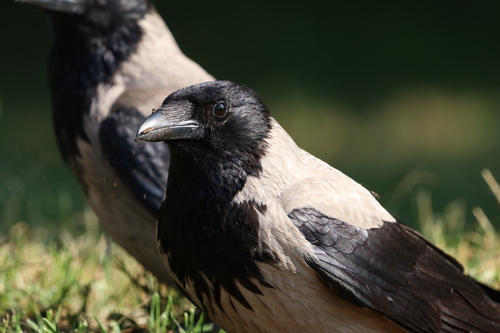
ズキンガラス (Corvus cornix) ズキンガラス

メディア

読み込み中…

要点

ハシボソガラスとズキンガラスをフィールドで区別する最も信頼できる方法は、全体の羽毛によるものです:ハシボソガラスは全体が黒く、緑がかったまたは紫がかった光沢がありますが、ズキンガラスは黒い頭、翼、尾、太ももを持つ灰色の体と鮮やかな対比を示します。この対比は、非常に若い幼鳥を除いてすべての年齢で見ることができます。両種はサイズと構造が似ていますが、ハシボソガラスはしばしば少しがっしりとしています。幼鳥のハシボソガラスは青い目を持ち、茶色っぽく見えることがありますが、幼鳥のズキンガラスは成鳥よりも鈍い色合いですが、灰色と黒のパターンを示します。声と行動は似ていますが、呼び声や社会的習慣の微妙な違いがあれば、あいまいな場合に役立ちます。

識別のコツ

  1. Overall plumage is the key field mark: ハシボソガラスは全体が黒く、緑または紫の光沢があります。ズキンガラスは黒い頭、翼、尾、太ももを持つ灰色の体と鮮やかな対比を示します。これはすべての照明条件とすべての年齢で見ることができ、最も若い幼鳥を除きます。
  2. Juvenile differences: 若いハシボソガラスは青い目を持つ茶色っぽい色合いですが、灰色はありません。幼鳥のズキンガラスは鈍い色合いですが、灰色と黒のパターンを保持しています。ただし、新しく孵化したひなは成鳥よりも黒っぽいです。
  3. Flight views: 飛行中、ズキンガラスは淡い灰色の体と黒い翼と尾との明確な対比を示しますが、ハシボソガラスは上も下も均一に黒いです。
  4. No distinctive upperwing or trailing edge patterns: どちらの種も年齢特有の翼パネルや後縁のマークを示さず、全体の色合いに依存します。
  5. Bill, legs, and feet: 両種ともに黒いくちばしと脚を持ち、これらは区別には役立ちません。
  6. Iris color: ズキンガラスは暗い茶色の虹彩を持ち、ハシボソガラスはより暗いですが、これはフィールドではほとんど見えません。
  7. Structure: ハシボソガラスはわずかにがっしりとしていて、くちばしが重いように見えることがありますが、これは微妙でほとんどの観察者には信頼できません。
  8. Size: 両種は長さと質量が似ています。サイズは信頼できる区別にはならず、ハシボソガラスは少し大きく見えることがあります。
  9. Voice: 両者は深いクローキングの呼び声を出します。ハシボソガラスの声はわずかに深く、より喉に響くと説明されていますが、これは強いフィールドマークではありません。
  10. Behavior: ハシボソガラスはより孤独であることが多く、ズキンガラスはペアや小さな群れで見られることがありますが、両者は混合したカラスの群れに参加することがあります。
  11. Range: 西ヨーロッパでは、全体が黒いカラスはほぼ常にハシボソガラスです。北ヨーロッパと東ヨーロッパでは、灰色と黒のカラスはズキンガラスです。接触ゾーンでは、ハイブリッドが発生することがあり、中間的な羽毛を示すことがあります。
  12. Habitat: 両種は似たような生息地を利用します。両方が存在する場所では生息地に依存して区別しないでください。
  13. Season and sex: 季節的または性的な羽毛の違いは区別には役立ちません。両種ともに両性は似ていますが、オスのズキンガラスはわずかに大きいことがあります。
  14. Hybrid caution: 重複ゾーンでは、中間的または斑点のある黒/灰色の羽毛を持つ鳥に注意してください。これらはハイブリッドかもしれません。
  15. Common pitfalls: ハシボソガラスをミヤマガラス(淡いくちばしの基部と毛羽立った太ももを持つ)やカラス(はるかに大きく、重いくちばしとくさび形の尾を持つ)と混同しないでください。ズキンガラスは灰色と黒のパターンでヨーロッパのカラスの中でユニークです。

大きさ

両種は非常にサイズが近く、長さは両方とも48–52 cm(19–20 in)です。ハシボソガラスの翼幅は84–100 cmで、体重は400–600 gですが、ズキンガラスは平均的に翼幅105 cm、典型的な体重は約510 gです。ハシボソガラスは少しがっしりとして見えることがありますが、これは微妙でフィールドでは常に信頼できるわけではありません。両者の性別は似ていますが、オスのズキンガラスはメスよりもわずかに大きい傾向があります。

羽色

行動

ハシボソガラスは一般的により孤独で、単独またはペアで見られることが多いですが、冬のねぐらでは社交的になることがあります。ズキンガラスは行動が似ていますが、両種は他のカラスと一緒に餌を食べることがあります。両者は知能が高く、機会主義的な採餌者であり、道具を使ったり食べ物を隠したりするのが見られることがあります。ハシボソガラスは時々人間の近くでよりおとなしいですが、ズキンガラスも適応力があり、都市部で一般的です。フィールドで診断的な主要な行動の違いは特にありません。

生息環境

両種は都市、森林、農地、沿岸地域を含む広範な生息地を占めています。彼らの分布はヨーロッパで主に異所性であり、ハシボソガラスは西ヨーロッパに、ズキンガラスは北、東、南東ヨーロッパおよび中東の一部に分布しています。彼らの分布が交わる場所ではハイブリッドが発生することがありますが、ほとんどの地域では一種のみが存在します。両方が存在する場所では生息地の好みは信頼できるフィールドマークではありません。

声

両種は似たような深いクローキングの呼び声を持っています。ハシボソガラスの呼び声は、喉に響く、わずかに活気のある、より深い「クラー」と説明され、通常は短いシリーズで与えられます。ズキンガラスの声も似ており、情報源では特に特徴的な声の違いは強調されていません。声はこれらを他のカラス(高音のミヤマガラスなど)から分けるのに役立つかもしれませんが、ハシボソガラスとズキンガラスの間で強い区別にはなりません。

より良い説明を送る

比較と同じ項目を使ってください。文章はすぐに公開されます。

The most reliable way to separate Carrion Crow from Hooded Crow in the field is by overall plumage: Carrion Crow is entirely black with a greenish or purplish gloss, while Hooded Crow has a sharply contrasting ashy-grey body with black head, wings, tail, and thighs. This contrast is visible at all ages except for very young juveniles, which are darker but still show some difference. Both species are similar in size and structure, but Carrion Crow is often slightly stockier. Juvenile Carrion Crows may appear browner with blue eyes, while juvenile Hooded Crows are duller than adults but still show the grey-and-black pattern. Voice and behavior are similar, but subtle differences in calls and social habits can help in ambiguous cases.

  1. Overall plumage is the key field mark: Carrion Crow is all black with a green or purple gloss; Hooded Crow has a contrasting ashy-grey body with black head, wings, tail, and thighs. This is visible in all lighting and at all ages except the youngest juveniles.
  2. Juvenile differences: Young Carrion Crows are brownish with blue eyes, but still lack any grey; juvenile Hooded Crows are duller but retain the grey-and-black pattern, except for newly hatched chicks which are blacker than adults.
  3. Flight views: In flight, Hooded Crow shows a clear contrast between pale grey body and black wings and tail, while Carrion Crow is uniformly black above and below.
  4. No distinctive upperwing or trailing edge patterns: Neither species shows age-specific wing panels or trailing edge marks that are diagnostic; rely on overall coloration.
  5. Bill, legs, and feet: Both species have black bills and legs; these are not useful for separation.
  6. Iris color: Hooded Crow has dark brown irises, while Carrion Crow's are darker, but this is rarely visible in the field.
  7. Structure: Carrion Crow may appear slightly stockier and heavier-billed, but this is subtle and unreliable for most observers.
  8. Size: Both species are similar in length and mass; size is not a reliable separator except that Carrion Crow may look a bit bulkier.
  9. Voice: Both give deep croaking calls; Carrion Crow's is described as slightly deeper and more guttural, but this is not a strong field mark.
  10. Behavior: Carrion Crow is more often solitary, while Hooded Crow can be seen in pairs or small groups, but both can join mixed corvid flocks.
  11. Range: In western Europe, an all-black crow is almost always Carrion Crow; in northern and eastern Europe, a grey-and-black crow is Hooded Crow. In contact zones, hybrids may occur and can show intermediate plumage.
  12. Habitat: Both species use similar habitats; do not rely on habitat for separation where both occur.
  13. Season and sex: No seasonal or sexual plumage differences are useful for separation; both sexes look alike in both species, though male Hooded Crows may be slightly larger.
  14. Hybrid caution: In overlap zones, beware of birds with intermediate or patchy black/grey plumage, which may be hybrids.
  15. Common pitfalls: Do not confuse Carrion Crow with Rook (which has a pale bill base and shaggier thighs) or with Raven (which is much larger with a heavier bill and wedge-shaped tail). Hooded Crow is unique among European crows for its grey-and-black pattern.

Both species are very close in size, with lengths of 48–52 cm (19–20 in) for both. Carrion Crow has a wingspan of 84–100 cm and weighs 400–600 g, while Hooded Crow averages a wingspan of 105 cm and a typical weight of about 510 g. Carrion Crow may appear a bit stockier, but this is subtle and not always reliable in the field. Sexes are similar in both, though male Hooded Crows tend to be slightly larger than females.

  • Juveniles: Juvenile Carrion Crows are browner overall with blue eyes, darkening as they age; Hooded Crow juveniles are duller than adults but still show the characteristic grey-and-black pattern, though newly hatched birds are much blacker than their parents.
  • Adults: Carrion Crow is entirely black, including bill, legs, and feet, with a green or purple sheen. Hooded Crow has a distinctive ashy-grey body with black head, throat, wings, tail, and thighs. The grey areas on Hooded Crow have dark feather shafts, giving a streaked look. Both have black bills and legs, but Hooded Crow's iris is dark brown, while Carrion Crow's is darker.
  • Flight views: The contrasting grey and black of Hooded Crow is visible in flight from above and below, while Carrion Crow remains uniformly black. No distinctive upperwing or trailing edge patterns are described for either species beyond this overall coloration.

Carrion Crow is generally more solitary, often seen alone or in pairs, though it can be sociable in winter roosts. Hooded Crow is similar in behavior, but both species may feed together with other corvids. Both are intelligent, opportunistic foragers, and may be seen using tools or caching food. Carrion Crow is sometimes tamer near humans, while Hooded Crow is also adaptable and common in urban areas. No major behavioral differences are noted that are diagnostic in the field.

Both species occupy a wide range of habitats, including cities, forests, farmland, and coastal areas. Their ranges are largely allopatric in Europe, with Carrion Crow in western Europe and Hooded Crow in northern, eastern, and southeastern Europe, as well as parts of the Middle East. Where their ranges meet, hybrids can occur, but in most areas only one species is present. Habitat preference is not a reliable field mark for separating the two where both occur.

Both species have similar deep, croaking calls. Carrion Crow's call is described as a guttural, slightly vibrant, deeper 'kraa', usually given in short series with pauses. Hooded Crow's voice is similar, and no distinctive vocal differences are emphasized in the sources. Voice may help separate these from other corvids (like the higher-pitched rook), but is not a strong separator between Carrion and Hooded Crow.

変更を破棄しますか?

保存していない編集があります。今離れると失われます。

ハシボソガラス · ズキンガラス · 苦手な鳥