

cape robin-chat vs white-browed robin-chat
Dessonornis caffer versus Cossypha heuglini
Jogue um quiz com cape robin-chat e white-browed robin-chat
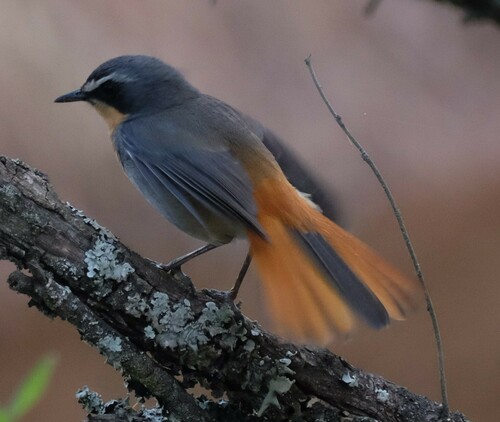 cape robin-chat
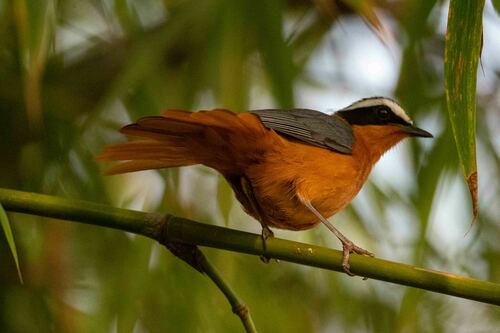 white-browed robin-chat
Em resumo
O juvenil cape robin-chat não possui um supercílio branco e é fortemente marcado na parte superior, enquanto o juvenil white-browed robin-chat apresenta uma garganta pálida e um ventre laranja-amarelado. Para os adultos, ambos têm um supercílio branco e partes inferiores laranjas, mas o cape robin-chat é menor, mais cinza na parte superior e tem um contraste mais pronunciado entre a sua cauda laranja e as partes superiores cinzas. O white-browed robin-chat é maior, com uma coroa e face mais escuras, partes inferiores laranjas mais extensas e uma cauda ruiva. No campo, o habitat e o tamanho podem ajudar: o cape robin-chat prefere bordas montanhosas ou de montanha e jardins, enquanto o white-browed robin-chat está ligado a arbustos ribeirinhos e é mais robusto. Ambos podem ocorrer perto de humanos, então a atenção cuidadosa ao padrão da cabeça e ao tamanho é fundamental.
Dicas de identificação
- Plumagem juvenil: O juvenil cape robin-chat não possui um supercílio branco e é fortemente marcado na parte superior com amarelo; procure um lado superior marrom escuro e partes inferiores amarelas, com solas amarelas nos pés (se vistas). O juvenil white-browed robin-chat apresenta uma garganta pálida, peito laranja-amarelado pálido e ventre laranja pálido, com marcas ruivas na parte de trás e uma cabeça marrom.
- Supercílio (adultos): Ambas as espécies têm um supercílio branco, mas o do cape robin-chat é mais nitidamente definido e fica acima de lore e coberturas auriculares escuras, enquanto o do white-browed é mais amplo e fica acima de uma coroa e face pretas.
- Coroa e face: O adulto white-browed robin-chat tem uma coroa e face pretas, criando um forte contraste com o supercílio branco; o cape robin-chat tem uma coroa cinza e menos preto na face.
- Partes superiores: O cape robin-chat é cinza na parte superior com tons de oliva, enquanto o white-browed robin-chat é marrom oliva-cinza na parte superior com uma cauda ruiva.
- Cauda e rabo: Ambos têm caudas e penas externas da cauda laranja/ruivas, mas a do white-browed é mais extensa e a cauda é mais longa e robusta; as penas centrais da cauda do cape robin-chat são marrom-cinzentas e podem obscurecer o ruivo quando a cauda está fechada.
- Partes inferiores: O cape robin-chat tem laranja na garganta, peito central e cauda, com uma barriga cinza pálido a branca e coberturas de cauda amarelas. O white-browed robin-chat tem partes inferiores laranja-ruivas brilhantes da garganta ao ventre, sem uma quebra de cor acentuada.
- Bico e pernas: Ambos têm bicos pretos, mas o do cape robin-chat é ligeiramente curvado para baixo. A cor das pernas varia no white-browed (marrom-rosado a marrom escuro), enquanto as do cape robin-chat são pretas (adultos) ou cinza-rosadas (juvenis).
- Tamanho e estrutura: O white-browed robin-chat é maior e mais pesado (19–20 cm, 34,9 g) do que o cape robin-chat (16–17 cm, ~28 g). Isso é frequentemente visível no campo, especialmente em comparação direta ou com experiência.
- Comportamento: O cape robin-chat frequentemente pousa em locais abertos, levanta a cauda e a abre; o white-browed é mais furtivo em arbustos densos, mas também pode ser ousado perto de humanos.
- Habitat: O cape robin-chat é mais provável de ser encontrado em jardins montanhosos, bordas de florestas e arbustos montanhosos, enquanto o white-browed robin-chat está ligado a florestas ribeirinhas, arbustos densos e habitats úmidos, especialmente em altitudes mais baixas.
- Voz: Se ouvido, a canção melodiosa e repetitiva do white-browed robin-chat e seus duetos são distintos. A canção do cape robin-chat não é descrita aqui, então tenha cautela a menos que a canção completa do white-browed seja ouvida.
- Diferenças sexuais: Ambas as espécies são monomórficas sexualmente em plumagem; a fêmea do white-browed é ligeiramente menor, mas isso não é útil no campo.
- Armadilhas: Ambas as espécies podem ocorrer em jardins e perto de humanos, então não confie apenas no contexto urbano. Juvenis são especialmente confusos; concentre-se no supercílio, na cor da garganta e nas marcas das partes superiores.
- Visões de voo: Nenhum padrão distintivo de marca de asa superior ou de voo é descrito para qualquer uma das espécies, então a separação em voo depende do tamanho, comprimento da cauda e impressão geral de cor.
- Variação sazonal: O laranja do peito do cape robin-chat se intensifica na estação não reprodutiva, mas isso é sutil e não é uma marca de campo primária.
Tamanho
O white-browed robin-chat é claramente maior e mais pesado (19–20 cm, 34,9 g) em comparação com o cape robin-chat (16–17 cm, ~28 g). A diferença é geralmente aparente em comparação direta ou com experiência, já que o white-browed parece mais robusto e de cauda mais longa. No entanto, o tamanho sozinho pode ser enganoso à distância ou com aves solitárias.
Plumagem
O juvenil cape robin-chat é marrom escuro na parte superior, fortemente marcado com amarelo, e não possui supercílio; suas partes inferiores são amarelas com marrom-cinza no peito, e a cauda é semelhante à de um adulto, mas com solas amarelas nos pés. O juvenil white-browed robin-chat tem uma cabeça marrom, marcas ruivas na parte de trás, uma garganta pálida, peito laranja-amarelado pálido e ventre laranja pálido. Nos adultos, ambas as espécies têm um supercílio branco, mas o do cape robin-chat é mais nitidamente definido acima de uma lore e coberturas auriculares escuras, com uma coroa cinza e partes superiores tingidas de marrom-oliva. Seu laranja é restrito à garganta, peito central, cauda e cauda externa, com uma barriga cinza pálido a branca e coberturas de cauda amarelas. O adulto white-browed robin-chat tem uma coroa e face pretas, um supercílio branco mais amplo, costas marrom oliva-cinza, cauda ruiva e partes inferiores laranja-ruivas brilhantes que se estendem da garganta ao ventre. Suas coberturas de asa são ruivas, e a cauda é mais extensivamente laranja-ruiva, exceto pelas penas centrais marrom-oliva. Os sexos são semelhantes em ambas, mas a fêmea do white-browed é ligeiramente menor.
Comportamento
O cape robin-chat é frequentemente visto sozinho, pousando de forma proeminente e frequentemente levantando sua cauda em até 60 graus, às vezes abrindo-a. Ele salta no chão e repousa sozinho em coberturas densas. O white-browed robin-chat também é territorial e pode ser visto perto de humanos, mas está mais intimamente ligado a habitats ribeirinhos ou de arbustos. Ambas as espécies tomam banho regularmente. O white-browed robin-chat pode cantar em duetos e é mais provável que defenda seu território de forma agressiva.
Habitat
O cape robin-chat prefere bordas de florestas afromontanas, jardins montanhosos, arbustos florestais, ravinas e plantações, frequentemente em altitudes mais elevadas (tipicamente acima de 1.500 m em grande parte de sua área de distribuição). É comum em jardins e parques do sul da África, mas evita zonas áridas e arbustos ribeirinhos de baixas altitudes. O white-browed robin-chat é encontrado em florestas ribeirinhas, arbustos densos e jardins, frequentemente em altitudes mais baixas (abaixo de 1.000 m ao sul do Limpopo, até 2.200 m na África Oriental), e está intimamente associado a cursos d'água e vegetação densa. Ambos podem ocorrer perto de humanos, mas o cape robin-chat é mais provável em ambientes suburbanos montanhosos, enquanto o white-browed está ligado a arbustos densos e úmidos.
Voz
O white-browed robin-chat tem uma canção distinta e melodiosa com frases repetidas (por exemplo, 'pip-pip-uree', 'don't-you-do-it'), frequentemente cantada ao amanhecer e ao anoitecer, às vezes em dueto, e com uma variedade de chamadas de contato e alarme. A canção e as chamadas do cape robin-chat não são detalhadas nessas notas, então a voz é apenas diagnóstica se a canção completa do white-browed for ouvida.
cape robin-chat · white-browed robin-chat · Minhas aves difíceis