

Cape Robin-Chat vs White-browed Robin-Chat
Dessonornis caffer contro Cossypha heuglini
Fai un quiz con Cape Robin-Chat e White-browed Robin-Chat
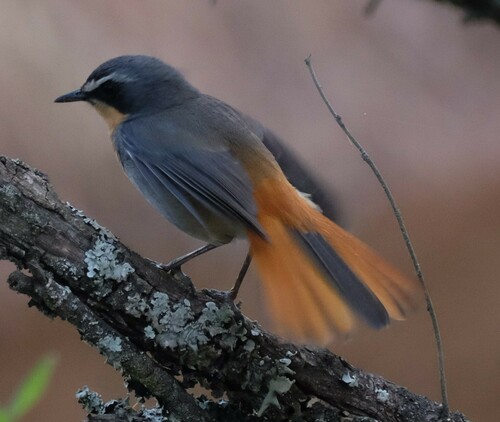 Cape Robin-Chat
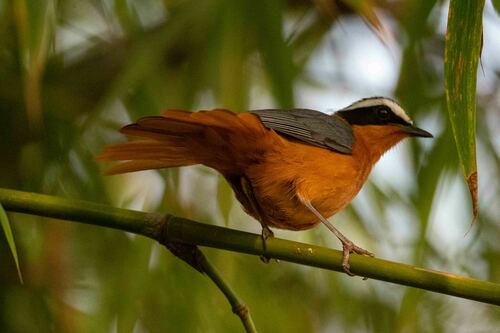 White-browed Robin-Chat
In breve
Il giovane Cape Robin-Chat non ha un sopracciglio bianco ed è fortemente marcato sopra, mentre il giovane White-browed Robin-Chat mostra una gola chiara e un ventre arancio-buffo. Per gli adulti, entrambi hanno un sopracciglio bianco e parti inferiori arancioni, ma il Cape Robin-Chat è più piccolo, più grigio sopra e ha un contrasto più evidente tra il suo groppone arancione e le parti superiori grigie. Il White-browed Robin-Chat è più grande, con una corona e un viso più neri, un arancione più esteso sotto e un groppone rugginoso. Sul campo, l'habitat e le dimensioni possono aiutare: il Cape Robin-Chat preferisce i bordi montani o di alta montagna e i giardini, mentre il White-browed Robin-Chat è legato ai cespugli fluviali ed è più robusto. Entrambi possono trovarsi vicino agli esseri umani, quindi prestare attenzione al modello della testa e alle dimensioni è fondamentale.
Consigli di identificazione
- Giovane piumaggio: Il giovane Cape Robin-Chat non ha un sopracciglio bianco ed è fortemente marcato sopra con buff; cerca un lato superiore marrone scuro e parti inferiori buffe, con suole gialle sui piedi (se viste). Il giovane White-browed Robin-Chat mostra una gola chiara, un petto arancio-buffo chiaro e un ventre arancio chiaro, con segni rugginosi-marroni sulla schiena e una testa marrone.
- Sopracciglio (adulti): Entrambe le specie hanno un sopracciglio bianco, ma quello del Cape Robin-Chat è più nettamente definito e si trova sopra lore e copritrici auricolari nerastre, mentre quello del White-browed è più ampio e si trova sopra una corona e un viso neri.
- Corona e viso: L'adulto White-browed Robin-Chat ha una corona e un viso neri, creando un forte contrasto con il sopracciglio bianco; il Cape Robin-Chat ha una corona grigia e meno nero sul viso.
- Parti superiori: Il Cape Robin-Chat è grigio sopra con sfumature marrone-oliva, mentre il White-browed Robin-Chat è marrone-oliva-grigio sopra con un groppone rugginoso.
- Groppone e coda: Entrambi hanno gropponi arancioni/rugginosi e penne esterne della coda, ma quello del White-browed è più esteso e la coda è più lunga e robusta; le penne centrali della coda del Cape Robin-Chat sono marrone-grigiastro e possono oscurare il rugginoso quando la coda è chiusa.
- Parti inferiori: Il Cape Robin-Chat ha arancione sulla gola, sul petto centrale e sul groppone, con un ventre grigio chiaro a bianco e copritrici del sottocoda buffe. Il White-browed Robin-Chat ha parti inferiori arancio-rugginose brillanti dalla gola al ventre, senza interruzione di colore netta.
- Becco e zampe: Entrambi hanno becchi neri, ma quello del Cape Robin-Chat è leggermente curvato verso il basso. Il colore delle zampe è variabile nel White-browed (marrone-rosato a marrone scuro), mentre quelle del Cape Robin-Chat sono nere (adulti) o grigio-rosate (giovani).
- Dimensioni e struttura: Il White-browed Robin-Chat è più grande e pesante (19–20 cm, 34.9 g) rispetto al Cape Robin-Chat (16–17 cm, ~28 g). Questo è spesso visibile sul campo, soprattutto in confronto diretto o con esperienza.
- Comportamento: Il Cape Robin-Chat spesso si posa in modo prominente, muovendo frequentemente la coda fino a 60 gradi, a volte aprendo la coda; il White-browed è più schivo in cespugli densi ma può anche essere audace vicino agli esseri umani.
- Habitat: Il Cape Robin-Chat è più probabile trovarlo in giardini montani, bordi forestali e cespugli montani, mentre il White-browed Robin-Chat è legato a foreste fluviali, cespugli densi e habitat umidi, specialmente a basse altitudini.
- Voce: Se sentito, il canto melodioso e ripetitivo del White-browed Robin-Chat e i duetti sono distintivi. Il canto del Cape Robin-Chat non è descritto qui, quindi usa cautela a meno che non si senta il canto completo del White-browed.
- Differenze sessuali: Entrambe le specie sono sessualmente monomorfiche nel piumaggio; la femmina del White-browed è leggermente più piccola, ma questo non è utile sul campo.
- Trappole: Entrambe le specie possono trovarsi in giardini e vicino agli esseri umani, quindi non fare affidamento solo sul contesto urbano. I giovani sono particolarmente confusi; concentrati sul sopracciglio, sul colore della gola e sulle marcature delle parti superiori.
- Viste in volo: Non ci sono segni distintivi delle ali superiori o del modello di volo descritti per nessuna delle due specie, quindi la separazione in volo si basa su dimensioni, lunghezza della coda e impressione di colore complessiva.
- Variazione stagionale: L'arancione del petto del Cape Robin-Chat si intensifica nella stagione non riproduttiva, ma questo è sottile e non è un segno principale sul campo.
Taglia
Il White-browed Robin-Chat è decisamente più grande e pesante (19–20 cm, 34.9 g) rispetto al Cape Robin-Chat (16–17 cm, ~28 g). La differenza è solitamente evidente in confronto diretto o con esperienza, poiché il White-browed appare più robusto e con coda più lunga. Tuttavia, le dimensioni da sole possono essere fuorvianti a distanza o con uccelli solitari.
Piumaggio
Il giovane Cape Robin-Chat è marrone scuro sopra, fortemente marcato con buff, e non ha alcun sopracciglio; le sue parti inferiori sono buff con grigio-marrone sul petto, e la coda è simile a quella degli adulti ma con suole gialle sui piedi. Il giovane White-browed Robin-Chat ha una testa marrone, segni rugginosi-marroni sulla schiena, una gola chiara, un petto arancio-buffo chiaro e un ventre arancio chiaro. Negli adulti, entrambe le specie hanno un sopracciglio bianco, ma quello del Cape Robin-Chat è più nettamente definito sopra un lore nerastro e copritrici auricolari, con una corona grigia e parti superiori tinte di marrone-oliva. Il suo arancione è limitato alla gola, al petto centrale, al groppone e alla coda esterna, con un ventre grigio chiaro a bianco e copritrici del sottocoda buffe. L'adulto White-browed Robin-Chat ha una corona e un viso neri, un sopracciglio bianco più ampio, una schiena marrone-oliva-grigia, un groppone rugginoso e parti inferiori arancio-rugginose brillanti che si estendono dalla gola al ventre. Le sue copritrici dell'ala sono rugginose, e la coda è più estensivamente arancio-rugginosa tranne per le penne centrali marrone-oliva. I sessi sono simili in entrambe, ma la femmina del White-browed è leggermente più piccola.
Comportamento
Il Cape Robin-Chat è spesso visto singolarmente, posandosi in modo prominente e muovendo frequentemente la coda fino a 60 gradi, a volte aprendo la coda. Salta a terra e si riposa da solo in copertura densa. Il White-browed Robin-Chat è anche territoriale e può essere visto vicino agli esseri umani, ma è più legato agli habitat fluviali o ai cespugli. Entrambe le specie si bagnano regolarmente. Il White-browed Robin-Chat può cantare in duetti ed è più propenso a difendere il territorio in modo aggressivo.
Habitat
Il Cape Robin-Chat favorisce i bordi forestali afromontani, i giardini montani, i cespugli forestali, i burroni e le piantagioni, spesso a altitudini più elevate (tipicamente sopra i 1.500 m in gran parte del suo areale). È comune nei giardini e nei parchi dell'Africa meridionale, ma evita le zone aride e i cespugli fluviali a bassa quota. Il White-browed Robin-Chat si trova in foreste fluviali, cespugli densi e giardini, spesso a basse altitudini (sotto i 1.000 m a sud del Limpopo, fino a 2.200 m in Africa orientale), ed è strettamente associato a corsi d'acqua e vegetazione densa. Entrambi possono trovarsi vicino agli esseri umani, ma il Cape Robin-Chat è più probabile trovarlo in ambienti suburbani montani, mentre il White-browed è legato a cespugli umidi e densi.
Voce
Il White-browed Robin-Chat ha un canto distintivo e melodioso con frasi ripetute (ad es., 'pip-pip-uree', 'don't-you-do-it'), spesso cantato all'alba e al tramonto, a volte in duetto, e con una varietà di richiami di contatto e di allerta. Il canto del Cape Robin-Chat non è dettagliato in queste note, quindi la voce è solo diagnostica se si sente il canto completo del White-browed.
Cape Robin-Chat · White-browed Robin-Chat · I miei uccelli difficili