

bronzy hermit vs long-billed hermit
Glaucis aeneus versus Phaethornis longirostris
Jogue um quiz com bronzy hermit e long-billed hermit
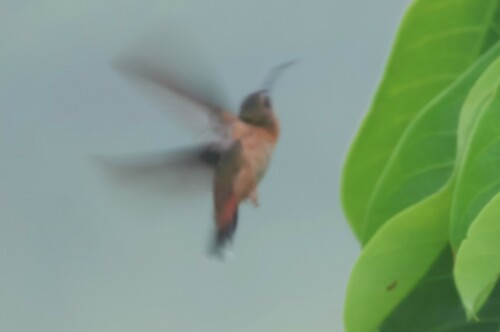 bronzy hermit
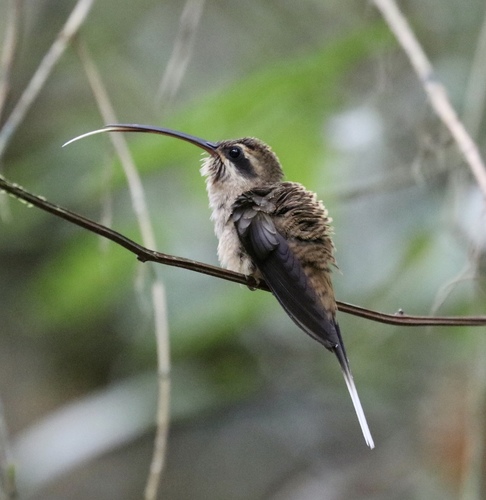 long-billed hermit
Em resumo
A marca de campo mais confiável entre bronzy hermit e long-billed hermit é o tamanho e a estrutura geral: long-billed hermit é muito maior, com um bico proporcionalmente muito mais longo e fortemente curvado para baixo, e uma cauda dramaticamente mais longa e graduada com pontas brancas proeminentes. Bronzy hermit é compacto, com uma cauda curta e um brilho superior mais bronzoso ou verde-cobre. Ambas as espécies têm uma faixa facial branca, mas a de long-billed hermit é mais ousada e a aparência do pássaro é mais esbelta. Em voo ou empoleirado, concentre-se no comprimento da cauda e na forma do bico para a separação mais rápida. Padrões de asas ou cauda específicos de juvenis/imaturos não são descritos nas fontes para nenhuma das espécies.
Dicas de identificação
- O tamanho é uma pista importante: Long-billed hermit é muito maior e mais longo que bronzy hermit. Se o pássaro parece grande para um hermit, especialmente com uma cauda longa, suspeite de long-billed.
- Comprimento e forma da cauda: Long-billed hermit tem uma cauda dramaticamente longa e graduada com pontas brancas proeminentes nas penas centrais; bronzy hermit tem uma cauda curta e quadrada com pontas brancas, mas nunca tão longa ou graduada.
- Forma e comprimento do bico: O bico de long-billed hermit é muito longo e fortemente curvado para baixo; o bico de bronzy hermit é mais curto e menos dramaticamente curvado. As fêmeas de bronzy hermit têm um bico mais curvado que os machos, mas nunca tão longo quanto o de long-billed.
- Padrão facial: Ambos têm uma faixa facial branca, mas a de long-billed hermit é mais larga e ousada, muitas vezes proporcionando um contraste facial mais marcante. O rosto de bronzy hermit é escuro com uma 'bigode' branca (faixa malar), não tão ousada.
- Cor das partes superiores: Bronzy hermit apresenta um brilho bronzoso ou verde-cobre acima, enquanto long-billed hermit é marrom-esverdeado ou verde metálico opaco, sem os tons bronzosos/cobres.
- Partes inferiores: Bronzy hermit tem uma garganta e peito de um buff profundo com uma barriga de buff pálido; long-billed hermit é marrom a acinzentado (às vezes ocráceo ou mais claro em algumas subespécies), nunca tão buff quanto bronzy.
- Parte inferior da cauda: Bronzy hermit tem uma base avermelhada, meio escuro e ponta branca por baixo; a cauda de long-billed hermit é principalmente escura com longas pontas brancas, especialmente nas penas centrais.
- Coberturas da cauda superior: Long-billed hermit apresenta bandas ocráceas nas coberturas da cauda superior em algumas subespécies; bronzy hermit não apresenta.
- Aparência em voo: Long-billed hermit parece esbelto e alongado com uma cauda arrastando; bronzy hermit é compacto e rápido.
- Comportamento de lek: Se você ver um grupo de hermits cantando e exibindo caudas longas, é long-billed hermit; bronzy hermit não faz lek.
- Voz: Uma série contínua de notas agudas 'sweeup' ou 'tchee' ou um chamado agudo 'week!' é de long-billed hermit. A voz de bronzy hermit não é descrita, então use isso apenas para identificação positiva de long-billed.
- Habitat e elevação: Em elevações mais altas ou nas bordas de florestas/florestas de nuvens, long-billed hermit é mais provável. Bronzy hermit prefere o sub-bosque denso de florestas úmidas de planície/montanha.
- Diferenças sexuais: Ambas as espécies têm plumagem semelhante entre os sexos, mas o comprimento/curvatura do bico pode ajudar: machos de long-billed hermit têm bicos mais longos e menos curvados; fêmeas de bronzy hermit têm bicos mais curvados, mas nunca tão longos quanto os de long-billed.
- Nenhum padrão útil de asa ou cauda juvenil/imaturo: Nenhuma das espécies tem uma marca de asa ou cauda específica para a idade descrita, então concentre-se na estrutura e na plumagem adulta.
- Quando em dúvida: Se o pássaro é pequeno, compacto, bronzoso e de cauda curta, é bronzy hermit. Se é grande, de cauda longa, com uma faixa facial branca ousada e bico longo, é long-billed hermit.
Tamanho
Long-billed hermit é substancialmente maior: 13–16 cm de comprimento e 5–7,5 g (macho) ou 4–6,5 g (fêmea) de massa, em comparação com os 9–10 cm e 3–6,5 g (macho) ou 3–6 g (fêmea) de bronzy hermit [wikipedia][avonet]. Essa diferença de tamanho é óbvia em campo, especialmente quando ambas as espécies estão presentes. Long-billed hermit também parece ter cauda e bico mais longos, dando-lhe uma aparência alongada e esbelta, enquanto bronzy hermit é compacto e de cauda curta.
Plumagem
- Padrão de asa ou cauda juvenil/imaturo: Nenhum padrão de asa ou cauda específico para a idade é descrito para nenhuma das espécies nas fontes, então concentre-se na plumagem adulta e na estrutura.
- Bronzy hermit: Ambos os sexos têm partes superiores bronzosas ou verde-cobre, uma garganta e peito de um buff profundo, e uma barriga de buff pálido. O rosto é escuro com um 'bigode' branco (faixa malar). A cauda é curta, verde-acinzentada acima com pontas brancas, e a parte inferior é avermelhada perto da base, escura no meio e com ponta branca [wikipedia].
- Long-billed hermit: As partes superiores são marrom-esverdeadas a verde metálico opaco (dependendo da subespécie), as partes inferiores são marrom a acinzentadas (às vezes ocráceas ou mais claras em algumas subespécies). O rosto tem uma faixa branca ousada, e a cauda é muito longa e fortemente graduada, com longas pontas brancas nas penas centrais e bandas ocráceas nas coberturas da cauda superior. O efeito geral é uma cauda muito mais alongada e com padrão ousado e uma aparência menos bronzosa do que bronzy hermit [wikipedia].
- Sexos: Ambas as espécies mostram plumagem semelhante entre os sexos, mas os machos de long-billed hermit têm bicos mais longos e menos curvados que as fêmeas; as fêmeas de bronzy hermit têm um bico mais curvado que os machos.
Comportamento
Ambas as espécies são alimentadoras típicas de 'trap-line', visitando um circuito de flores em busca de néctar e ocasionalmente capturando pequenos artrópodes. Os machos de long-billed hermit são conhecidos pelo comportamento de lek, reunindo-se em grupos e cantando por longos períodos enquanto exibem suas longas caudas. Bronzy hermit não exibe lekking comunitário nas fontes. Em voo, long-billed hermit parece mais lânguido e alongado devido à sua longa cauda e bico, enquanto bronzy hermit é mais compacto e ágil.
Habitat
Ambas as espécies se sobrepõem na América Central (Costa Rica, Panamá, Colômbia, etc.), mas long-billed hermit tem uma faixa elevacional e de habitat mais ampla, desde florestas tropicais de planície até bordas de florestas de nuvens e florestas de galeria, até 2.500 m em algumas áreas. Bronzy hermit é encontrado em regiões semelhantes, mas geralmente é mais restrito a florestas úmidas de planície e montanha e bordas. Em áreas de sobreposição, long-billed hermit é mais provável em uma gama mais ampla de tipos de floresta e elevações, enquanto bronzy hermit está mais ligado ao sub-bosque denso e úmido da floresta.
Voz
Long-billed hermit canta uma série contínua de notas agudas e ascendentes 'sweeup' ou 'tchee..tchee..tchee..', dependendo da subespécie, e seu chamado é um 'week!' agudo e explosivo ou um 'seep' fino, frequentemente emitido em voo [wikipedia]. As vocalizações de bronzy hermit não são descritas nas fontes, então a voz é apenas diagnóstica se você ouvir a canção ou o chamado distintivo de long-billed hermit.