

bornean peacock-pheasant vs malayan peacock-pheasant
Polyplectron schleiermacheri versus Polyplectron malacense
Jogue um quiz com bornean peacock-pheasant e malayan peacock-pheasant
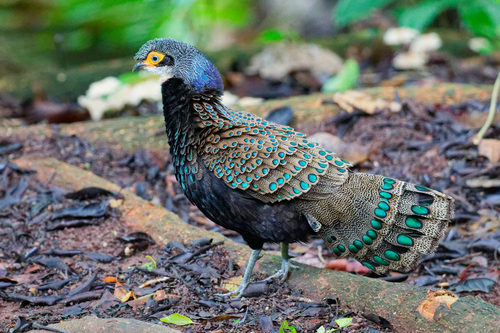 bornean peacock-pheasant
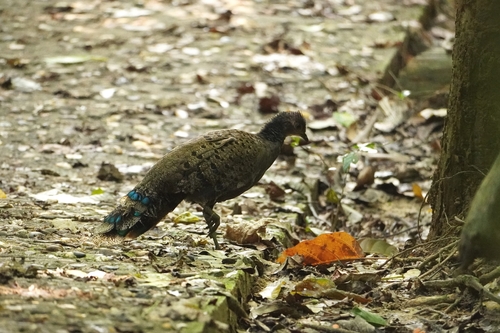 malayan peacock-pheasant
Em resumo
A marca de campo mais confiável entre o bornean peacock-pheasant e o malayan peacock-pheasant é o peito e o pescoço do macho: machos bornean apresentam lados do peito e do pescoço superior altamente especializados, metálicos e azul-esverdeados, que delimitam nitidamente uma garganta branca e um peito central, enquanto machos malayan têm uma garganta branca que se estende pelo centro do peito, cercada por uma plumagem pálida marrom e manchada de preto mais difusa. Ambas as espécies têm manchas oculares (ocelos) azuis-esverdeadas proeminentes na cauda, mas as do malayan são contornadas com buff e se estendem para as asas superiores e costas, enquanto as do bornean são limitadas à cauda. As fêmeas são muito mais difíceis de separar, com ambas sendo marrons opacas e menos ornamentadas, mas o bornean tende a ser ligeiramente mais opaco e não possui esporas. Ambas as espécies são aves secretivas, que habitam o solo das florestas tropicais de planície do Sudeste Asiático, mas seus habitats não se sobrepõem: o bornean é estritamente endêmico de Bornéu, o malayan da Península Malaia. No campo, concentre-se no padrão do peito do macho e na distribuição das manchas oculares para ter a melhor chance de uma identificação confiante.
Dicas de identificação
- Padrão do peito e pescoço do macho: Machos bornean têm lados do peito e pescoço superiores azul-esverdeados metálicos, delimitando nitidamente uma garganta branca e um peito central; machos malayan têm uma garganta branca que se estende pelo centro do peito, com menos contraste em relação à plumagem circundante. Esta é a marca de campo mais confiável para machos adultos.
- Distribuição das manchas oculares azuis-esverdeadas (ocelos): Machos malayan têm ocelos azul-esverdeados iridescentes com bordas buff nas asas superiores, costas e cauda; machos bornean têm grandes ocelos azul-esverdeados apenas na cauda, sem borda buff e nenhum nas costas ou asas. Essa diferença é visível tanto em aves empoleiradas quanto em exibição.
- Tom geral da plumagem: O malayan é marrom mais claro com um efeito de 'sal e pimenta' devido a pequenas manchas e faixas pretas; o bornean é marrom-rúfio com manchas pretas, sem a fina estriação e aparência geral mais clara do malayan.
- Forma da crista: Machos malayan têm uma crista solta, pontuda e voltada para cima de cor azul-esverdeada escura; machos bornean têm penas de crista e nuca alongadas, mas a crista é menos voltada para cima e mais marrom-rúfio.
- Cor da pele facial: Ambos têm pele nua ao redor dos olhos, mas no malayan geralmente é rosa, tornando-se laranja-avermelhada brilhante durante o acasalamento; o bornean tem pele nua vermelha, mas o grau de mudança de cor na exibição não é descrito.
- Cor da íris: Ambos os machos têm íris azuladas ou azul-brancas, mas fêmeas bornean têm íris marrons, enquanto fêmeas malayan não são especificadas como diferentes.
- Cauda e crista da fêmea: Fêmeas malayan têm cauda visivelmente mais curta e uma crista vestigial; fêmeas bornean são mais opacas, não possuem esporas e têm padrões menos óbvios, mas ambas são difíceis de separar no campo.
- Esporas: Fêmeas bornean peacock-pheasants não possuem esporas; fêmeas malayan não são especificadas, mas isso pode ser uma diferença sutil se visível.
- Exibição da cauda: Durante o acasalamento, machos malayan mostram ocelos nas costas e asas, além da cauda; machos bornean mostram apenas ocelos na cauda.
- Comportamento de voo: Ambas as espécies são relutantes em voar e raramente são vistas em voo; nenhuma silhueta de voo distinta ou padrão de asa é descrita para nenhuma delas.
- Tamanho e estrutura: O malayan é ligeiramente mais pesado e volumoso, com cauda mais curta nas fêmeas, mas essas diferenças são sutis e não confiáveis no campo.
- Distribuição: Qualquer peacock-pheasant visto em Bornéu é bornean; qualquer um na Península Malaia é malayan. Não há sobreposição natural.
- Habitat: Ambas preferem florestas tropicais primárias de planície, mas o malayan pode às vezes ser encontrado em florestas secundárias, enquanto o bornean é estritamente um especialista em florestas primárias.
- Comportamento: Ambas são tímidas e habitam o solo, correndo rapidamente para se esconder; o bornean é particularmente elusivo e solitário, enquanto o malayan pode ser visto em pares durante a época de reprodução.
- Vocalização: Ambas as espécies chamam durante a reprodução, mas os chamados não são descritos em detalhes e não devem ser usados para separação.
Tamanho
Ambas as espécies são peacock-pheasants de tamanho médio, com machos atingindo cerca de 50 cm de comprimento, aproximadamente metade do qual é cauda. Machos malayan peacock-pheasant são ligeiramente mais pesados (565–700 g) [wikidata], enquanto a massa do bornean não é bem documentada, mas presume-se semelhante. Fêmeas de ambas são menores e com cauda mais curta, com fêmeas malayan medindo cerca de 40 cm e pesando 450–550 g. No geral, o tamanho não é um separador confiável no campo, mas o malayan pode parecer um pouco mais volumoso e com cauda mais curta, especialmente nas fêmeas.
Plumagem
-
Plumagem juvenil/imatura: Nenhuma marca de asa ou voo específica para a idade é descrita para ambas as espécies, portanto, a separação depende de características do tipo adulto mesmo em aves jovens.
-
Machos adultos: Machos bornean têm um contraste marcante entre os lados do peito azul-esverdeados metálicos e uma garganta branca e um peito central nitidamente definidos, com penas de crista e nuca alongadas. Sua cauda (22 penas) é adornada com grandes ocelos azul-esverdeados, mas estes não são contornados com buff e são limitados à cauda. Machos malayan são marrom mais claro no geral, com pequenas manchas e faixas pretas criando um efeito de 'sal e pimenta', e seus ocelos azul-esverdeados iridescentes são contornados com buff e presentes não apenas na cauda, mas também nas asas superiores e costas. A crista do malayan é solta, pontuda e voltada para cima, de cor azul-esverdeada escura.
-
Fêmeas adultas: Ambas são marrons mais opacas, com fêmeas malayan mostrando uma crista vestigial e ocelos apenas nas remiges e rectrizes (penas da cauda e de voo), enquanto as coberturas das asas e costas têm pontos escuros. Fêmeas bornean são ainda mais opacas, não possuem esporas e têm padrões menos óbvios no geral. Ambas têm íris marrons, mas apenas fêmeas malayan são descritas como tendo uma cauda visivelmente mais curta.
-
Em exibição: Ambas as espécies abrem suas caudas para exibir os ocelos, mas a exibição do malayan inclui ocelos nas costas e asas, enquanto a do bornean é restrita à cauda.
Comportamento
Ambas as espécies são extremamente tímidas, preferindo correr para se esconder em vez de voar quando perturbadas. O bornean peacock-pheasant é particularmente elusivo e solitário, frequentemente detectado apenas pelas arenas de exibição limpas que os machos mantêm para o acasalamento. Machos malayan peacock-pheasant também limpam locais de exibição e realizam exibições ritualizadas, incluindo estridulação (vibrações das penas), e são geralmente monogâmicos, com machos participando da criação dos filhotes. Em cativeiro, indivíduos bornean são difíceis de emparelhar fora da época de reprodução, enquanto os malayan são mais flexíveis. Ambas são aves que habitam o solo e raramente são vistas em voo.
Habitat
O bornean peacock-pheasant é estritamente endêmico das florestas de planície de Bornéu, nunca encontrado fora da ilha. O malayan peacock-pheasant habita a floresta tropical de dipterocarpas de planície da Península Malaia, principalmente abaixo de 150 m de elevação, e apenas raramente até 300 m. Embora o malayan possa usar florestas secundárias, prefere florestas primárias. Não há sobreposição de distribuição: qualquer ave selvagem em Bornéu é bornean, e qualquer uma na Península Malaia é malayan.
Voz
Ambas as espécies são descritas como vocais durante a época de reprodução, com machos chamando de suas arenas de exibição, mas nenhuma diferença detalhada na voz é fornecida nas fontes disponíveis. As vocalizações atualmente não são um separador confiável no campo.
bornean peacock-pheasant · malayan peacock-pheasant · Minhas aves difíceis