

blyth's paradise-flycatcher vs ultramarine flycatcher
Terpsiphone affinis versus Ficedula superciliaris
Jogue um quiz com blyth's paradise-flycatcher e ultramarine flycatcher
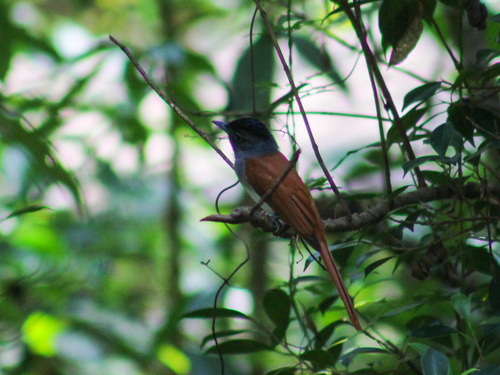 blyth's paradise-flycatcher
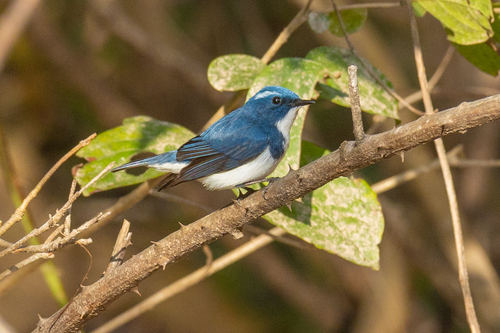 ultramarine flycatcher
Em resumo
A marca de campo mais confiável para separar o blyth's paradise-flycatcher do ultramarine flycatcher é a estrutura geral e a cauda: o blyth's paradise-flycatcher é um pássaro esbelto e de cauda longa com uma pequena crista e, nos machos adultos, espetaculares streamers de cauda, enquanto o ultramarine flycatcher é um flycatcher compacto, de cauda curta e robusto, com um ousado supercílio branco (em populações ocidentais) e sem crista ou streamers de cauda. Os blyth's paradise-flycatchers imaturos e fêmeas podem ser confundidos com outros flycatchers, mas nunca mostram o padrão azul e branco profundo ou a sobrancelha branca nítida do macho ultramarine flycatcher. O habitat e o comportamento também ajudam: o blyth's prefere florestas e bordas de planícies, enquanto o ultramarine é um reprodutor montano, muitas vezes em florestas mistas abertas. Se você ver um pássaro com uma cauda longa e semelhante a um streamer e um anel ocular azul, é um blyth's; um pássaro pequeno, azul e branco com uma sobrancelha branca e cauda curta é um ultramarine.
Dicas de identificação
- Comprimento e forma da cauda: O macho adulto blyth's paradise-flycatcher tem extremamente longas penas centrais da cauda semelhantes a streamers—quase duas vezes o comprimento do corpo—nunca igualadas pelo ultramarine flycatcher. Fêmeas e imaturos de blyth's ainda têm uma cauda mais longa e mais graduada do que a cauda curta e quadrada do ultramarine.
- Crista e forma da cabeça: O blyth's tem uma pequena crista triangular (curta e arredondada), visível na maioria das posturas. O ultramarine flycatcher não tem crista e tem uma cabeça lisa e arredondada.
- Anel ocular: O blyth's paradise-flycatcher (ambos os sexos) mostra um distinto anel ocular azul, mais brilhante nos machos adultos, mais apagado nas fêmeas. O ultramarine flycatcher não tem anel ocular azul.
- Supercílio (sobrancelha branca): O ultramarine flycatcher (subespécie ocidental, mais comum nos Himalaias ocidentais) mostra um ousado supercílio branco acima do olho, que nunca está presente no blyth's. Populações orientais de ultramarine podem não ter isso, mas ainda nunca mostram um anel ocular azul ou crista.
- Cor da plumagem: Os machos de blyth's vêm em morfos ruivos ou brancos, mas ambos têm uma cabeça escura e anel ocular azul. Morfos ruivos têm um subcauda ruivo pálido e uma transição gradual para cinza nas partes inferiores. Os machos do ultramarine flycatcher são azul profundo acima, branco abaixo, com um contraste acentuado entre as cores.
- Branco na cauda: O ultramarine flycatcher (subespécie ocidental) mostra branco na base das penas externas da cauda, visível em voo ou quando a cauda está aberta. O blyth's paradise-flycatcher não tem isso, e mesmo os morfos brancos têm eixos escuros e não têm manchas brancas na cauda.
- Bico e estrutura: O blyth's tem um bico esbelto e levemente curvado, típico dos paradise-flycatchers; o ultramarine tem um bico mais curto e grosso, de acordo com sua construção robusta.
- Tamanho: O blyth's é maior e mais esbelto, enquanto o ultramarine é pequeno e compacto (cerca de 8g, menor que um pardal).
- Comportamento: O ultramarine frequentemente levanta a cauda e despenteia as penas da cabeça, especialmente quando agitado ou perto do ninho; o blyth's é mais propenso a sair em busca de insetos e exibir sua cauda.
- Habitat: O blyth's é encontrado em florestas de planície/encosta, jardins e plantações; o ultramarine é um reprodutor montano nos Himalaias, hibernando no centro/leste da Índia. Se visto acima de 2000m na época de reprodução, provavelmente é um ultramarine; abaixo de 1000m, provavelmente é um blyth's.
- Voz: O blyth's emite uma canção de 'wiwiwiwiwiwiwi' e chamadas nasais de 'ji-jeh'; o ultramarine emite uma nota de 'trrr', especialmente perto do ninho.
- Armadilhas de sexo e idade: Fêmeas e imaturos de blyth's podem ser confundidos com outros flycatchers, mas nunca mostram o padrão azul e branco ou a sobrancelha branca do ultramarine. A fêmea do ultramarine pode não ter um supercílio forte, mas é sempre compacta, de cauda curta e não tem anel ocular azul.
- Morfos brancos de blyth's: Mesmo o blyth's paradise-flycatcher mais pálido mostra asas escuras e eixos centrais da cauda, e nunca o contraste azul e branco ou a sobrancelha branca do ultramarine.
- Bandos mistos: Ambos podem se juntar a bandos mistos, mas o contexto (montano vs planície, comprimento da cauda e padrão da cabeça) permanece confiável.
- Quando em dúvida: Foque no comprimento/forma da cauda, presença ou ausência de crista e anel ocular, e contraste geral de cores (azul e branco vs ruivo/branco com cabeça escura). Estes são consistentes em todas as idades e sexos.
Tamanho
O ultramarine flycatcher é notavelmente menor e mais robusto, pesando cerca de 8 gramas e sendo menor que um pardal. O blyth's paradise-flycatcher é maior e mais esbelto, com uma cauda muito mais longa—especialmente nos machos adultos, onde os streamers centrais da cauda podem ser quase duas vezes o comprimento do corpo. Mesmo as fêmeas e imaturos de blyth's têm caudas mais longas e são mais esguios do que o compacto ultramarine flycatcher.
Plumagem
-
Juvenil/Imaturo/Não-reprodutor: Não há notas detalhadas sobre padrões de asas superiores juvenis para nenhuma das espécies, portanto, a separação depende da coloração e estrutura geral. Os blyth's paradise-flycatchers imaturos se assemelham às fêmeas, com partes superiores ruivas, cabeça escura e partes inferiores pálidas, sem qualquer contraste azul e branco ou supercílio. Os ultramarine flycatchers imaturos não são descritos em detalhes, mas não desenvolvem a cauda longa ou crista do blyth's e não têm o anel ocular azul.
-
Machos adultos: Os machos do blyth's paradise-flycatcher são morfos ruivos ou brancos, sempre com uma cabeça escura, anel ocular azul e (na plumagem de reprodução) longos streamers centrais da cauda. Os machos do ultramarine flycatcher são azul profundo acima com um proeminente supercílio branco (em pássaros ocidentais), garganta branca até a barriga, e cauda curta com bases brancas nas penas externas (subespécie ocidental). Sem crista ou streamers de cauda.
-
Fêmeas: As fêmeas de blyth's são ruivas acima com uma cabeça escura e anel ocular azul, sem a sobrancelha branca ou contraste azul e branco. As fêmeas do ultramarine flycatcher são menos vividamente coloridas, mas ainda mostram uma forma compacta e de cauda curta e podem ter um supercílio reduzido ou ausente, dependendo da subespécie, mas nunca mostram a cauda longa ou anel ocular azul do blyth's.
-
Principais armadilhas: Os morfos brancos de blyth's podem parecer pálidos, mas sempre têm asas escuras e eixos centrais da cauda, e nunca o padrão azul e branco do ultramarine. O ultramarine nunca mostra uma crista, anel ocular azul ou cauda alongada.
Comportamento
O blyth's paradise-flycatcher é frequentemente visto saindo em busca de insetos de poleiros na parte média a superior do dossel, às vezes em jardins ou plantações, e pode ser bastante conspícuo quando os machos exibem seus longos streamers de cauda. Eles podem se juntar a bandos mistos, mas frequentemente são vistos sozinhos ou em pares. O ultramarine flycatcher é mais arbóreo, mantendo-se em árvores baixas e arbustos, forrageando entre a folhagem, e frequentemente levanta a cauda e despenteia as penas da cabeça, especialmente perto do ninho. Geralmente é solitário, mas pode se juntar a grupos de caça mistos no inverno. O constante movimento da cauda e o despenteio são mais típicos do ultramarine.
Habitat
O blyth's paradise-flycatcher prefere florestas de folhas largas perenes, bordas de floresta, crescimento secundário, jardins e plantações, principalmente em regiões de planície e encosta. É raramente encontrado acima das encostas. O ultramarine flycatcher se reproduz em florestas mistas abertas (carvalho, rododendro, pinheiro, abeto) nos Himalaias ocidentais e orientais, geralmente entre 1800–3200 m, e hiberna no centro e leste da Índia, às vezes em pomares ou jardins de estações de montanha. A sobreposição de habitat é mínima, exceto talvez no inverno, mas o blyth's é uma espécie de planície/encosta e o ultramarine é um reprodutor montano.
Voz
O blyth's paradise-flycatcher emite uma série de notas 'wiwiwiwiwiwiwi' como sua canção, e uma chamada nasal 'ji-jeh' ou 'ji-jeh-jeh'. As vocalizações do ultramarine flycatcher não são descritas em detalhes nas notas, mas ele emite uma nota 'trrr', muitas vezes quando agitado ou perto do ninho. No campo, a canção do blyth's é mais musical e ressoante, enquanto a chamada do ultramarine é mais curta e menos musical.
blyth's paradise-flycatcher · ultramarine flycatcher · Minhas aves difíceis