

Blyth's Paradise-Flycatcher vs Ultramarine Flycatcher
Terpsiphone affinis contro Ficedula superciliaris
Fai un quiz con Blyth's Paradise-Flycatcher e Ultramarine Flycatcher
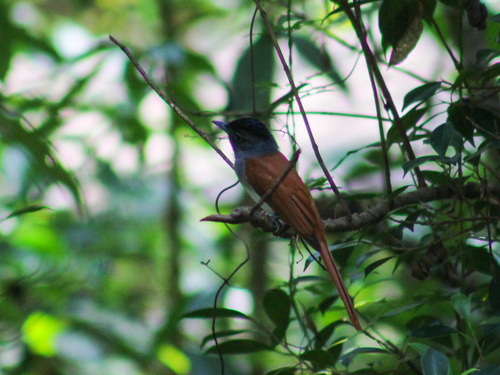 Blyth's Paradise-Flycatcher
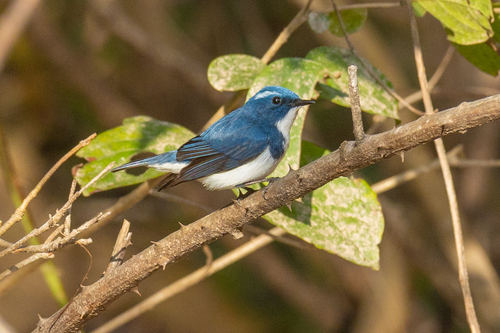 Ultramarine Flycatcher
In breve
Il segno distintivo più affidabile per separare il Blyth's Paradise-Flycatcher dall'Ultramarine Flycatcher è la struttura generale e la coda: il Blyth's Paradise-Flycatcher è un uccello snello e dalla coda lunga con una piccola cresta e, nei maschi adulti, spettacolari streamers della coda, mentre l'Ultramarine Flycatcher è un uccello compatto, dalla coda corta e tozzo, con un audace supercilium bianco (nelle popolazioni occidentali) e senza cresta o streamers della coda. I Blyth's Paradise-Flycatchers immaturi e femminili possono essere confusi con altri flycatchers, ma non mostrano mai il profondo motivo blu e bianco o la chiara fronte bianca del maschio Ultramarine Flycatcher. L'habitat e il comportamento aiutano anche: il Blyth's preferisce le foreste e i margini di pianura, mentre l'Ultramarine è un riproduttore montano, spesso in foreste miste aperte. Se vedi un uccello con una lunga coda simile a uno streamer e un anello oculare blu, è un Blyth's; un piccolo uccello blu e bianco con una fronte bianca e una coda corta è un Ultramarine.
Consigli di identificazione
- Lunghezza e forma della coda: Il maschio adulto del Blyth's Paradise-Flycatcher ha piume centrali della coda estremamente lunghe e simili a streamer—quasi il doppio della lunghezza del corpo—mai eguagliato dall'Ultramarine Flycatcher. Le femmine e gli immaturi del Blyth's hanno comunque una coda più lunga e più graduata rispetto alla coda corta e quadrata dell'Ultramarine.
- Cresta e forma della testa: Il Blyth's ha una piccola cresta triangolare (corta e arrotondata), visibile nella maggior parte delle posture. L'Ultramarine Flycatcher manca di qualsiasi cresta e ha una testa liscia e arrotondata.
- Anello oculare: Il Blyth's Paradise-Flycatcher (entrambi i sessi) mostra un distintivo anello oculare blu, più brillante nei maschi adulti, più opaco nelle femmine. L'Ultramarine Flycatcher non ha un anello oculare blu.
- Supercilium (fronte bianca): L'Ultramarine Flycatcher (sottospecie occidentale, più comune nell'Himalaya occidentale) mostra un audace supercilium bianco sopra l'occhio, che non è mai presente nel Blyth's. Le popolazioni orientali di Ultramarine possono mancare di questo, ma non mostrano mai un anello oculare blu o cresta.
- Colore del piumaggio: I maschi del Blyth's si presentano in forme rufous o bianche, ma entrambi hanno una testa scura e un anello oculare blu. Le forme rufous hanno un sottocoda rufous pallido e una transizione graduale al grigio nelle parti inferiori. I maschi dell'Ultramarine Flycatcher sono blu scuro sopra, bianchi sotto, con un netto contrasto tra i colori.
- Bianco nella coda: L'Ultramarine Flycatcher (sottospecie occidentale) mostra bianco alla base delle piume esterne della coda, visibile in volo o quando la coda è aperta. Il Blyth's Paradise-Flycatcher non ha questo, e anche le forme bianche hanno fusti scuri e nessuna macchia bianca sulla coda.
- Becco e struttura: Il Blyth's ha un becco snello e leggermente ricurvo, tipico dei paradise-flycatchers; l'Ultramarine ha un becco più corto e tozzo in linea con la sua corporatura robusta.
- Dimensioni: Il Blyth's è più grande e più snello, mentre l'Ultramarine è piccolo e compatto (circa 8g, più piccolo di un passero).
- Comportamento: L'Ultramarine spesso solleva la coda e gonfia le piume della testa, specialmente quando è agitato o vicino al nido; il Blyth's è più propenso a lanciarsi per gli insetti e a mostrare la sua coda.
- Habitat: Il Blyth's si trova in foreste di pianura/margini, giardini e piantagioni; l'Ultramarine è un riproduttore montano nell'Himalaya, invernando nell'India centrale/orientale. Se visto sopra i 2000m in stagione di riproduzione, probabilmente è un Ultramarine; sotto i 1000m, probabilmente è un Blyth's.
- Voce: Il Blyth's emette un canto squillante 'wiwiwiwiwiwiwi' e richiami nasali 'ji-jeh'; l'Ultramarine emette una nota 'trrr', specialmente vicino al nido.
- Trappole di sesso e età: Le femmine e gli immaturi del Blyth's possono essere confusi con altri flycatchers ma non mostrano mai il motivo blu e bianco o la fronte bianca dell'Ultramarine. La femmina dell'Ultramarine può mancare di un forte supercilium ma è sempre compatta, dalla coda corta e priva di anello oculare blu.
- Forma bianca del Blyth's: Anche il Blyth's Paradise-Flycatcher più pallido mostra ali scure e fusti centrali della coda, e non mostra mai il contrasto blu e bianco o la fronte bianca dell'Ultramarine.
- Stormi misti: Entrambi possono unirsi a stormi misti, ma il contesto (montano vs pianura, lunghezza della coda e motivo della testa) rimane affidabile.
- Quando in dubbio: Concentrati sulla lunghezza/forma della coda, presenza o assenza di cresta e anello oculare, e contrasto di colore generale (blu e bianco vs rufous/bianco con testa scura). Questi sono coerenti tra età e sessi.
Taglia
L'Ultramarine Flycatcher è notevolmente più piccolo e tozzo, pesando circa 8 grammi e risultando più piccolo di un passero. Il Blyth's Paradise-Flycatcher è più grande e più snello, con una coda molto più lunga—specialmente nei maschi adulti, dove gli streamers centrali della coda possono essere quasi il doppio della lunghezza del corpo. Anche le femmine e gli immaturi del Blyth's hanno una coda più lunga e sono più snelli rispetto all'Ultramarine Flycatcher compatto.
Piumaggio
-
Giovanile/Immaturi/Non riproduttivi: Non ci sono note dettagliate sui motivi delle ali superiori giovanili per nessuna delle due specie, quindi la separazione si basa sulla colorazione e sulla struttura generale. I Blyth's Paradise-Flycatchers immaturi assomigliano alle femmine, con parti superiori rufous, testa scura e parti inferiori chiare, senza alcun contrasto blu e bianco o supercilium. Gli Ultramarine Flycatchers immaturi non sono descritti in dettaglio, ma non sviluppano la lunga coda o la cresta del Blyth's e mancano dell'anello oculare blu.
-
Maschi adulti: I maschi del Blyth's Paradise-Flycatcher sono o rufous o forme bianche, sempre con una testa scura, anello oculare blu e (in piumaggio di riproduzione) lunghi streamers centrali della coda. I maschi dell'Ultramarine Flycatcher sono blu scuro sopra con un prominente supercilium bianco (negli uccelli occidentali), gola bianca fino alla pancia, e coda corta con basi bianche per le piume esterne (sottospecie occidentale). Nessuna cresta o streamers della coda.
-
Femmine: Le femmine del Blyth's sono rufous sopra con una testa scura e un anello oculare blu, senza la fronte bianca o il contrasto blu e bianco. Le femmine degli Ultramarine Flycatchers sono meno vivacemente colorate ma mostrano comunque una forma compatta e dalla coda corta e possono avere un supercilium ridotto o assente a seconda della sottospecie, ma non mostrano mai la lunga coda o l'anello oculare blu del Blyth's.
-
Trappole chiave: Le forme bianche del Blyth's possono apparire pallide ma hanno sempre ali scure e fusti centrali della coda, e non mostrano mai il motivo blu e bianco dell'Ultramarine. L'Ultramarine non mostra mai una cresta, anello oculare blu o coda allungata.
Comportamento
Il Blyth's Paradise-Flycatcher è spesso visto lanciarsi per gli insetti da posatoi nella parte centrale e superiore della chioma, a volte in giardini o piantagioni, e può essere piuttosto evidente quando i maschi mostrano i loro lunghi streamers della coda. Possono unirsi a stormi misti ma sono spesso visti da soli o in coppie. L'Ultramarine Flycatcher è più arboricolo, mantenendosi su alberi e cespugli bassi, foraggiando tra il fogliame, e spesso solleva la coda e gonfia le piume della testa, specialmente vicino al nido. Di solito è solitario ma può unirsi a gruppi di caccia misti in inverno. Il costante movimento della coda e il gonfiore sono più tipici dell'Ultramarine.
Habitat
Il Blyth's Paradise-Flycatcher preferisce foreste sempreverdi a foglia larga, margini forestali, crescita secondaria, giardini e piantagioni, principalmente in regioni di pianura e di piede. È raramente trovato sopra i piedi delle montagne. L'Ultramarine Flycatcher nidifica in foreste miste aperte (quercia, rododendro, pino, abete) negli Himalaya occidentali e orientali, solitamente tra 1800–3200 m, e inverna nell'India centrale e orientale, a volte in frutteti o giardini di stazioni collinari. L'overlap dell'habitat è minimo, tranne forse in inverno, ma il Blyth's è una specie di pianura/piede e l'Ultramarine è un riproduttore montano.
Voce
Il Blyth's Paradise-Flycatcher emette una serie squillante di note 'wiwiwiwiwiwiwi' come canto, e un richiamo nasale 'ji-jeh' o 'ji-jeh-jeh'. Le vocalizzazioni dell'Ultramarine Flycatcher non sono descritte in dettaglio nelle note, ma emette una nota 'trrr', spesso quando è agitato o vicino al nido. Sul campo, il canto del Blyth's è più musicale e squillante, mentre il richiamo dell'Ultramarine è più corto e meno musicale.
Blyth's Paradise-Flycatcher · Ultramarine Flycatcher · I miei uccelli difficili