

blyth's paradise-flycatcher vs indian paradise-flycatcher
Terpsiphone affinis versus Terpsiphone paradisi
Jogue um quiz com blyth's paradise-flycatcher e indian paradise-flycatcher
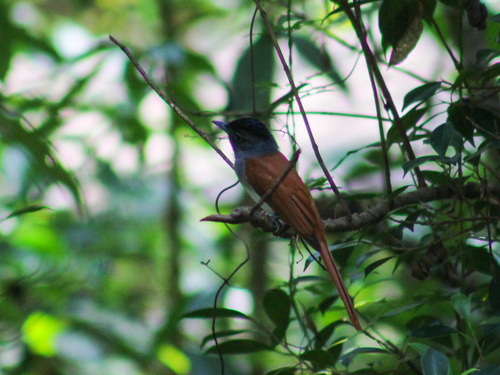 blyth's paradise-flycatcher
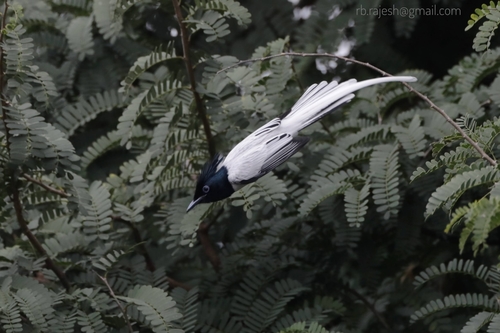 indian paradise-flycatcher
Em resumo
A marca de campo mais confiável entre blyth's paradise-flycatcher e indian paradise-flycatcher é a forma e o tamanho da crista: a de blyth's é curta e arredondada, enquanto a de indian é mais longa e pontuda. Para as morfas ruivas, blyth's apresenta uma cauda inferior ruiva pálida e um desvanecimento gradual para o cinza nas partes inferiores, enquanto indian tem uma cauda inferior branca e um contraste mais acentuado entre a garganta e a barriga. Ambas as espécies têm machos dimórficos (ruivos ou brancos), longas penas de cauda em machos em reprodução e anéis oculares azuis, mas diferenças sutis na forma da cabeça, padrão da cauda e contraste das partes inferiores são fundamentais. Fêmeas e imaturos são especialmente complicados, mas a atenção cuidadosa à forma da crista e à cor da cauda inferior pode ajudar. As vistas de voo de juvenis não são descritas em detalhes para nenhuma das espécies, então aves empoleiradas são mais fáceis de separar.
Dicas de identificação
- A forma da crista é fundamental: A de blyth's é curta e arredondada; a de indian é mais longa e pontuda. Isso é visível em aves empoleiradas de todas as idades e sexos.
- Cor da cauda inferior em morfas ruivas: A de blyth's apresenta uma cauda inferior ruiva pálida, enquanto a de indian é branca. Isso é especialmente útil para machos e fêmeas adultas.
- Contraste das partes inferiores: As morfas ruivas de blyth's têm uma transição gradual para o cinza nas partes inferiores, sem uma linha divisória nítida; as de indian têm um contraste mais acentuado entre a garganta acinzentada e o restante das partes inferiores.
- Anel ocular e cor da cabeça em fêmeas/imaturos: As fêmeas de blyth's e os jovens machos têm um anel ocular azul menos vibrante e uma cabeça ligeiramente mais pálida em comparação com as de indian, que têm um anel ocular azul mais distinto e uma cabeça mais escura.
- Comprimento das penas da cauda: Os machos adultos de ambas as espécies têm longas penas centrais da cauda, mas as de indian podem chegar até 30 cm, às vezes mais longas que as de blyth's. No entanto, isso é variável e nem sempre confiável.
- Riscas no eixo em morfas brancas: As morfas brancas de blyth's mostram riscas escuras nos eixos das asas e penas centrais da cauda; as morfas brancas de indian têm riscas pretas no eixo e às vezes bordas pretas nas asas e na cauda.
- Partes inferiores das fêmeas: As fêmeas de indian são ruivas acima com uma garganta e partes inferiores acinzentadas e uma cauda inferior branca; as fêmeas de blyth's são semelhantes, mas com uma cabeça mais pálida e cauda inferior ruiva.
- Jovens machos: Os jovens machos de indian se parecem com fêmeas, mas têm uma garganta preta e anel ocular azul; os jovens machos de blyth's se assemelham a fêmeas com uma cabeça mais pálida e anel ocular menos vibrante.
- Vistas de voo: Nenhum padrão distintivo de asa superior juvenil ou imaturo é descrito para nenhuma das espécies, então a separação em voo é difícil; concentre-se em aves empoleiradas para melhores resultados.
- Contexto de habitat: Blyth's é mais provável em florestas de folhas largas perenes e plantações, enquanto indian é amplamente distribuído no subcontinente indiano em vários habitats arborizados.
- Voz: Blyth's emite uma série de notas "wiwiwiwiwiwiwi" e chamadas nasais "ji-jeh"; a voz de indian não é descrita aqui, então não confie nisso para separação.
- Aves intermediárias/intergradadas: Indian paradise-flycatcher pode mostrar plumagens intermediárias entre ruivas e brancas, especialmente na região indiana; essas podem ser confusas e podem não ser separadas com segurança de blyth's sem atenção cuidadosa à crista e à cauda inferior.
- Variação sazonal: Ambas as espécies mostram mudanças sazonais semelhantes, com machos adquirindo longas penas de cauda em condição de reprodução. Jovens de ambas as espécies são de cauda curta e ruivos.
- Sobreposição geográfica: Onde ambas as espécies ocorrem, use uma combinação da forma da crista e da cor da cauda inferior para melhor separação, especialmente em fêmeas e machos não reprodutores.
- Quando em dúvida: Se a crista não for visível e a cor da cauda inferior for ambígua, a identificação pode não ser possível para a espécie em campo, especialmente para imaturos e fêmeas.
Tamanho
Ambas as espécies são semelhantes em tamanho e proporções gerais, sendo paradise-flycatchers de tamanho médio. Os adultos de indian paradise-flycatcher são listados como tendo 19–22 cm de comprimento corporal, com penas de cauda em machos adultos se estendendo até 30 cm. O blyth's paradise-flycatcher não tem uma medida precisa nas notas, mas é descrito como típico do gênero. Não há uma diferença de tamanho forte a ser usada em campo.
Plumagem
- Juvenis/imaturos: Nenhuma diferença específica de padrão de asa superior ou de voo é descrita para jovens pássaros nas notas. Os jovens machos de ambas as espécies se assemelham a fêmeas: ruivos acima, de cauda curta, com os jovens machos de indian mostrando uma garganta preta e anel ocular azul, enquanto as fêmeas e jovens machos de blyth's têm uma cabeça mais pálida e anel ocular menos vibrante.
- Machos adultos: Ambos podem ser morfas ruivas ou brancas. As morfas ruivas de blyth's têm uma cauda inferior ruiva pálida e um desvanecimento gradual para o cinza nas partes inferiores, sem contraste acentuado. As morfas ruivas de indian têm uma cauda inferior branca e um contraste mais abrupto entre a garganta acinzentada e as partes inferiores. As morfas brancas de blyth's mostram riscas escuras nos eixos das asas e penas centrais da cauda; as morfas brancas de indian têm riscas pretas no eixo e às vezes bordas pretas nas asas e na cauda.
- Fêmeas: Ambas são ruivas acima com cabeças escuras, mas a de blyth's tem uma cabeça mais pálida e anel ocular azul menos vibrante. As fêmeas de indian têm uma garganta e partes inferiores acinzentadas, e uma cauda inferior branca.
- Crista: A de blyth's é curta e arredondada; a de indian é mais longa e pontuda.
Comportamento
Ambas as espécies são flycatchers ativas, caçando insetos no dossel médio a superior. O indian paradise-flycatcher é conhecido por capturar presas no ar, às vezes batendo-as em uma pedra antes de comer. Nenhuma diferença comportamental única é descrita que seja diagnóstica em campo.
Habitat
O blyth's paradise-flycatcher é encontrado em florestas de folhas largas perenes, bordas de florestas, crescimento secundário, jardins e plantações, principalmente em planícies e encostas. O indian paradise-flycatcher é nativo do subcontinente indiano e regiões adjacentes, ocorrendo em uma ampla gama de habitats arborizados, frequentemente abaixo de um dossel denso. Há alguma sobreposição de habitat, mas blyth's está mais associado a florestas perenes e plantações, enquanto indian é mais amplamente distribuído no subcontinente.
Voz
O blyth's paradise-flycatcher tem uma série de notas "wiwiwiwiwiwiwi" e uma chamada nasal "ji-jeh". Nenhuma vocalização específica é descrita para o indian paradise-flycatcher nas notas, então a voz não é um separador confiável com base nas informações atuais.
blyth's paradise-flycatcher · indian paradise-flycatcher · Minhas aves difíceis