

Blyth's Paradise-Flycatcher vs Indian Paradise-Flycatcher
Terpsiphone affinis contro Terpsiphone paradisi
Fai un quiz con Blyth's Paradise-Flycatcher e Indian Paradise-Flycatcher
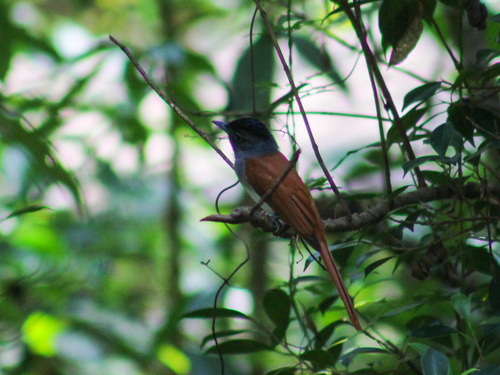 Blyth's Paradise-Flycatcher
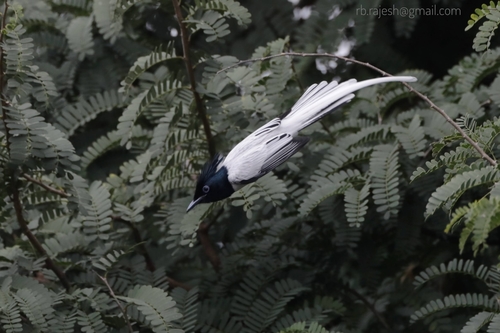 Indian Paradise-Flycatcher
In breve
Il segno di campo più affidabile tra Blyth's Paradise-Flycatcher e Indian Paradise-Flycatcher è la forma e la dimensione della cresta: quella di Blyth è corta e arrotondata, mentre quella di Indian è più lunga e appuntita. Per le forme rufous, Blyth mostra un sottocoda rufous pallido e una graduale sfumatura verso il grigio nelle parti inferiori, mentre Indian ha un sottocoda bianco e un contrasto più netto tra gola e pancia. Entrambe le specie hanno maschi dimorfici (rufous o bianchi), lunghi streamer nella coda dei maschi in riproduzione e anelli oculari blu, ma differenze sottili nella forma della testa, nel motivo della coda e nel contrasto delle parti inferiori sono fondamentali. Le femmine e gli immaturi sono particolarmente difficili, ma prestare attenzione alla forma della cresta e al colore del sottocoda può aiutare. Le viste in volo dei giovani non sono descritte in dettaglio per nessuna delle due specie, quindi gli uccelli in posa sono più facili da separare.
Consigli di identificazione
- La forma della cresta è fondamentale: Blyth ha una cresta corta e arrotondata; quella di Indian è più lunga e appuntita. Questo è visibile sugli uccelli in posa di tutte le età e sessi.
- Colore del sottocoda nelle forme rufous: Blyth mostra un sottocoda rufous pallido, mentre quello di Indian è bianco. Questo è particolarmente utile per i maschi e le femmine adulte.
- Contrasto delle parti inferiori: Le forme rufous di Blyth hanno una transizione graduale verso il grigio nelle parti inferiori, senza una linea di divisione netta; quelle di Indian hanno un contrasto più netto tra la gola grigia e il resto delle parti inferiori.
- Anello oculare e colore della testa nelle femmine/immaturi: Le femmine di Blyth e i giovani maschi hanno un anello oculare blu meno vivace e una testa leggermente più chiara rispetto a quelle di Indian, che hanno un anello oculare blu più distinto e una testa più scura.
- Lunghezza degli streamer della coda: I maschi adulti di entrambe le specie hanno lunghe penne centrali della coda, ma quelle di Indian possono raggiungere fino a 30 cm, a volte più lunghe di quelle di Blyth. Tuttavia, questo è variabile e non sempre affidabile.
- Striature del fusto nelle forme bianche: Le forme bianche di Blyth mostrano striature scure sui fusti delle ali e delle penne centrali della coda; le forme bianche di Indian hanno striature nere sui fusti e talvolta bordi neri sulle ali e sulla coda.
- Parti inferiori delle femmine: Le femmine di Indian sono rufous sopra con una gola e parti inferiori grigie e un sottocoda bianco; le femmine di Blyth sono simili ma con una testa più chiara e un sottocoda rufous.
- Giovani maschi: I giovani maschi di Indian assomigliano alle femmine ma hanno una gola nera e un anello oculare blu; i giovani maschi di Blyth somigliano alle femmine con una testa più chiara e un anello oculare meno vivace.
- Viste in volo: Non sono descritti modelli distintivi delle ali superiori per i giovani o gli immaturi di nessuna delle due specie, quindi la separazione in volo è difficile; concentrati sugli uccelli in posa per i migliori risultati.
- Contesto dell'habitat: Blyth è più probabile trovarlo in foreste a foglia larga sempreverdi e piantagioni, mentre Indian è diffuso nel subcontinente indiano in vari habitat boschivi.
- Voce: Blyth emette una serie di note "wiwiwiwiwiwiwi" e richiami nasali "ji-jeh"; la voce di Indian non è descritta qui, quindi non fare affidamento su questo per la separazione.
- Uccelli intermedi/intergradati: Indian Paradise-Flycatcher può mostrare piumaggi intermedi tra rufous e bianco, specialmente nella regione indiana; questi possono essere confusi e potrebbero non essere separati in modo sicuro da Blyth senza prestare attenzione alla cresta e al sottocoda.
- Variazione stagionale: Entrambe le specie mostrano cambiamenti stagionali simili, con i maschi che acquisiscono lunghi streamer nella coda in condizioni di riproduzione. I giovani di entrambe le specie sono a coda corta e rufous.
- Sovrapposizione geografica: Dove si trovano entrambe le specie, utilizza una combinazione di forma della cresta e colore del sottocoda per la migliore separazione, specialmente nelle femmine e nei maschi non in riproduzione.
- Quando hai dubbi: Se la cresta non è visibile e il colore del sottocoda è ambiguo, l'identificazione potrebbe non essere possibile a livello di specie sul campo, specialmente per immaturi e femmine.
Taglia
Entrambe le specie sono simili in dimensioni e proporzioni generali, essendo moschettieri del paradiso di dimensioni medie. Gli adulti di Indian Paradise-Flycatcher sono elencati come 19–22 cm di lunghezza corporea, con streamer della coda nei maschi adulti che si estendono fino a 30 cm. Non viene fornita una misura precisa per Blyth's Paradise-Flycatcher nelle note, ma è descritto come tipico per il genere. Non c'è una forte differenza di dimensioni da utilizzare sul campo.
Piumaggio
- Giovani/immaturi: Non sono descritte differenze specifiche nei modelli delle ali superiori o di volo per i giovani uccelli nelle note. I giovani maschi di entrambe le specie assomigliano alle femmine: rufous sopra, a coda corta, con i giovani maschi di Indian che mostrano una gola nera e un anello oculare blu, mentre le femmine e i giovani maschi di Blyth hanno una testa più chiara e un anello oculare meno vivace.
- Maschi adulti: Entrambi possono essere forme rufous o bianche. Le forme rufous di Blyth hanno un sottocoda rufous pallido e una graduale sfumatura verso il grigio nelle parti inferiori, senza contrasto netto. Le forme rufous di Indian hanno un sottocoda bianco e un contrasto più netto tra la gola grigia e le parti inferiori. Le forme bianche di Blyth mostrano striature scure sui fusti delle ali e delle penne centrali della coda; le forme bianche di Indian hanno striature nere sui fusti e talvolta bordi neri sulle ali e sulla coda.
- Femmine: Entrambe sono rufous sopra con teste scure, ma Blyth ha una testa più chiara e un anello oculare blu meno vivace. Le femmine di Indian hanno una gola e parti inferiori grigie e un sottocoda bianco.
- Cresta: Blyth ha una cresta corta e arrotondata; quella di Indian è più lunga e appuntita.
Comportamento
Entrambe le specie sono moschettieri attivi, che catturano insetti nel canopeo medio e superiore. Indian Paradise-Flycatcher è noto per catturare prede in volo, a volte battendole su una roccia prima di mangiarle. Non sono descritte differenze comportamentali uniche che siano diagnostiche sul campo.
Habitat
Blyth's Paradise-Flycatcher si trova in foreste a foglia larga sempreverdi, bordi forestali, crescita secondaria, giardini e piantagioni, principalmente nelle pianure e nelle colline. Indian Paradise-Flycatcher è nativo del subcontinente indiano e delle regioni adiacenti, presente in una vasta gamma di habitat boschivi, spesso sotto una densa copertura. C'è una certa sovrapposizione negli habitat, ma Blyth è più associato a foreste sempreverdi e piantagioni, mentre Indian è più diffuso nel subcontinente.
Voce
Blyth's Paradise-Flycatcher ha una serie di note "wiwiwiwiwiwiwi" e un richiamo nasale "ji-jeh". Non sono descritte vocalizzazioni specifiche per Indian Paradise-Flycatcher nelle note, quindi la voce non è un separatore affidabile basato sulle informazioni attuali.
Blyth's Paradise-Flycatcher · Indian Paradise-Flycatcher · I miei uccelli difficili