

blue-winged parrot vs elegant parrot
Neophema chrysostoma versus Neophema elegans
Jogue um quiz com blue-winged parrot e elegant parrot
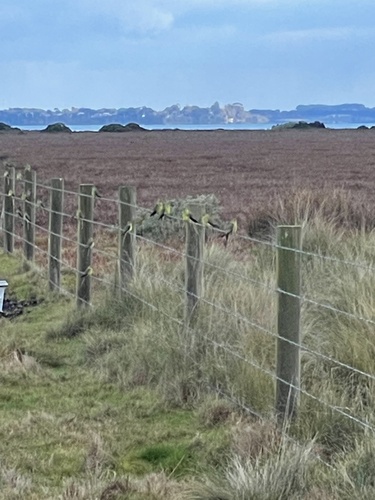 blue-winged parrot
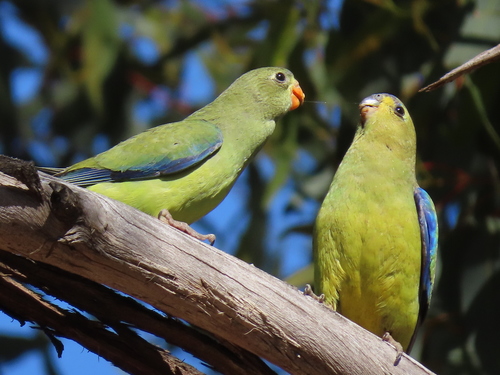 elegant parrot
Em resumo
A marca de campo mais confiável entre blue-winged parrot e elegant parrot é a quantidade e intensidade de azul nas asas e a estrutura da faixa frontal azul, especialmente em machos adultos. Machos de blue-winged parrot mostram uma faixa azul em dois tons acima do bico e muito mais azul profundo nas coberturas das asas e na parte inferior das asas, enquanto machos de elegant parrot têm uma única faixa frontal azul e asas principalmente oliva com apenas as penas de voo externas em azul escuro. Fêmeas e juvenis de ambas as espécies são mais apagados, mas blue-winged parrot ainda mostra mais azul na asa, e elegant parrot tem uma barriga mais amarelada e menos azul no geral. Juvenis de ambas as espécies não têm a faixa frontal, então a cor da asa é crítica. Ambas são semelhantes em tamanho e forma, então concentre-se nos detalhes da plumagem e, se possível, no contexto de distribuição e habitat.
Dicas de identificação
- Quantidade de azul na asa (todas as idades): Blue-winged parrot mostra muito mais azul nas coberturas das asas e nas coberturas da parte inferior das asas do que elegant parrot, que é principalmente de asas oliva com apenas as penas de voo externas em azul escuro. Esta é a melhor marca para juvenis e fêmeas.
- Faixa frontal (machos adultos): Machos de blue-winged parrot têm uma faixa frontal azul em dois tons (ultramarinho acima, turquesa mais clara abaixo), enquanto machos de elegant parrot têm uma única faixa azul escura mais estreita com azul mais claro abaixo. A faixa do blue-winged é mais larga e mais marcante.
- Faixa frontal (fêmeas): As fêmeas de ambas as espécies têm uma faixa frontal muito reduzida ou mais apagada, mas fêmeas de blue-winged parrot podem mostrar uma faixa pequena e fraca; a faixa das fêmeas de elegant parrot é ainda mais estreita e menos óbvia.
- Separação de juvenis: Juvenis de ambas as espécies não têm a faixa frontal, então confie na quantidade de azul na asa—blue-winged tem azul ardósia nas asas, elegant é principalmente oliva com apenas as penas de voo externas em azul escuro.
- Cor das partes inferiores: Machos de blue-winged parrot têm um peito verde pálido e barriga amarela; elegant parrot tem uma barriga e ventrículo amarelos, mas o resto das partes inferiores é menos distintamente colorido.
- Cor da cauda: Blue-winged parrot tem uma cauda azul-acinzentada; a cauda de elegant parrot é com bordas amarelas com tons de oliva e azul. Isso pode ser sutil, mas pode ajudar em boa luz.
- Cor da coroa: Blue-winged parrot tem uma coroa amarelada, que pode contrastar com o rosto e a faixa frontal; a coroa de elegant parrot não é distintamente amarelada.
- Cor do bico e das pernas: Ambas as espécies têm bicos e pernas acinzentados, então isso não é útil para separação.
- Tamanho e forma: Ambas são muito semelhantes em tamanho e estrutura; não confie no tamanho ou forma geral para separação.
- Habitat e distribuição: Blue-winged parrot é o único encontrado na Tasmânia e é parcialmente migratório; elegant parrot não é migratório e é encontrado no sudoeste da Austrália e em partes do sul da Austrália e oeste de Victoria. Se estiver na Tasmânia, é blue-winged; se estiver no extremo sudoeste de WA, é elegant.
- Contexto do bando: Ambas as espécies podem ocorrer em bandos mistos de Neophema, então verifique cada pássaro cuidadosamente.
- Visões empoleiradas vs. em voo: Em voo, procure a quantidade de azul na asa (blue-winged muito mais extensa); empoleirado, verifique a faixa frontal e as cores das partes inferiores.
- Dimorfismo sexual: Machos são mais brilhantes e mais fáceis de separar pela faixa frontal; fêmeas e juvenis requerem atenção cuidadosa à cor da asa.
- Movimento sazonal: Blue-winged parrot pode estar presente na Tasmânia apenas no verão; elegant parrot é residente em sua área.
- Erros comuns: Não confie na coloração geral verde/oliva, pois ambas são semelhantes; concentre-se no azul na asa e na estrutura da faixa frontal para a melhor separação.
Tamanho
Ambas as espécies são muito próximas em tamanho: blue-winged parrot mede 20–24 cm de comprimento e cerca de 55 g, enquanto elegant parrot mede cerca de 23 cm de comprimento. Não há diferença significativa no tamanho ou estrutura geral em campo, e ambas têm proporções semelhantes de papagaio esguio e de cauda longa. A cor do bico e das pernas também é semelhante (acinzentada).
Plumagem
-
Juvenis/imaturos: Os juvenis de ambas as espécies são de um verde oliva apagado e não têm a faixa frontal azul, mas os juvenis de blue-winged parrot têm azul ardósia nas asas, enquanto os juvenis de elegant parrot têm menos azul, com asas permanecendo principalmente oliva, exceto pelas penas de voo externas. Isso torna a quantidade de azul na asa a marca chave para os jovens pássaros.
-
Machos adultos: Machos de blue-winged parrot têm uma faixa frontal azul em dois tons (ultramarinho acima, turquesa mais clara abaixo) que não atinge os olhos, coberturas das asas em azul profundo e coberturas da parte inferior das asas, uma coroa amarelada, peito verde pálido e barriga amarela. Machos de elegant parrot têm uma única faixa frontal azul escura com azul mais claro abaixo, mas é mais estreita e menos marcante, e as asas são principalmente oliva com apenas as penas de voo externas em azul escuro; a barriga e o ventrículo são amarelos, mas o resto das partes inferiores é menos distintamente colorido do que o blue-winged.
-
Fêmeas adultas: Ambas são mais apagadas do que os machos. Fêmeas de blue-winged parrot têm menos azul nas asas e uma faixa frontal menor e menos distinta, com mais verde nas asas e uma faixa de asa. Fêmeas de elegant parrot são em geral de um oliva mais apagado e têm uma faixa frontal azul mais estreita; suas asas são principalmente oliva com pouco azul, exceto nas bordas.
-
Cauda: Blue-winged parrot tem uma cauda azul-acinzentada, enquanto a cauda de elegant parrot é com bordas amarelas com tons de oliva e azul.
Comportamento
Ambas as espécies são alimentadoras do solo, frequentemente vistas forrageando por sementes em habitats abertos. Blue-winged parrot é notado por seus hábitos terrestres, às vezes chamado de 'ground parrot de Hobart' na Tasmânia. Ambas as espécies podem ser vistas empoleiradas baixo ou se alimentando no chão, e ambas se adaptam prontamente à cativeiro. O estilo de voo e o comportamento geral não são distintamente diferentes em campo.
Habitat
Blue-winged parrot é encontrado na Tasmânia e no sudeste da Austrália continental, frequentemente em habitats abertos como campos de grama, florestas de savana, pântanos e terras agrícolas. É parcialmente migratório, com algumas populações se movendo para a Tasmânia durante o verão. Elegant parrot é encontrado em duas regiões principais: sudoeste da Austrália e sudeste da Austrália do Sul até o oeste de Victoria. Ambas as espécies utilizam habitats abertos, mas elegant parrot não é migratório e está ausente da Tasmânia. A sobreposição é possível no oeste de Victoria e no sudeste da Austrália do Sul, mas blue-winged é muito mais provável na Tasmânia e elegant no extremo sudoeste.