

Blue-winged Parrot vs Elegant Parrot
Neophema chrysostoma contro Neophema elegans
Fai un quiz con Blue-winged Parrot e Elegant Parrot
 Blue-winged Parrot
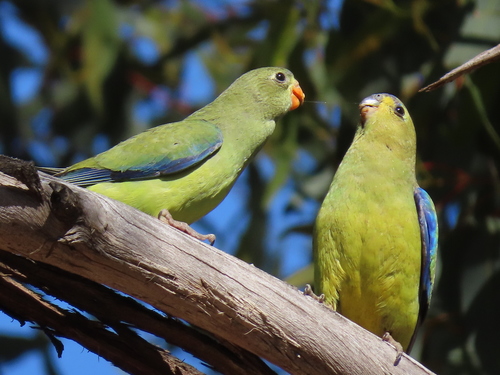 Elegant Parrot
In breve
The most reliable field mark between Blue-winged Parrot and Elegant Parrot is the amount and intensity of blue on the wings and the structure of the blue frontal band, especially in adult males. Blue-winged Parrot males show a two-toned blue band above the bill and much more extensive deep blue on the wing coverts and underwing, while Elegant Parrot males have a single blue frontal band and mostly olive wings with only the outer flight feathers dark blue. Females and juveniles of both species are duller, but Blue-winged Parrot still shows more blue in the wing, and Elegant Parrot has a yellower belly and less blue overall. Juveniles of both species lack the frontal band, so wing color is critical. Both are similar in size and shape, so focus on plumage details and, if possible, the context of range and habitat.
Consigli di identificazione
- Amount of blue on the wing (all ages): Blue-winged Parrot shows much more blue in the wing coverts and underwing coverts than Elegant Parrot, which is mostly olive-winged with only the outer flight feathers dark blue. This is the best mark for juveniles and females.
- Frontal band (adult males): Blue-winged Parrot males have a two-toned blue frontal band (ultramarine above, paler turquoise below), while Elegant Parrot males have a single, narrower dark blue band with lighter blue below. The Blue-winged's band is broader and more striking.
- Frontal band (females): Both species' females have a much reduced or duller frontal band, but Blue-winged Parrot females may show a faint, smaller band; Elegant Parrot females' band is even narrower and less obvious.
- Juvenile separation: Juveniles of both species lack the frontal band, so rely on the amount of blue in the wing—Blue-winged has slate-blue in the wings, Elegant is mostly olive with only the outer flight feathers dark blue.
- Underparts color: Blue-winged Parrot males have a pale green breast and yellow belly; Elegant Parrot has a yellow belly and vent, but the rest of the underparts are less distinctly colored.
- Tail color: Blue-winged Parrot has a blue-grey tail; Elegant Parrot's tail is yellow-edged with olive and blue shades. This can be subtle but may help in good light.
- Crown color: Blue-winged Parrot has a yellowish crown, which can contrast with the face and frontal band; Elegant Parrot's crown is not distinctly yellowish.
- Bill and leg color: Both species have greyish bills and legs, so this is not useful for separation.
- Size and shape: Both are very similar in size and structure; do not rely on overall size or shape for separation.
- Habitat and range: Blue-winged Parrot is the only one found in Tasmania and is partly migratory; Elegant Parrot is not migratory and is found in southwestern Australia and parts of South Australia and western Victoria. If in Tasmania, it is Blue-winged; if in far southwest WA, it is Elegant.
- Context of flock: Both species can occur in mixed Neophema flocks, so check each bird carefully.
- Perched vs. flight views: In flight, look for the amount of blue in the wing (Blue-winged much more extensive); perched, check for the frontal band and underpart colors.
- Sexual dimorphism: Males are brighter and easier to separate by frontal band; females and juveniles require careful attention to wing color.
- Seasonal movement: Blue-winged Parrot may be present in Tasmania only in summer; Elegant Parrot is resident in its range.
- Common pitfalls: Do not rely on overall green/olive coloration, as both are similar; focus on blue in the wing and the structure of the frontal band for the best separation.
Taglia
Both species are very close in size: Blue-winged Parrot is 20–24 cm long and about 55 g, while Elegant Parrot is about 23 cm long. There is no meaningful difference in overall size or structure in the field, and both have similar slim, long-tailed parrot proportions. Bill and leg color are also similar (greyish).
Piumaggio
-
Juveniles/immatures: Both species' juveniles are dull olive-green and lack the blue frontal band, but Blue-winged Parrot juveniles have slate-blue in the wings, while Elegant Parrot juveniles have less blue, with wings remaining mostly olive except for the outer flight feathers. This makes the amount of blue in the wing the key mark for young birds.
-
Adult males: Blue-winged Parrot males have a two-toned blue frontal band (ultramarine above, paler turquoise below) that does not reach the eyes, deep blue wing coverts and underwing coverts, a yellowish crown, pale green breast, and yellow belly. Elegant Parrot males have a single dark blue frontal band with lighter blue below, but it is narrower and less striking, and the wings are mostly olive with only the outer flight feathers dark blue; the belly and vent are yellow, but the rest of the underparts are less distinctly colored than Blue-winged.
-
Adult females: Both are duller than males. Blue-winged Parrot females have less blue on the wings and a smaller, less distinctive frontal band, with more green on the wings and a wingbar. Elegant Parrot females are overall duller olive and have a narrower blue frontal band; their wings are mostly olive with little blue except at the edges.
-
Tail: Blue-winged Parrot has a blue-grey tail, while Elegant Parrot's tail is yellow-edged with olive and blue shades.
Comportamento
Both species are ground feeders, often seen foraging for seeds in open habitats. Blue-winged Parrot is noted for its terrestrial habits, sometimes called the 'Hobart ground parrot' in Tasmania. Both species can be seen perched low or feeding on the ground, and both adapt readily to captivity. Flight style and general behavior are not distinctly different in the field.
Habitat
Blue-winged Parrot is found in Tasmania and southeast mainland Australia, often in open habitats like grasslands, savannah woodland, marshes, and farmlands. It is partly migratory, with some populations moving to Tasmania for the summer. Elegant Parrot is found in two main regions: southwestern Australia and southeastern South Australia into western Victoria. Both species use open habitats, but Elegant Parrot is not migratory and is absent from Tasmania. Overlap is possible in western Victoria and southeastern South Australia, but Blue-winged is much more likely in Tasmania and Elegant in the far southwest.
Blue-winged Parrot · Elegant Parrot · I miei uccelli difficili