

maitaca-de-cabeça-azul/maitaca-de-barriga-azul vs curica
Pionus menstruus versus Amazona amazonica
Jogue um quiz com maitaca-de-cabeça-azul/maitaca-de-barriga-azul e curica
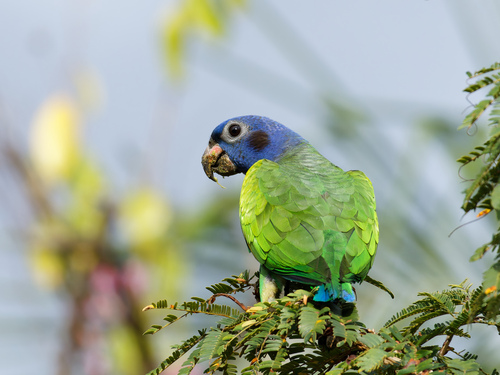 maitaca-de-cabeça-azul/maitaca-de-barriga-azul
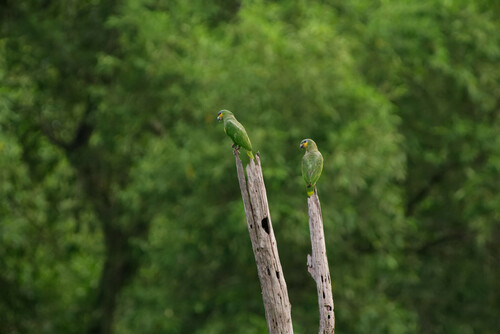 curica
Em resumo
A marca de campo mais confiável para separar a maitaca-de-cabeça-azul da curica é a coloração da cabeça e da parte inferior da cauda: a maitaca-de-cabeça-azul tem uma cabeça e pescoço distintamente azuis com coberturas vermelhas na parte inferior da cauda, enquanto a curica apresenta uma cabeça predominantemente verde com manchas azuis e amarelas variáveis e não possui vermelho sob a cauda. Em voo, procure as penas laranja da asa e da cauda da curica, que estão ausentes na maitaca-de-cabeça-azul. A estrutura também ajuda: a curica é visivelmente mais robusta, com um bico maior. Maitacas-de-cabeça-azul juvenis podem não ter azul completo na cabeça, mas nunca mostram laranja nas asas ou na cauda. Ambas as espécies são barulhentas e gregárias, mas seus chamados diferem.
Dicas de identificação
- Cor da cabeça: A maitaca-de-cabeça-azul sempre mostra uma cabeça e pescoço azuis (adultos), enquanto a curica tem uma cabeça predominantemente verde com manchas azuis e amarelas variáveis, nunca tão sólidas ou extensas quanto o pionus. Maitacas-de-cabeça-azul juvenis podem ter menos azul, mas nunca mostram laranja nas asas ou na cauda.
- Coberturas da parte inferior da cauda: A maitaca-de-cabeça-azul tem coberturas vermelhas brilhantes na parte inferior da cauda, visíveis quando empoleiradas ou em voo. A curica tem coberturas verdes na parte inferior da cauda, nunca vermelhas.
- Asa e cauda em voo: A curica mostra penas laranja nas asas e na cauda, especialmente óbvias em voo ou quando se estica. A maitaca-de-cabeça-azul não tem laranja nas asas ou na cauda em nenhuma idade.
- Cor do bico: O maxilar superior da maitaca-de-cabeça-azul é principalmente preto com lados avermelhados; o bico da curica é parcialmente da cor do chifre e parcialmente cinza escuro. Isso pode ser sutil à distância, mas é útil em distâncias próximas.
- Tamanho e estrutura: A curica é maior, mais robusta, e tem um bico mais pesado e robusto. A maitaca-de-cabeça-azul é mais compacta e esbelta em comparação.
- Confusão juvenil: Jovens maitacas-de-cabeça-azul podem não ter azul completo na cabeça e mostrar algumas penas avermelhadas ou rosadas ao redor do cera, mas ainda têm coberturas vermelhas na parte inferior da cauda e nunca mostram laranja nas asas ou na cauda. Juvenis de curica se parecem com adultos, mas sempre mostram laranja nas asas/cauda.
- Sexos: Ambas as espécies são sexualmente monomórficas; machos e fêmeas se parecem, então o sexo não é uma marca de campo útil.
- Voz: Ouça a diferença: a maitaca-de-cabeça-azul emite chamados leves e estridentes, enquanto a curica é muito mais alta e áspera.
- Contexto de habitat: Ambas podem ser encontradas em habitats semelhantes, mas a maitaca-de-cabeça-azul está mais intimamente ligada a florestas úmidas e áreas ribeirinhas, enquanto a curica é mais flexível e pode ser vista em áreas mais secas ou abertas.
- Postura empoleirada: A curica frequentemente parece mais pesada e mais ereta, enquanto a maitaca-de-cabeça-azul é mais compacta e menos volumosa.
- Formato do bico: O bico da curica é mais profundo e mais curvado, especialmente notável ao se alimentar.
- Composição do bando: Bandos mistos podem ocorrer, mas procure a combinação de cabeça azul e parte inferior da cauda vermelha (pionus) versus laranja nas asas/cauda e cor de cabeça variável (Amazon).
- Variação de subespécies: A maitaca-de-cabeça-azul tem alguma variação regional (por exemplo, garganta azul mais clara ou rosada em algumas subespécies), mas todas têm azul na cabeça e parte inferior da cauda vermelha. A curica é monotípica, então a variação é limitada a manchas de cor de cabeça individuais.
- Aves de estimação: Ambas são comuns em cativeiro, mas as marcas de campo permanecem as mesmas; cuidado com desgaste de penas ou coloração anormal em fugitivos.
- Armadilhas: Não confie apenas na cor verde do corpo ou no tamanho geral; sempre verifique a cor da cabeça, parte inferior da cauda e coloração das asas/cauda para uma identificação confiante.
Tamanho
A curica é significativamente maior e mais pesada: cerca de 33 cm de comprimento e 340 g, em comparação com a maitaca-de-cabeça-azul, que mede 27–28 cm e 245 g [wikipedia][avonet]. A curica tem uma construção visivelmente mais robusta e um bico mais robusto, o que é aparente mesmo à distância. Quando empoleiradas lado a lado, o tamanho maior e a aparência mais pesada da curica são óbvios.
Plumagem
- Aves juvenis/imaturas: Maitacas-de-cabeça-azul juvenis têm menos azul na cabeça e podem mostrar penas vermelhas ou rosadas ao redor do cera, mas ainda carecem de qualquer laranja nas asas ou na cauda. Juvenis de curica se assemelham a adultos, com plumagem verde e azul/amarelo variável na cabeça, e sempre mostram laranja nas asas e na cauda (especialmente visível em voo).
- Adultos: A maitaca-de-cabeça-azul é principalmente verde com uma cabeça, pescoço e parte superior do peito azul brilhante, e coberturas vermelhas na parte inferior da cauda. A curica é verde no geral com azul e amarelo variáveis na cabeça, mas nunca tão solidamente azul quanto o pionus, e carece de vermelho sob a cauda. As penas laranja da asa e da cauda da curica são diagnósticas em voo ou quando as asas estão abertas. A cor do bico também difere: a maitaca-de-cabeça-azul tem um maxilar superior principalmente preto com lados avermelhados, enquanto o bico da curica é parcialmente da cor do chifre e parcialmente cinza escuro.
Comportamento
Ambas as espécies são sociais, frequentemente vistas em bandos e empoleiradas comunalmente em árvores. Ambas podem ser barulhentas, especialmente ao amanhecer e ao anoitecer. As curicas são frequentemente mais ousadas e conspícuas, às vezes se alimentando em áreas abertas ou terras cultivadas. As maitacas-de-cabeça-azul podem ser um pouco mais reservadas, mas ambas as espécies são ativas e móveis, frequentemente voando entre locais de alimentação e descanso.
Habitat
Ambas as espécies ocupam habitats semelhantes: florestas úmidas ou semi-úmidas e áreas semi-abertas, incluindo áreas cultivadas. A maitaca-de-cabeça-azul está mais intimamente ligada a regiões úmidas e florestas ribeirinhas, enquanto a curica é amplamente distribuída em florestas de planície e áreas semi-abertas, e é mais provável de ser vista em habitats mais secos ou mais abertos. Ambas ocorrem em faixas sobrepostas no norte da América do Sul e Trinidad.
Voz
Ambas são barulhentas, mas seus chamados diferem: a maitaca-de-cabeça-azul emite chamados leves e agudos de 'sweenk', enquanto a curica produz gritos muito mais altos, ásperos e agudos. Em um bando misto ou em um local de descanso, a voz da curica é mais rouca e ressonante, enquanto a do pionus é mais suave e menos penetrante.
maitaca-de-cabeça-azul/maitaca-de-barriga-azul · curica · Minhas aves difíceis