

Blue-headed Parrot vs Orange-winged Amazon
Pionus menstruus contro Amazona amazonica
Fai un quiz con Blue-headed Parrot e Orange-winged Amazon
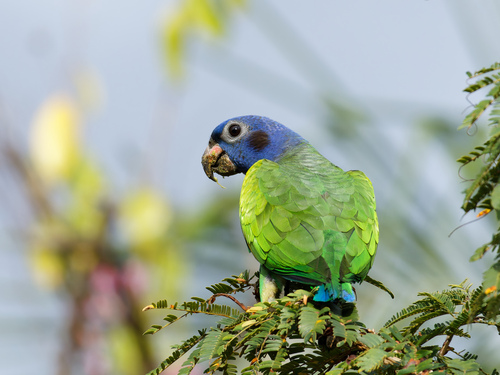 Blue-headed Parrot
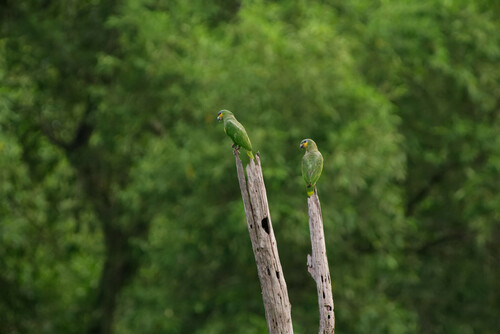 Orange-winged Amazon
In breve
Il segno distintivo più affidabile per separare il Blue-headed Parrot dall'Orange-winged Amazon è la colorazione della testa e del sottocoda: il Blue-headed Parrot ha una testa e un collo blu distintivi con copritrici del sottocoda rosse, mentre l'Orange-winged Amazon mostra una testa per lo più verde con macchie blu e gialle variabili e manca di rosso sotto la coda. In volo, cerca le piume arancioni delle ali e della coda dell'Orange-winged Amazon, che sono assenti nel Blue-headed Parrot. Anche la struttura aiuta: l'Orange-winged Amazon è notevolmente più robusto con un becco più grande. I giovani Blue-headed Parrots possono mancare di blu completo sulla testa, ma non mostrano mai arancione nelle ali o nella coda. Entrambe le specie sono rumorose e gregarie, ma i loro richiami differiscono.
Consigli di identificazione
- Head color: Il Blue-headed Parrot mostra sempre una testa e un collo blu (adulti), mentre l'Orange-winged Amazon ha una testa per lo più verde con macchie blu e gialle variabili, mai così solide o estese come il pionus. I giovani Blue-headed Parrots possono avere meno blu, ma non mostrano mai arancione nelle ali o nella coda.
- Undertail coverts: Il Blue-headed Parrot ha copritrici del sottocoda rosse brillanti, visibili quando è posato o in volo. L'Orange-winged Amazon ha copritrici del sottocoda verdi, mai rosse.
- Wing and tail in flight: L'Orange-winged Amazon mostra piume arancioni nelle ali e nella coda, particolarmente evidenti in volo o quando si allunga. Il Blue-headed Parrot non ha alcun arancione nelle ali o nella coda a qualsiasi età.
- Bill color: Il mandibola superiore del Blue-headed Parrot è per lo più nera con lati rossastri; il becco dell'Orange-winged Amazon è parzialmente color corno e parzialmente grigio scuro. Questo può essere sottile a distanza, ma è utile a distanza ravvicinata.
- Size and structure: L'Orange-winged Amazon è più grande, più robusto e ha un becco più pesante e robusto. Il Blue-headed Parrot è più compatto e snello in confronto.
- Juvenile confusion: I giovani Blue-headed Parrots possono mancare di blu completo sulla testa e mostrare alcune piume rossastre o rosa attorno al cere, ma hanno ancora copritrici del sottocoda rosse e non mostrano mai arancione nelle ali o nella coda. I giovani Orange-winged Amazons assomigliano agli adulti ma mostrano sempre arancione nelle ali/nella coda.
- Sexes: Entrambe le specie sono sessualmente monomorfiche; maschi e femmine si somigliano, quindi il sesso non è un segno distintivo utile.
- Voice: Ascolta la differenza: il Blue-headed Parrot emette richiami leggeri e squittenti, mentre l'Orange-winged Amazon è molto più forte e aspro.
- Habitat context: Entrambi possono essere trovati in habitat simili, ma il Blue-headed Parrot è più legato a foreste umide e aree fluviali, mentre l'Orange-winged Amazon è più flessibile e può essere visto in paesi più secchi o più aperti.
- Perched posture: L'Orange-winged Amazon appare spesso più pesante e più eretto, mentre il Blue-headed Parrot è più compatto e meno ingombrante.
- Bill shape: Il becco dell'Amazon è più profondo e più ricurvo, particolarmente evidente quando si nutre.
- Flock composition: Possono verificarsi stormi misti, ma cerca la combinazione di testa blu e sottocoda rosso (pionus) rispetto all'arancione nelle ali/nella coda e al colore della testa variabile (Amazon).
- Subspecies variation: Il Blue-headed Parrot ha alcune variazioni regionali (ad es., gola blu più chiara o rosa in alcune sottospecie), ma tutti hanno blu sulla testa e sottocoda rosso. L'Orange-winged Amazon è monotipo, quindi la variazione è limitata a macchie di colore della testa individuali.
- Pet birds: Entrambi sono comuni in cattività, ma i segni distintivi rimangono gli stessi; fai attenzione all'usura delle piume o alla colorazione anomala negli scappati.
- Pitfalls: Non fare affidamento solo sul colore verde del corpo o sulla dimensione generale; controlla sempre la testa, il sottocoda e la colorazione delle ali/della coda per un'identificazione sicura.
Taglia
L'Orange-winged Amazon è significativamente più grande e pesante: circa 33 cm di lunghezza e 340 g, rispetto ai 27–28 cm e 245 g del Blue-headed Parrot [wikipedia][avonet]. L'Amazon ha una struttura notevolmente più robusta e un becco più robusto, che è evidente anche a distanza. Quando sono posati fianco a fianco, la dimensione maggiore e il peso dell'Amazon sono ovvi.
Piumaggio
- Juvenile/immature birds: I giovani Blue-headed Parrots hanno meno blu sulla testa e possono mostrare piume rosse o rosa attorno al cere, ma mancano ancora di qualsiasi arancione nelle ali o nella coda. I giovani Orange-winged Amazons assomigliano agli adulti, con piumaggio verde e blu/giallo variabile sulla testa, e mostrano sempre arancione nelle ali e nella coda (particolarmente visibile in volo).
- Adults: Il Blue-headed Parrot è principalmente verde con una testa, un collo e un petto superiore blu brillanti, e copritrici del sottocoda rosse. L'Orange-winged Amazon è verde nel complesso con blu e giallo variabili sulla testa, ma mai così solidamente blu come il pionus, e manca di rosso sotto la coda. Le piume arancioni delle ali e della coda dell'Amazon sono diagnostiche in volo o quando le ali sono spiegate. Anche il colore del becco differisce: il Blue-headed Parrot ha un mandibola superiore per lo più nera con lati rossastri, mentre il becco dell'Orange-winged Amazon è parzialmente color corno e parzialmente grigio scuro.
Comportamento
Entrambe le specie sono sociali, spesso viste in stormi e che si riposano comunemente sugli alberi. Entrambi possono essere rumorosi, specialmente all'alba e al crepuscolo. Gli Orange-winged Amazons sono spesso più audaci e più appariscenti, a volte si nutrono in aree aperte o terreni coltivati. I Blue-headed Parrots possono essere leggermente più riservati, ma entrambe le specie sono attive e mobili, spesso volando tra i siti di alimentazione e riposo.
Habitat
Entrambe le specie occupano habitat simili: foreste umide o semi-umide e paesi semi-aperti, comprese le aree coltivate. Il Blue-headed Parrot è più legato a regioni umide e foreste fluviali, mentre l'Orange-winged Amazon è diffuso nelle foreste di pianura e in aree semi-aperte, ed è più probabile che venga visto in habitat più secchi o più aperti. Entrambi si trovano in aree sovrapposte nel nord del Sud America e a Trinidad.
Voce
Entrambi sono rumorosi, ma i loro richiami differiscono: il Blue-headed Parrot emette richiami leggeri e acuti 'sweenk', mentre l'Orange-winged Amazon produce grida molto più forti, aspre e acute. In uno stormo misto o in un luogo di riposo, la voce dell'Amazon è più rauca e portante, mentre il pionus è più morbido e meno penetrante.
Blue-headed Parrot · Orange-winged Amazon · I miei uccelli difficili