

tiziu vs nicaraguan seed-finch
Volatinia jacarina versus Sporophila nuttingi
Jogue um quiz com tiziu e nicaraguan seed-finch
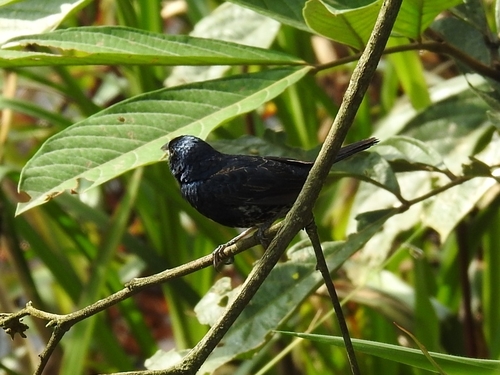 tiziu
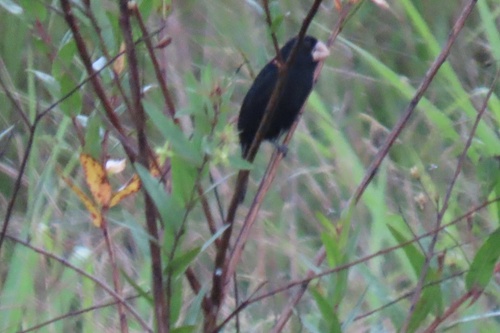 nicaraguan seed-finch
Em resumo
A marca de campo mais confiável para separar o tiziu do nicaraguan seed-finch é o tamanho e a forma do bico: o seed-finch tem um bico maciço, de base profunda, pálido (marfim ou rosado), enquanto o bico do tiziu é muito mais fino e cônico. Em voo, fêmeas e juvenis de tiziu mostram faixas de asa fracas e um peito riscado, ao contrário da fêmea/juvenil do seed-finch, que é mais simples e de um marrom mais escuro. Machos de ambas as espécies são pretos, mas o macho do tiziu é menor, com um brilho azul e um sutil reflexo branco na parte inferior da asa em voo, enquanto o macho do seed-finch é mais robusto, não tem brilho azul e possui um bico strikingly pálido. Tamanho e estrutura também são úteis: o seed-finch é muito maior e mais pesado. Ambas as espécies podem ocorrer em campos semelhantes, mas o seed-finch é mais restrito em alcance e habitat.
Dicas de identificação
- Tamanho e cor do bico: O nicaraguan seed-finch tem um bico maciço, de base profunda, pálido (marfim ou rosado) nos machos, e um bico escuro com uma base pálida nas fêmeas. O tiziu tem um bico muito mais fino, cônico e escuro. Esta é a marca de campo mais confiável em qualquer idade ou sexo.
- Tamanho e forma geral: O seed-finch pesa quase o dobro e é muito mais longo que o tiziu. No campo, o seed-finch parece robusto e com cabeça pesada, enquanto o tiziu é pequeno e semelhante a um pardal.
- Plumagem do macho: O macho adulto do tiziu é azul-preto brilhante com uma pequena mancha branca na parte inferior da asa (às vezes visível em voo) e um bico escuro e fino. O macho do seed-finch é preto fosco (sem brilho azul), com um bico enorme e pálido e sem branco na asa. O macho do tiziu é muito menor e mais ativo.
- Plumagem da fêmea/juvenil: Fêmeas/juvenis de tiziu são marrons quentes com riscas fracas, duas faixas de asa sutis e um peito e flancos riscados. Fêmeas/juvenis de seed-finches são marrons mais escuros, não têm faixas de asa e possuem partes inferiores mais simples, às vezes marrons canela, sem riscas fortes. O bico do seed-finch é sempre mais profundo e mais pálido na base.
- Faixas de asa: Apenas fêmeas/juvenis de tiziu mostram faixas de asa fracas (das pontas pálidas até as coberturas); o seed-finch nunca mostra faixas de asa em qualquer idade.
- Marcas na parte inferior da asa/voo: O tiziu (especialmente as subespécies nominate e peruviensis) mostra uma mancha branca na base da parte inferior da asa (axilares e coberturas da parte inferior da asa) em voo, especialmente nos machos. O seed-finch tem partes inferiores da asa uniformemente escuras.
- Cauda: O tiziu tem uma cauda marrom com pontas amarelas nas penas externas (na plumagem fresca), que se desgastam rapidamente. O seed-finch tem uma cauda escura simples, combinando com o restante da plumagem.
- Riscas no peito: Fêmeas/juvenis de tiziu têm uma faixa de riscas escuras no peito e ao longo dos flancos; fêmeas/juvenis de seed-finch são muito mais simples na parte inferior.
- Cor das pernas: Ambas as espécies têm pernas escuras, não úteis para separação.
- Cor da íris: Ambas as espécies têm íris marrons, não diagnósticas.
- Comportamento de exibição: Machos de tiziu frequentemente realizam voos de exibição saltitantes de poleiros expostos; o seed-finch não faz isso.
- Habitat e alcance: O tiziu é amplamente distribuído e comum em habitats abertos, infestados de ervas ou gramíneos em todo o Neotrópico. O seed-finch é restrito à Costa Rica, Nicarágua e Panamá, e prefere áreas mais úmidas e pantanosas.
- Jizz: O tiziu é rápido, ativo e frequentemente pousa em caules de grama ou fios. O seed-finch é mais lento, mais pesado e mais propenso a ser encontrado baixo em vegetação densa.
- Voz: Não descrita nas notas fornecidas; não confie em vocalizações para separação com as informações atuais.
- Armadilhas: Tizius imaturos podem ser confundidos com seed-finches se o tamanho do bico não for cuidadosamente observado, especialmente se as faixas de asa estiverem desgastadas ou fracas. Sempre verifique a profundidade e a cor do bico e procure por riscas sutis ou faixas de asa nos tiziu.
Tamanho
O tiziu é muito menor (8.7–10.9 cm, 8–12 g) do que o nicaraguan seed-finch (14–14.5 cm, ~24 g) [wikipedia]. O seed-finch é quase duas vezes mais pesado e visivelmente mais longo, com um corpo muito mais robusto e um bico desproporcionalmente grande. Lado a lado, o tiziu parece delicado e semelhante a um pardal, enquanto o seed-finch é robusto e com cabeça grande.
Plumagem
-
Contraste juvenil/imaturo/fêmea: Fêmeas e juvenis de tiziu são marrons quentes acima com riscas fracas e duas faixas de asa sutis, além de um peito e flancos riscados. Suas asas e cauda são marrons com pontas mais claras (as penas externas da cauda podem mostrar pontas amarelas quando frescas). Juvenis/fêmeas de nicaraguan seed-finches são marrons mais escuros acima, não têm faixas de asa e possuem partes inferiores mais simples, às vezes marrons canela, sem riscas fortes. O bico do seed-finch é sempre muito mais profundo e mais pálido na base (fêmeas: escuro com base marfim rosada).
-
Contraste do macho adulto: O macho do tiziu é azul-preto brilhante com um bico escuro e fino e uma pequena mancha branca na base da parte inferior da asa (visível em voo). O macho do nicaraguan seed-finch é completamente preto (sem brilho azul) com um bico enorme, pálido, marfim ou rosado e sem branco na asa. Machos de tiziu são muito menores e mais delicados em construção.
-
Marcas de voo: Fêmeas/juvenis de tiziu podem mostrar faixas de asa fracas e uma mancha pálida na parte inferior da asa (especialmente nas subespécies nominate e peruviensis), enquanto o seed-finch mostra asas uniformemente escuras, sem manchas pálidas ou faixas de asa.
Comportamento
O tiziu é frequentemente visto realizando voos de exibição curtos e saltitantes de poleiros expostos, especialmente os machos. Eles são ativos, às vezes em pequenos bandos, e frequentemente pousam em caules de grama ou fios. O nicaraguan seed-finch é mais deliberado e pesado em movimento, frequentemente forrageando baixo em vegetação densa ou na borda de pântanos. O seed-finch raramente realiza os voos acrobáticos de exibição típicos dos tiziu e é menos provável de ser visto em campos abertos e infestados de ervas longe da água.
Habitat
O tiziu é amplamente distribuído e adaptável, encontrado em campos arbustivos, áreas gramadas, beiras de estrada, pastagens e matas abertas do México até a maior parte da América do Sul, incluindo ilhas [wikipedia]. O nicaraguan seed-finch é muito mais localizado, restrito à Costa Rica, Nicarágua e Panamá, e tende a favorecer habitats mais úmidos, como bordas de pântano, grama alta perto da água e pastagens úmidas. Embora ambas possam ocorrer em campos infestados de ervas, o seed-finch é menos provável de ser encontrado em locais secos ou em áreas elevadas.