

Blue-black Grassquit vs Nicaraguan Seed-Finch
Volatinia jacarina contro Sporophila nuttingi
Fai un quiz con Blue-black Grassquit e Nicaraguan Seed-Finch
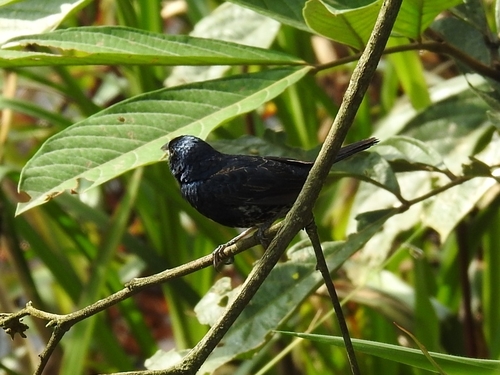 Blue-black Grassquit
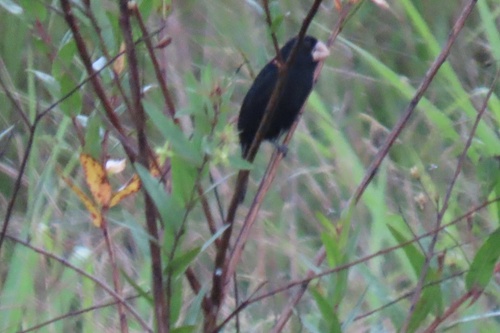 Nicaraguan Seed-Finch
In breve
Il segno distintivo più affidabile per separare il Blue-black Grassquit dal Nicaraguan Seed-Finch è la dimensione e la forma del becco: il seed-finch ha un becco massiccio, profondo, chiaro (avorio o rosato), mentre il becco del grassquit è molto più snello e conico. In volo, le femmine e i giovani grassquit mostrano deboli barre alari e un petto striato, a differenza del seed-finch femmina/giovane, che è più semplice e di un marrone più scuro. I maschi di entrambe le specie sono neri, ma il maschio del grassquit è più piccolo, con una lucentezza blu e un sottile flash bianco sotto le ali in volo, mentre il maschio del seed-finch è più robusto, privo di lucentezza blu e ha un becco notevolmente chiaro. Anche la dimensione e la struttura sono utili: il seed-finch è molto più grande e pesante. Entrambe le specie possono trovarsi in campi infestati simili, ma il seed-finch è più limitato in termini di distribuzione e habitat.
Consigli di identificazione
- Dimensione e colore del becco: Il Nicaraguan Seed-Finch ha un becco massiccio, profondo, chiaro (avorio o rosato) nei maschi, e un becco nerastro con una base chiara nelle femmine. Il Blue-black Grassquit ha un becco molto più snello, conico e scuro. Questo è il segno distintivo più affidabile a qualsiasi età o sesso.
- Dimensione e forma complessiva: Il seed-finch pesa quasi il doppio ed è molto più lungo del grassquit. Sul campo, il seed-finch appare robusto e con una testa pesante, mentre il grassquit è piccolo e simile a un passero.
- Piumaggio maschile: Il maschio adulto del grassquit è blu-nero lucido con una piccola macchia bianca sotto l'ala (a volte visibile in volo) e un becco scuro e snello. Il maschio del seed-finch è nero opaco (senza lucentezza blu), con un enorme becco chiaro e senza bianco nell'ala. Il maschio del grassquit è molto più piccolo e più attivo.
- Piumaggio femminile/giovane: Le femmine e i giovani grassquit sono di un marrone caldo con deboli striature, due sottili barre alari e un petto e fianchi striati. Le femmine e i giovani seed-finches sono di un marrone più scuro, privi di barre alari e hanno parti inferiori più semplici, a volte marrone cannella, senza forti striature. Il becco del seed-finch è sempre più profondo e chiaro alla base.
- Barre alari: Solo le femmine/giovani del grassquit mostrano deboli barre alari (dai toni chiari alle copritrici); il seed-finch non mostra mai barre alari a qualsiasi età.
- Segni sotto l'ala/in volo: Il grassquit (soprattutto le sottospecie nominate e peruviensis) mostra una macchia bianca alla base dell'ala inferiore (assiliari e copritrici sotto l'ala) in volo, specialmente nei maschi. Il seed-finch ha ali inferiori uniformemente scure.
- Coda: Il grassquit ha una coda marrone con punte color crema sulle piume esterne (in piumaggio fresco), che si consumano rapidamente. Il seed-finch ha una coda scura semplice, che corrisponde al resto del piumaggio.
- Striature sul petto: Le femmine/giovani del grassquit hanno una banda di striature scure sul petto e lungo i fianchi; le femmine/giovani del seed-finch sono molto più semplici sotto.
- Colore delle zampe: Entrambe le specie hanno zampe scure, non utili per la separazione.
- Colore dell'iride: Entrambe le specie hanno iridi marroni, non diagnostiche.
- Comportamento di display: I maschi del grassquit spesso eseguono voli di display rimbalzanti da posatoi esposti; il seed-finch non lo fa.
- Habitat e distribuzione: Il grassquit è diffuso e comune in habitat aperti, infestati o erbosi in tutto il Neotropico. Il seed-finch è limitato a Costa Rica, Nicaragua e Panama, e preferisce aree più umide e paludose.
- Jizz: Il grassquit è veloce, attivo e spesso si posa su steli d'erba o fili. Il seed-finch è più lento, più pesante e più probabile da trovare in basso nella vegetazione densa.
- Voce: Non descritta nelle note fornite; non fare affidamento sulle vocalizzazioni per la separazione con le informazioni attuali.
- Insidie: I grassquit immaturi possono essere confusi con i seed-finches se la dimensione del becco non viene notata con attenzione, specialmente se le barre alari sono consumate o deboli. Controlla sempre la profondità e il colore del becco e cerca striature o barre alari sottili nei grassquit.
Taglia
Il Blue-black Grassquit è molto più piccolo (8.7–10.9 cm, 8–12 g) rispetto al Nicaraguan Seed-Finch (14–14.5 cm, ~24 g) [wikipedia]. Il seed-finch è quasi il doppio del peso e notevolmente più lungo, con un corpo molto più robusto e un becco sproporzionatamente grande. Affiancati, il grassquit appare delicato e simile a un passero, mentre il seed-finch è massiccio e con una testa grossa.
Piumaggio
-
Contrasto giovanile/immaturo/femminile: Le femmine e i giovani Blue-black Grassquit sono di un marrone caldo sopra con deboli striature e due sottili barre alari, oltre a un petto e fianchi striati. Le loro ali e coda sono marroni con punte più chiare (le piume esterne della coda possono mostrare punte color crema quando fresche). I giovani/femmine Nicaraguan Seed-Finch sono di un marrone più scuro sopra, privi di barre alari e hanno parti inferiori più semplici, a volte marrone cannella, senza forti striature. Il becco del seed-finch è sempre molto più profondo e chiaro alla base (femmine: nerastre con base avorio rosato).
-
Contrasto maschile adulto: Il maschio Blue-black Grassquit è blu-nero lucido con un becco scuro e snello e una piccola macchia bianca alla base dell'ala inferiore (visibile in volo). Il maschio Nicaraguan Seed-Finch è completamente nero (senza lucentezza blu) con un enorme becco chiaro di avorio o rosa e senza bianco nell'ala. I maschi del grassquit sono molto più piccoli e più delicati nella struttura.
-
Segni di volo: Le femmine/giovani del grassquit possono mostrare deboli barre alari e una macchia chiara sotto l'ala (soprattutto nelle sottospecie nominate e peruviensis), mentre il seed-finch mostra ali uniformemente scure senza macchie chiare o barre alari.
Comportamento
Il Blue-black Grassquit è spesso visto eseguire brevi voli di display rimbalzanti da posatoi esposti, specialmente i maschi. Sono attivi, a volte in piccoli gruppi, e frequentemente si posano su steli d'erba o fili. Il Nicaraguan Seed-Finch è più deliberato e pesante nei movimenti, spesso cerca cibo in basso nella vegetazione densa o ai margini delle paludi. Il seed-finch raramente esegue i voli acrobatici di display tipici dei grassquit ed è meno probabile da vedere in campi aperti e infestati lontano dall'acqua.
Habitat
Il Blue-black Grassquit è diffuso e adattabile, trovato in campi cespugliosi, aree erbose, bordi stradali, pascoli e cespugli aperti dal Messico attraverso la maggior parte del Sud America, comprese le isole [wikipedia]. Il Nicaraguan Seed-Finch è molto più localizzato, limitato a Costa Rica, Nicaragua e Panama, e tende a favorire habitat più umidi come i margini delle paludi, l'erba alta vicino all'acqua e i pascoli umidi. Sebbene entrambe le specie possano trovarsi in campi infestati, il seed-finch è meno probabile in siti asciutti o collinari.
Blue-black Grassquit · Nicaraguan Seed-Finch · I miei uccelli difficili