

tiziu vs morelet's seedeater
Volatinia jacarina versus Sporophila morelleti
Jogue um quiz com tiziu e morelet's seedeater
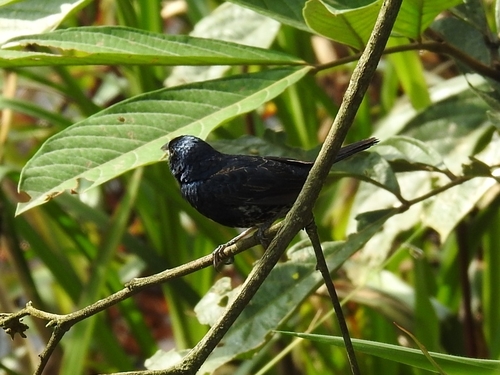 tiziu
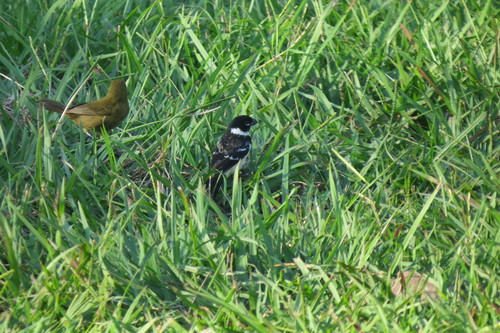 morelet's seedeater
Em resumo
A marca de campo mais confiável entre o tiziu e o morelet's seedeater é a presença de uma mancha branca na parte inferior da asa em voo nos machos de tiziu, que está ausente no morelet's seedeater. Para aves empoleiradas, os machos de tiziu são azul-preto brilhante no geral, enquanto os machos de morelet's seedeater apresentam uma coroa e face acinzentadas com um crescente branco contrastante abaixo do olho e um dorso mais claro, oliva-acinzentado. Fêmeas e imaturos de ambas as espécies são marrons e estriados, mas as fêmeas de tiziu são marrons mais quentes com mais estrias abaixo, enquanto as fêmeas de seedeater são oliva-acinzentadas e menos estriadas. A forma do bico e as sutis diferenças nas barras das asas podem ajudar, mas cuidado com a sobreposição de tamanho e estrutura geral.
Dicas de identificação
- Mancha branca na parte inferior da asa em voo (apenas macho tiziu): Se você ver um pequeno pássaro preto piscando branco na parte inferior da asa enquanto voa, é um macho tiziu. Nenhum seedeater apresenta isso.
- Cor geral do macho: Os machos de tiziu são azul-preto brilhante em todo o corpo, sem áreas claras ou oliva. Os machos de morelet's seedeater têm uma cabeça e face acinzentadas, mas um dorso oliva-acinzentado e partes inferiores amareladas, com um distinto crescente branco abaixo do olho.
- Crescente branco no olho (macho seedeater): Procure um ousado crescente branco abaixo do olho nos machos de morelet's seedeater, especialmente nas subespécies nominate e sharpei. Machos de tiziu nunca mostram essa marca.
- Barras das asas: Ambas as espécies podem mostrar barras de asas claras, mas geralmente são mais fracas e menos contrastantes nas fêmeas e juvenis de tiziu. Machos de seedeater têm duas barras de asas brancas amareladas que são mais distintas, especialmente em plumagem fresca.
- Forma do bico: O tiziu tem um bico mais longo e cônico, enquanto o bico do seedeater é mais curto, mais grosso e mais arredondado na parte superior. Isso é sutil, mas pode ajudar com boas vistas.
- Partes inferiores de fêmeas/imaturos: Fêmeas/imaturos de tiziu têm uma garganta e partes inferiores amareladas quentes com uma faixa de estrias escuras no peito e flancos. Fêmeas/imaturos de seedeater são mais simples abaixo, sem estrias fortes.
- Partes superiores de fêmeas/imaturos: Fêmeas/imaturos de tiziu são marrons mais quentes acima com estrias fracas, enquanto fêmeas/imaturos de seedeater são oliva-acinzentadas e menos estriadas.
- Cor da cauda: Fêmeas de tiziu têm uma cauda marrom com pontas amareladas nas penas externas (rapidamente desgastadas), enquanto fêmeas de seedeater têm uma cauda cinza com pontas cinzas finas.
- Padrão das asas do macho: Machos de seedeater mostram branco na base da maioria das primárias e duas barras de asas brancas amareladas; machos de tiziu têm asas totalmente pretas sem branco, exceto pela mancha na parte inferior da asa (em voo).
- Comportamento de exibição: Se você ver um pequeno pássaro acinzentado pulando repetidamente de um poleiro com asas batendo, é um macho tiziu. Seedeaters não realizam essa exibição.
- Contexto do habitat: Na América Central, ambos podem ocorrer juntos, mas o tiziu é mais provável em áreas mais úmidas, gramadas ou com ervas daninhas, enquanto o seedeater prefere locais mais secos ou mais ao norte.
- Tamanho: O tiziu é ligeiramente menor e mais compacto, mas isso é sutil e não confiável em campo.
- Cor do íris e pernas: Ambos têm íris marrons e pernas cinzas, então essas características não são úteis para separação.
- Cor do bico: Machos de seedeater têm um bico preto; fêmeas de seedeater têm uma maxila marrom e mandíbula clara. Tizius têm uma maxila acinzentada e mandíbula clara a cor de chifre em ambos os sexos.
- Variação de subespécies: Algumas subespécies de seedeater (mutanda) têm uma garganta principalmente preta, mas sempre com o crescente branco no olho e partes inferiores claras, nunca totalmente pretas brilhantes como nos machos de tiziu.
Tamanho
O tiziu é ligeiramente menor, medindo 8,7–10,9 cm de comprimento e pesando 8–12 g, enquanto o morelet's seedeater tem cerca de 11 cm de comprimento e pesa em média 8,7 g. No campo, essa diferença de tamanho é sutil e nem sempre confiável para separação, já que ambos são pequenos, compactos e semelhantes a tentilhões. A forma do bico é mais útil: o tiziu tem um bico mais longo e cônico, enquanto o bico do seedeater é mais curto, mais grosso e tem um culmen arredondado.
Plumagem
-
Aves juvenis/imaturas e fêmeas: Fêmeas e juvenis de tiziu são marrons quentes acima com estrias escuras fracas na coroa, manto e dorso, e têm partes inferiores amareladas com uma faixa de estrias escuras no peito e flancos. As asas são marrons com coberturas pálidas e fracas formando duas barras de asas fracas. Fêmeas e imaturos de morelet's seedeater são oliva-acinzentadas a marrons-oliva acima, com asas e cauda cinzas, e barras de asas mais finas e menos óbvias. Elas não têm as fortes estrias no peito das fêmeas de tiziu, aparecendo mais simples abaixo.
-
Machos adultos: Machos de tiziu são azul-preto brilhante em todo o corpo, com uma mancha branca na parte inferior da asa (axilares e coberturas da parte inferior da asa) visível em voo. As asas e a cauda são pretas. Machos de morelet's seedeater (sharpei) têm uma coroa, nuca e lados da cabeça acinzentados, um crescente branco abaixo do olho, dorso oliva-acinzentado com manchas pretas, e partes inferiores amareladas. As asas são pretas com branco na base da maioria das primárias e duas barras de asas brancas amareladas. O macho nominate morelleti tem um crescente branco maior no olho e uma faixa preta sólida no peito. A mancha branca na parte inferior da asa está ausente em todos os seedeaters.
-
Em voo: A mancha branca na parte inferior da asa é diagnóstica para machos de tiziu. Seedeaters podem mostrar branco na base das primárias, mas não na parte inferior da asa.
Comportamento
Machos de tiziu são conhecidos por seus voos de exibição distintos, frequentemente pulando repetidamente de um poleiro com asas batendo, o que pode ser uma pista comportamental. O morelet's seedeater não realiza essa exibição e é mais provável ser visto alimentando-se ou empoleirado em silêncio. Ambas as espécies forrageiam em campos com ervas daninhas e pastagens, mas os tiziu são mais propensos a serem vistos em áreas abertas, com ervas daninhas ou gramadas, às vezes em pequenos grupos.
Habitat
Ambas as espécies ocupam habitats abertos, com ervas daninhas ou gramados, frequentemente nas bordas de campos, beiras de estrada ou arbustos de regeneração. O tiziu tem uma faixa muito mais ampla, encontrado em grande parte da América Central e do Sul, incluindo o Caribe. O morelet's seedeater é mais restrito a áreas do Texas ao sul até o Panamá. A sobreposição de habitat é possível na América Central, mas o tiziu é mais provável em locais mais úmidos e de menor elevação, enquanto o seedeater pode ser encontrado em áreas mais secas ou mais ao norte.