

Blue-black Grassquit vs Morelet's Seedeater
Volatinia jacarina contro Sporophila morelleti
Fai un quiz con Blue-black Grassquit e Morelet's Seedeater
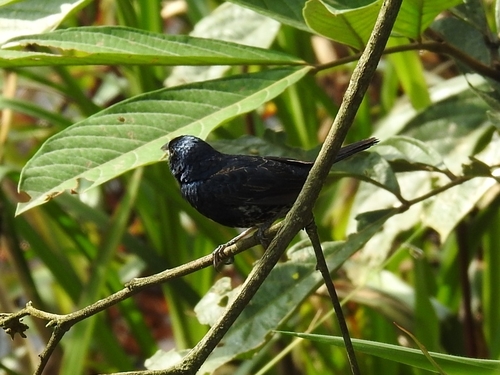 Blue-black Grassquit
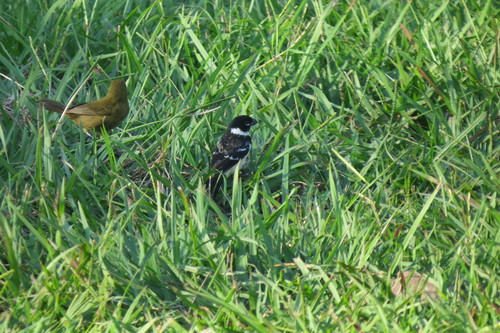 Morelet's Seedeater
In breve
Il segno distintivo più affidabile tra Blue-black Grassquit e Morelet's Seedeater è la presenza di una macchia bianca sotto l'ala in volo nei maschi di Blue-black Grassquit, che è assente in Morelet's Seedeater. Per gli uccelli in posa, i maschi di Blue-black Grassquit sono blu-neri lucidi nel complesso, mentre i maschi di Morelet's Seedeater mostrano una corona e un viso nerastro con un crescente bianco a contrasto sotto l'occhio e un dorso grigio-oliva più chiaro. Le femmine e gli immaturi di entrambe le specie sono brunastri e striati, ma le femmine di Grassquit sono di un marrone più caldo con più striature sotto, mentre le femmine di Seedeater sono grigio-olive e meno striate. La forma del becco e le sottili differenze nelle barre alari possono aiutare, ma fai attenzione alla sovrapposizione di dimensioni e struttura generale.
Consigli di identificazione
- Macchia bianca sotto l'ala in volo (solo maschio Blue-black Grassquit): Se vedi un piccolo uccello nero lampeggiare di bianco sotto l'ala mentre vola, è un maschio di Grassquit. Nessun Seedeater mostra questo.
- Colore complessivo del maschio: I maschi di Blue-black Grassquit sono blu-neri lucidi in tutto, privi di aree chiare o olive. I maschi di Morelet's Seedeater hanno una testa e un viso nerastro ma un dorso grigio-oliva e parti inferiori color crema, con un distintivo crescente bianco sotto l'occhio.
- Crescento bianco sotto l'occhio (maschio Seedeater): Cerca un audace crescente bianco sotto l'occhio nei maschi di Morelet's Seedeater, specialmente nelle sottospecie nominate e sharpei. I maschi di Grassquit non mostrano mai questo segno.
- Barre alari: Entrambe le specie possono mostrare barre alari chiare, ma di solito sono più deboli e meno contrastanti sulle femmine e sui giovanili di Grassquit. I maschi di Seedeater hanno due barre alari bianche color crema che sono più distinte, specialmente nel piumaggio fresco.
- Forma del becco: Il Grassquit ha un becco più lungo e conico, mentre il becco del Seedeater è più corto, più spesso e più arrotondato sopra. Questo è sottile ma può aiutare con buone visuali.
- Parti inferiori femmine/immaturi: Le femmine/immaturi di Grassquit hanno una gola e parti inferiori color crema caldo con una banda di striature scure sul petto e sui fianchi. Le femmine/immaturi di Seedeater sono più semplici sotto, prive di forti striature.
- Parti superiori femmine/immaturi: Le femmine/immaturi di Grassquit sono di un marrone più caldo sopra con deboli striature, mentre le femmine/immaturi di Seedeater sono grigio-olive e meno striate.
- Colore della coda: Le femmine di Grassquit hanno una coda marrone con punte color crema sulle piume esterne (che si consumano rapidamente), mentre le femmine di Seedeater hanno una coda grigia con punte grigie sottili.
- Schema alare maschile: I maschi di Seedeater mostrano bianco alla base della maggior parte delle primarie e due barre alari bianche color crema; i maschi di Grassquit hanno ali completamente nere senza bianco tranne la macchia sotto l'ala (in volo).
- Comportamento di display: Se vedi un piccolo uccello nerastro saltare ripetutamente da un posatoio con ali che svolazzano, è un maschio di Grassquit. I Seedeater non eseguono questo display.
- Contesto dell'habitat: In America Centrale, entrambi possono verificarsi insieme, ma il Grassquit è più probabile in aree più umide, erbose o infestanti, mentre il Seedeater preferisce siti più secchi o più a nord.
- Dimensioni: Il Grassquit è leggermente più piccolo e più compatto, ma questo è sottile e poco affidabile sul campo.
- Colore dell'iride e delle gambe: Entrambi hanno iridi marroni e gambe grigie, quindi questi non sono utili per la separazione.
- Colore del becco: I maschi di Seedeater hanno un becco nero; le femmine di Seedeater hanno una mascella superiore marrone e una mandibola chiara. I Grassquit hanno una mascella superiore nerastra e una mandibola grigio chiaro a corno in entrambi i sessi.
- Variazione delle sottospecie: Alcune sottospecie di Seedeater (mutanda) hanno una gola per lo più nera, ma sempre con il crescente bianco sotto l'occhio e le parti inferiori chiare, mai completamente nere lucide come nei maschi di Grassquit.
Taglia
Il Blue-black Grassquit è leggermente più piccolo, misurando 8.7–10.9 cm di lunghezza e pesando 8–12 g, mentre il Morelet's Seedeater è lungo circa 11 cm e pesa in media 8.7 g. Sul campo, questa differenza di dimensioni è sottile e non sempre affidabile per la separazione, poiché entrambi sono piccoli uccelli simili a fringuelli e compatti. La forma del becco è più utile: il Grassquit ha un becco lungo e conico, mentre il becco del Seedeater è più corto, più spesso e ha un culmine arrotondato.
Piumaggio
-
Uccelli giovanili/immaturi e femmine: Le femmine e i giovanili di Blue-black Grassquit sono di un marrone caldo sopra con deboli striature più scure sulla corona, sul mantello e sul dorso, e hanno parti inferiori color crema con una banda di striature più scure sul petto e sui fianchi. Le loro ali sono marroni con copritrici pallide e deboli che formano due barre alari deboli. Le femmine e gli immaturi di Morelet's Seedeater sono grigio-olive a bruno-olive sopra, con ali e coda grigie, e barre alari più sottili e meno evidenti. Mancano delle forti striature sul petto delle femmine di Grassquit, apparendo più semplici sotto.
-
Maschi adulti: I maschi di Blue-black Grassquit sono blu-neri lucidi in tutto, con una macchia bianca sotto l'ala (assiali e copritrici sotto l'ala) visibile in volo. Le loro ali e la coda sono nere piatte. I maschi di Morelet's Seedeater (sharpei) hanno una corona, una nuca e lati della testa nerastri, un crescente bianco sotto l'occhio, un dorso grigio-oliva con macchie nere e parti inferiori color crema. Le loro ali sono nere con bianco alla base della maggior parte delle primarie e due barre alari bianche color crema. Il maschio nominato morelleti ha un crescente bianco sotto l'occhio più grande e una banda nera solida sul petto. La macchia bianca sotto l'ala è assente in tutti i Seedeater.
-
In volo: La macchia bianca sotto l'ala è diagnostica per i maschi di Grassquit. I Seedeater possono mostrare bianco alla base delle primarie, ma non sotto l'ala.
Comportamento
I maschi di Blue-black Grassquit sono noti per i loro distintivi voli di display, spesso saltando ripetutamente da un posatoio con ali che svolazzano, il che può essere un indizio comportamentale. Il Morelet's Seedeater non esegue questo display ed è più probabile vederlo mentre si nutre silenziosamente o è posato. Entrambe le specie foraggiano in campi infestati e praterie, ma i Grassquit sono più probabili da vedere in aree aperte, infestanti o erbose, a volte in piccoli gruppi.
Habitat
Entrambe le specie occupano habitat aperti, infestanti o erbosi, spesso ai margini dei campi, lungo le strade o in cespugli di seconda crescita. Il Blue-black Grassquit ha un'area di distribuzione molto più ampia, trovandosi in gran parte dell'America Centrale e Meridionale, compresa la Caraibi. Il Morelet's Seedeater è più ristretto ad aree dal Texas a sud fino a Panama. La sovrapposizione degli habitat è possibile in America Centrale, ma il Grassquit è più probabile in siti più umidi e a bassa elevazione, mentre il Seedeater può essere trovato in aree più secche o più a nord.
Blue-black Grassquit · Morelet's Seedeater · I miei uccelli difficili