

blue-billed teal vs yellow-billed duck
Spatula hottentota versus Anas undulata
Jogue um quiz com blue-billed teal e yellow-billed duck
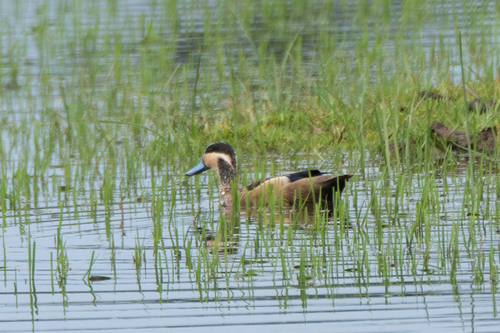 blue-billed teal
 yellow-billed duck
Em resumo
A marca de campo mais confiável entre blue-billed teal e yellow-billed duck é a cor do bico: blue-billed teal tem um bico azul claro (com um culmen e unha escuros), enquanto yellow-billed duck apresenta um bico amarelo brilhante. Em voo ou em repouso, blue-billed teal é muito menor e mais compacto, com um pescoço e cauda mais curtos, e uma plumagem distintamente manchada e padronizada, especialmente no pescoço e peito. Yellow-billed duck é maior, com um corpo cinza quase liso, cabeça mais escura e um especulum verde bordado de branco. Juvenis e fêmeas de blue-billed teal podem ser mais apagados, mas sempre carecem da simplicidade e tamanho de yellow-billed duck. Ambas as espécies têm um especulum verde, mas o padrão das asas circundantes e a estrutura geral são diferentes.
Dicas de identificação
- A cor do bico é a verificação mais rápida: blue-billed teal tem um bico azul claro com uma ponta escura, enquanto yellow-billed duck sempre apresenta um bico amarelo brilhante. Isso funciona para todas as idades e sexos.
- Tamanho e estrutura: blue-billed teal é muito menor e mais compacto, com um pescoço e cauda curtos; yellow-billed duck é grande, de pescoço longo e robusto. Use isso quando as aves forem vistas juntas ou com espécies conhecidas.
- Padrão da cabeça e face: blue-billed teal apresenta uma coroa marrom escura e face mais clara com uma mancha escura na orelha (machos adultos mais marcantes, mas visíveis em todas as idades em algum grau). Yellow-billed duck tem uma cabeça escura uniforme sem marcas faciais fortes.
- Manchas no peito e flancos: blue-billed teal (todas as idades, mas especialmente machos adultos) tem manchas pretas no pescoço e peito, às vezes se estendendo para os flancos. Yellow-billed duck é cinza liso sem manchas ou listras.
- Especulum e padrão das asas em voo: Ambas têm um especulum verde, mas o de blue-billed teal é bordado por barras pretas e brancas estreitas e é mais compacto; o de yellow-billed duck é maior, com bordas brancas mais largas e uma parte inferior clara. Isso é mais útil em voo ou quando as asas estão estendidas.
- Coberturas superiores brilhantes: O macho adulto de blue-billed teal tem um brilho esverdeado nas coberturas das asas, ausente em fêmeas e juvenis, e ausente em yellow-billed duck.
- Partes inferiores: As partes inferiores de blue-billed teal são manchadas e vermiculadas, especialmente na parte traseira; yellow-billed duck é lisa e sem marcas na parte inferior.
- Cor das pernas e pés: blue-billed teal tem pernas e pés cinza azulado; a cor das pernas de yellow-billed duck não é distintiva no campo.
- Confusão juvenil: O juvenil de blue-billed teal é mais apagado, mas ainda mostra algumas manchas e contraste facial; o juvenil de yellow-billed duck é liso e apenas ligeiramente mais apagado que os adultos.
- Tamanho do grupo e comportamento: Grandes bandos em água aberta são mais prováveis de serem yellow-billed duck; pequenos grupos ou pares em poças vegetadas sugerem blue-billed teal.
- Contexto do habitat: blue-billed teal é mais provável em zonas úmidas vegetadas e tranquilas; yellow-billed duck é comum em corpos d'água abertos, perturbados ou suburbanos.
- Vocalizações: Quacks ou assobios altos apontam para yellow-billed duck; blue-billed teal é em sua maioria silencioso, com apenas chamadas mecânicas suaves durante a exibição.
- Comprimento da cauda e pescoço: blue-billed teal tem uma cauda e pescoço curtos, dando uma aparência compacta; yellow-billed duck é mais longo em ambos.
- Diferenças sexuais: O macho de blue-billed teal é mais contrastante e brilhante; fêmeas e juvenis de blue-billed teal são mais apagados, mas ainda assim padronizados. Os sexos de yellow-billed duck são semelhantes.
- Quando em dúvida: Se a ave é pequena, compacta, manchada e tem um bico azul, é blue-billed teal. Se é grande, lisa e com bico amarelo, é yellow-billed duck.
Tamanho
Blue-billed teal é um pato pequeno, medindo 33–35 cm de comprimento e pesando 53–288 g, com uma envergadura de 58–69 cm. Em contraste, yellow-billed duck é muito maior, com 51–58 cm de comprimento (tamanho de pato-real), e é visivelmente mais pesado e robusto no campo. A diferença de tamanho é frequentemente óbvia quando vistas juntas ou com espécies familiares para escala. Blue-billed teal parece delicado e compacto, enquanto yellow-billed duck é robusto com um pescoço e cauda mais longos.
Plumagem
Juvenis e fêmeas de blue-billed teal são mais apagados que os machos, mas sempre mostram algum grau de manchas pretas no pescoço e peito, e um padrão facial contrastante, mesmo que menos nítido do que nos machos adultos. A asa superior em todas as idades tem um especulum verde com bordas pretas e brancas estreitas, mas as coberturas são verde-escuras apenas em machos adultos. Yellow-billed duck de todas as idades e sexos é principalmente cinza liso com uma cabeça mais escura, sem manchas ou contraste facial óbvios; seu especulum verde é bordado de branco, e o resto da asa é de outra forma liso. Juvenis de yellow-billed duck são apenas ligeiramente mais apagados que os adultos, sem padrões fortes. Em voo, blue-billed teal mostra um corpo compacto e asas curtas com um especulum verde e uma borda branca, enquanto yellow-billed duck mostra uma asa maior e mais larga com um especulum verde e bordas brancas mais extensas, e uma parte inferior clara.
Comportamento
Blue-billed teal é geralmente menos conspícua, frequentemente vista sozinha ou em pequenos grupos, e é menos gregária do que yellow-billed duck. É mais provável que seja encontrada mergulhando ou descansando tranquilamente à beira da água. Yellow-billed duck é altamente gregária fora da temporada de reprodução, formando grandes bandos, e é mais provável de ser vista em água aberta ou voando em grupos. Ambas as espécies mergulham em busca de alimento, mas yellow-billed duck é mais ativa e visível, especialmente fora da temporada de reprodução.
Habitat
Ambas as espécies compartilham habitats de água doce, como lagos, pântanos e lagoas, mas blue-billed teal tende a preferir zonas úmidas vegetadas e tranquilas e é mais provável de ser encontrada em poças menores ou temporárias. Yellow-billed duck é abundante em áreas abertas e corpos d'água maiores, e é mais tolerante a habitats suburbanos ou perturbados, incluindo campos de golfe e parques. Blue-billed teal é geralmente menos comum e mais restrita a locais menos perturbados.
Voz
Yellow-billed duck tem um assobio masculino e um quack feminino semelhante ao pato-real, que pode ser ouvido em bandos ou durante o acasalamento. Blue-billed teal é mais silencioso, com machos produzindo uma suave chamada mecânica de 'arrotar' durante a exibição, mas de outra forma não é muito vocal. No campo, a presença de quacks ou assobios altos é mais provável de indicar yellow-billed duck.
blue-billed teal · yellow-billed duck · Minhas aves difíceis