

arara-canindé vs araracanga
Ara ararauna versus Ara macao
Jogue um quiz com arara-canindé e araracanga
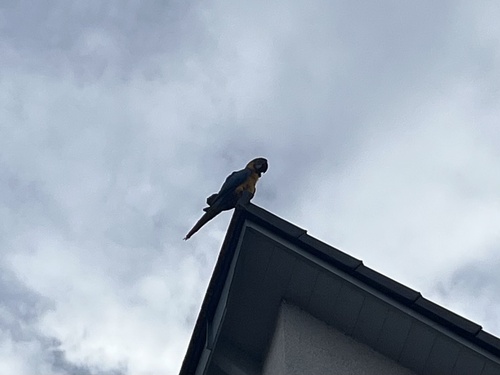 arara-canindé
 araracanga
Em resumo
A marca de campo mais confiável para separar a arara-canindé da araracanga é a coloração geral do corpo: a arara-canindé apresenta um dorso e asas azuis vívidos com uma parte inferior amarela a laranja, enquanto a araracanga é predominantemente vermelha escarlate com amarelo e azul nas asas. Ambas são araras grandes e de cauda longa com pele facial pálida, mas a coroa esverdeada da arara-canindé e o rosto inferior preto contrastam fortemente com a cabeça toda vermelha da araracanga e a mandíbula superior pálida. Os juvenis de ambas as espécies se assemelham aos adultos, portanto, o padrão de asas relacionado à idade não é um separador forte. O tamanho é semelhante, mas a araracanga tem uma cauda proporcionalmente mais longa. Em voo ou empoleiradas, concentre-se nos blocos de cor e no padrão facial para a separação mais rápida.
Dicas de identificação
- Blocos de cor geral: A arara-canindé é azul por cima e amarela/laranja por baixo; a araracanga é predominantemente vermelha escarlate com amarelo e azul nas asas. Esta é a marca de campo mais rápida e confiável em qualquer idade ou estação.
- Cor da cabeça: A arara-canindé tem uma testa e coroa verde-lima, enquanto a cabeça da araracanga é totalmente vermelha escarlate. Isso é especialmente útil em aves empoleiradas.
- Padrão da pele facial: Ambas têm pele branca nua no rosto, mas a arara-canindé apresenta linhas de penas pretas formando um padrão listrado, enquanto o rosto da araracanga é mais simples, com pequenas penas brancas. Procure as linhas pretas na arara-canindé em boa luz.
- Queixo e rosto inferior: A arara-canindé tem um queixo e rosto inferior pretos, contrastando com suas partes inferiores amarelas; o queixo da araracanga é vermelho, misturando-se com o resto da cabeça e corpo.
- Cor do bico: A arara-canindé tem um bico totalmente preto; a mandíbula superior da araracanga é de chifre pálido (marfim) com uma mandíbula inferior preta. Isso é melhor visto de perto.
- Padrão das asas (empoleiradas e em voo): As asas da arara-canindé são azuis por cima, sem amarelo nas coberturas; as coberturas superiores da araracanga são amarelas, com penas de voo azuis e às vezes verdes na dobra da asa. Em voo, a araracanga exibe uma asa tricolor impressionante em vermelho, amarelo e azul.
- Cor da cauda: A cauda da arara-canindé é azul por cima, amarela por baixo; a cauda da araracanga é vermelha com pontas azuis e coberturas de cauda azul claro.
- Cor dos olhos: Ambos os adultos têm íris amarelas pálidas, mas o juvenil da araracanga tem olhos escuros. Isso é sutil e raramente diagnóstico em campo.
- Tamanho e forma: Ambas são grandes, mas a araracanga tem uma cauda proporcionalmente mais longa, mais graduada, fazendo-a parecer mais alongada, especialmente em voo. Esta é uma marca de apoio, não primária.
- Contexto do habitat: Se vista em interior de floresta sempre-verde úmida, a araracanga é mais provável; a arara-canindé tolera áreas de floresta mais abertas e savanas, mas ambas podem se sobrepor em florestas de planície.
- Voz: Ambas são extremamente barulhentas e raucas; a voz não é um separador confiável.
- Comportamento: Ambas as espécies são sociais, frequentemente em pares ou pequenos grupos, e usam seus bicos para escalar. O comportamento não é um separador forte.
- Sem diferenças sazonais ou sexuais: Ambos os sexos são semelhantes, e há pouca variação sazonal na plumagem para qualquer uma das espécies.
- Confusão juvenil: Os juvenis de ambas as espécies se parecem com os adultos, portanto, não confie na plumagem imatura para separação. Apenas a cor dos olhos do juvenil da araracanga (mais escura) difere, mas isso raramente é útil à distância.
- Erros comuns: Não confunda o amarelo na asa da araracanga com as partes inferiores amarelas da arara-canindé—na araracanga, o amarelo é restrito às coberturas superiores da asa, não ao corpo. O azul na araracanga é limitado às penas de voo e pontas da cauda, nunca ao dorso ou coroa.
Tamanho
Ambas as espécies estão entre as maiores araras neotropicais, com a arara-canindé atingindo 81–91 cm (32–36 in) e 1,0–1,5 kg (2–3 lb), e a araracanga com uma média de cerca de 84 cm (33 in) e 1 kg (2 lb 3 oz). A cauda da araracanga é proporcionalmente mais longa, fazendo-a parecer ainda mais alongada, especialmente em voo. A massa e o comprimento gerais se sobrepõem, portanto, o tamanho sozinho não é diagnóstico, mas a araracanga pode parecer ligeiramente mais esbelta e pesada na cauda.
Plumagem
- Plumagem juvenil/imatura: Ambas as espécies têm juvenis que se assemelham muito aos adultos, sem padrão de asa específico por idade ou marcas de muda relatadas. A cor dos olhos é mais escura no juvenil da araracanga, tornando-se amarelo pálido nos adultos, mas isso é sutil à distância.
- Adultos: A arara-canindé é inconfundível com uma testa verde-lima, partes superiores azul brilhante (dorso, asas, cauda) e uma parte inferior rica em amarelo a laranja. O rosto é branco com linhas de penas pretas esparsas, e o queixo é preto. A araracanga é predominantemente vermelha escarlate, com coberturas superiores da asa amarelas, penas de voo azuis e pontas da cauda, e uma mancha facial branca com pequenas penas brancas. Alguns indivíduos mostram verde nas asas. A mandíbula superior é de chifre pálido, a inferior é preta. As coberturas da rabadilha e da cauda são azul claro. As partes inferiores das asas e da cauda são vermelhas escuras com iridescência dourada. A pele facial é nua e branca em ambas, mas a arara-canindé tem linhas de penas pretas formando um padrão listrado, enquanto o rosto da araracanga é mais simples, com pequenas penas brancas.
Comportamento
Ambas as espécies são altamente vocais, sociais e frequentemente vistas em pares ou pequenos grupos. As araras-canindé são conhecidas por seus altos chamados de bando e podem ser mastigadoras destrutivas. As araras-cangangas também são barulhentas, com chamados projetados para se espalhar por longas distâncias. Ambas as espécies usam seus poderosos bicos para escalar e se alimentar. Em cativeiro, ambas têm longa vida útil e requerem grandes espaços. Nenhuma diferença comportamental significativa é observada que ajude na separação em campo.
Habitat
A arara-canindé prefere uma variedade de habitats, incluindo várzea (floresta sazonalmente inundada), terra firme aberta (floresta não inundada), áreas florestais e savanas na América Central e do Sul tropical, incluindo Trinidad. A araracanga está mais intimamente ligada a florestas sempre-verdes úmidas, variando do sudeste do México através de grande parte da América do Sul tropical e Trinidad, mas também pode ser encontrada em florestas de planície até 1.000 m. Ambas podem se sobrepor em partes de suas áreas de distribuição, especialmente em florestas de planície e florestas de galeria, mas a araracanga é mais restrita aos interiores de florestas úmidas.
Voz
Ambas as espécies são extremamente barulhentas. A arara-canindé produz gritos penetrantes e chamados de bando, frequentemente descritos como ásperos e chamativos. A araracanga também emite gritos muito altos, de tons agudos e graves, e grunhidos que se espalham por quilômetros. A qualidade dos chamados é semelhante o suficiente para que a voz sozinha não seja um separador confiável em campo.