

Motmot

ルリコンゴウインコ 対 コンゴウインコ

Ara ararauna 対 Ara macao

ルリコンゴウインコとコンゴウインコのクイズ
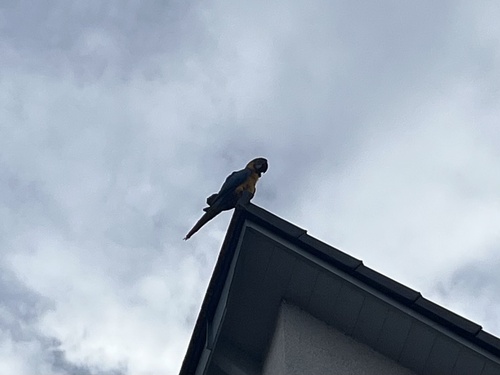
ルリコンゴウインコ (Ara ararauna) ルリコンゴウインコ
コンゴウインコ (Ara macao) コンゴウインコ

メディア

読み込み中…

要点

ブルーアンドイエローマカウとスカーレットマカウを区別する最も信頼できるフィールドマークは全体的な体色です:ブルーアンドイエローマカウは鮮やかな青い背中と翼を持ち、下側は黄色からオレンジ色ですが、スカーレットマカウは主にスカーレットレッドで、翼には黄色と青があります。両者は大きく、長い尾を持つマカウで、顔の皮膚は淡いですが、ブルーアンドイエローマカウの緑がかった冠と黒い下顔は、スカーレットマカウの全て赤い頭と淡い上顎と鮮やかに対比します。両種の幼鳥は成鳥に似ているため、年齢に関連する翼のパターンは強い区別要因ではありません。サイズは似ていますが、スカーレットマカウは相対的に長い尾を持っています。飛行中または止まっているときは、色のブロックと顔のパターンに注目して、最も迅速に区別してください。

識別のコツ

  1. 全体的な色のブロック: ブルーアンドイエローマカウは上が青で下が黄色/オレンジです;スカーレットマカウは主にスカーレットレッドで、翼には黄色と青があります。これは、どの年齢や季節でも最も速く、信頼できるフィールドマークです。
  2. 頭の色: ブルーアンドイエローマカウはライムグリーンの額と冠を持ち、スカーレットマカウの頭は完全にスカーレットレッドです。これは特に止まっている鳥に役立ちます。
  3. 顔の皮膚のパターン: 両者は顔に裸の白い皮膚を持っていますが、ブルーアンドイエローマカウは黒い羽毛の線がストライプパターンを形成しているのに対し、スカーレットマカウの顔は小さな白い羽毛でよりシンプルです。良い光の中でブルーアンドイエローマカウの黒い線を探してください。
  4. 顎と下顔: ブルーアンドイエローマカウは黒い顎と下顔を持ち、黄色の下側と対比しています;スカーレットマカウの顎は赤で、頭と体の残りと混ざっています。
  5. くちばしの色: ブルーアンドイエローマカウは全体が黒いくちばしを持ち、スカーレットマカウの上顎は淡い角(象牙)で、下顎は黒です。これは近距離で最もよく見えます。
  6. 翼のパターン(止まっているときと飛行中): ブルーアンドイエローマカウの翼は上が青で、カバーには黄色がありません;スカーレットマカウの大きな上翼カバーは黄色で、青い飛行羽と時々緑があります。飛行中、スカーレットマカウは目を引く赤、黄色、青の三色の翼を示します。
  7. 尾の色: ブルーアンドイエローマカウの尾は上が青で、下が黄色です;スカーレットマカウの尾は赤で、青い先端と淡い青の尾羽と尾カバーがあります。
  8. 目の色: 両方の成鳥は淡い黄色の虹彩を持っていますが、幼鳥のスカーレットマカウは暗い目を持っています。これは微妙で、フィールドでは診断的に役立つことは稀です。
  9. サイズと形: 両者は大きいですが、スカーレットマカウは相対的に長く、より段階的な尾を持ち、特に飛行中により細長く見えます。これは補助的なマークであり、主要なものではありません。
  10. 生息地の文脈: 湿った常緑樹林の内部で見られた場合、スカーレットマカウの方が可能性が高いです;ブルーアンドイエローマカウはより開けた森林やサバンナを好みますが、両者は低地の森林で重なることがあります。
  11. 声: 両者は非常に大きく、騒々しいです;声は信頼できる区別要因ではありません。
  12. 行動: 両種は社交的で、しばしばペアや小グループで見られ、登るためにくちばしを使います。行動は強い区別要因ではありません。
  13. 季節的または性別の違いはない: 両性は似ており、どちらの種でも羽毛に季節的な変化はほとんどありません。
  14. 幼鳥の混乱: 両種の幼鳥は成鳥に似ているため、未熟な羽毛に頼って区別しないでください。幼鳥のスカーレットマカウの目の色(暗い)だけが異なりますが、これは距離があるときにはほとんど役に立ちません。
  15. 一般的な落とし穴: スカーレットマカウの翼の黄色をブルーアンドイエローマカウの黄色の下側と混同しないでください—スカーレットでは、黄色は上翼カバーに限定されており、体にはありません。スカーレットマカウの青は飛行羽と尾の先端に限られ、決して背中や冠にはありません。

大きさ

両種は最大の新熱帯性オウムの中にあり、ブルーアンドイエローマカウは81–91 cm(32–36 in)および1.0–1.5 kg(2–3 lb)に達し、スカーレットマカウは平均約84 cm(33 in)および1 kg(2 lb 3 oz)です。スカーレットマカウの尾は相対的に長く、特に飛行中にさらに細長く見えます。全体的な質量と長さは重なっているため、サイズだけでは診断的ではありませんが、スカーレットマカウはわずかにスリムで尾が重いように見えるかもしれません。

羽色

行動

両種は非常に声が大きく、社交的で、しばしばペアや小グループで見られます。ブルーアンドイエローマカウは大きな群れの呼び声で知られ、破壊的な噛みつきができます。スカーレットマカウも騒がしく、長距離にわたって伝わるように設計された呼び声を持っています。両種は強力なくちばしを使って登ったり食べたりします。飼育下では、両者は長生きし、大きなスペースを必要とします。フィールドでの区別を助けるような主要な行動の違いはありません。

生息環境

ブルーアンドイエローマカウは、バルゼア(季節的に洪水が発生する森林)、オープンテラフィルメ(洪水のない森林)、森林、そしてトロピカルな中央および南アメリカのサバンナを含むさまざまな生息地を好みます。スカーレットマカウは湿った常緑樹林により密接に結びついており、南東メキシコからトロピカルな南アメリカの多く、そしてトリニダードにわたりますが、1,000 mまでの低地の森林でも見られます。両者はその範囲の一部で重なることがありますが、特に森林の低地やギャラリーフォレストでは、スカーレットマカウは湿った森林の内部により制限されています。

声

両種は非常に声が大きいです。ブルーアンドイエローマカウは鋭い叫び声と群れの呼び声を発し、しばしば厳しく注意を引くと表現されます。スカーレットマカウも非常に大きく、高音と低音の喉の鳴き声、きしみ、叫び声を発し、数キロメートルにわたって伝わります。呼び声の質は似ているため、声だけではフィールドでの信頼できる区別要因ではありません。

より良い説明を送る

比較と同じ項目を使ってください。文章はすぐに公開されます。

The most reliable field mark to separate Blue-and-yellow Macaw from Scarlet Macaw is overall body coloration: Blue-and-yellow Macaw shows a vivid blue back and wings with a yellow to orange underside, while Scarlet Macaw is mostly scarlet red with yellow and blue in the wings. Both are large, long-tailed macaws with pale facial skin, but the Blue-and-yellow Macaw’s greenish crown and black lower face contrast sharply with the Scarlet Macaw’s all-red head and pale upper mandible. Juveniles of both species resemble adults, so age-related wing pattern is not a strong separator. Size is similar, but Scarlet Macaw has a proportionally longer tail. In flight or perched, focus on the color blocks and facial pattern for the quickest separation.

  1. Overall color blocks: Blue-and-yellow Macaw is blue above and yellow/orange below; Scarlet Macaw is mostly scarlet red with yellow and blue in the wings. This is the fastest and most reliable field mark at any age or season.
  2. Head color: Blue-and-yellow Macaw has a lime-green forehead and crown, while Scarlet Macaw’s head is entirely scarlet red. This is especially useful on perched birds.
  3. Facial skin pattern: Both have bare white skin on the face, but Blue-and-yellow Macaw shows black feather lines forming a striped pattern, while Scarlet Macaw’s face is plainer with tiny white feathers. Look for the black lines on Blue-and-yellow Macaw in good light.
  4. Chin and lower face: Blue-and-yellow Macaw has a black chin and lower face, contrasting with its yellow underparts; Scarlet Macaw’s chin is red, blending with the rest of the head and body.
  5. Bill color: Blue-and-yellow Macaw has an all-black bill; Scarlet Macaw’s upper mandible is pale horn (ivory) with a black lower mandible. This is best seen at close range.
  6. Wing pattern (perched and in flight): Blue-and-yellow Macaw’s wings are blue above with no yellow in the coverts; Scarlet Macaw’s greater upperwing coverts are yellow, with blue flight feathers and sometimes green at the wing bend. In flight, Scarlet Macaw shows a striking red, yellow, and blue tricolor wing.
  7. Tail color: Blue-and-yellow Macaw’s tail is blue above, yellow below; Scarlet Macaw’s tail is red with blue tips and light blue rump and tail coverts.
  8. Eye color: Both adults have pale yellow irises, but juvenile Scarlet Macaw has dark eyes. This is subtle and rarely diagnostic in the field.
  9. Size and shape: Both are large, but Scarlet Macaw has a proportionally longer, more graduated tail, making it appear more elongated, especially in flight. This is a supporting mark, not primary.
  10. Habitat context: If seen in humid evergreen forest interior, Scarlet Macaw is more likely; Blue-and-yellow Macaw tolerates more open woodland and savannah, but both can overlap in lowland forests.
  11. Voice: Both are extremely loud and raucous; voice is not a reliable separator.
  12. Behavior: Both species are social, often in pairs or small groups, and use their beaks for climbing. Behavior is not a strong separator.
  13. No seasonal or sex differences: Both sexes are alike, and there is little seasonal variation in plumage for either species.
  14. Juvenile confusion: Juveniles of both species look like adults, so do not rely on immature plumage for separation. Only the eye color of juvenile Scarlet Macaw (darker) differs, but this is rarely useful at a distance.
  15. Common pitfalls: Do not confuse the yellow in Scarlet Macaw’s wing with the yellow underparts of Blue-and-yellow Macaw—on Scarlet, yellow is restricted to the upperwing coverts, not the body. The blue in Scarlet Macaw is limited to flight feathers and tail tips, never the back or crown.

Both species are among the largest Neotropical parrots, with Blue-and-yellow Macaw reaching 81–91 cm (32–36 in) and 1.0–1.5 kg (2–3 lb), and Scarlet Macaw averaging about 84 cm (33 in) and 1 kg (2 lb 3 oz). Scarlet Macaw’s tail is proportionally longer, making it appear even more elongated, especially in flight. Overall mass and length overlap, so size alone is not diagnostic, but the Scarlet Macaw may look slightly more slender and tail-heavy.

  • Juvenile/immature plumage: Both species have juveniles that closely resemble adults, with no distinctive age-specific upperwing pattern or molt marks reported. Eye color is darker in juvenile Scarlet Macaw, turning pale yellow in adults, but this is subtle at a distance.
  • Adults: Blue-and-yellow Macaw is unmistakable with a lime-green forehead, bright blue upperparts (back, wings, tail), and a rich yellow to orange underbody. The face is white with sparse black feather lines, and the chin is black. Scarlet Macaw is mostly scarlet red, with yellow greater upperwing coverts, blue flight feathers and tail tips, and a white facial patch with tiny white feathers. Some individuals show green in the wings. The upper mandible is pale horn, lower is black. The rump and tail coverts are light blue. Undersides of wings and tail are dark red with gold iridescence. The facial skin is bare and white in both, but Blue-and-yellow Macaw has black feather lines forming a striped pattern, while Scarlet Macaw’s face is plainer with tiny white feathers.

Both species are highly vocal, social, and often seen in pairs or small groups. Blue-and-yellow Macaws are known for their loud flock calls and can be destructive chewers. Scarlet Macaws are also noisy, with calls designed to carry over long distances. Both species use their powerful beaks for climbing and feeding. In captivity, both are long-lived and require large spaces. No major behavioral differences are noted that aid field separation.

Blue-and-yellow Macaw prefers a range of habitats including varzea (seasonally flooded forest), open terra firme (unflooded forest), woodland, and savannah in tropical Central and South America, including Trinidad. Scarlet Macaw is more closely tied to humid evergreen forests, ranging from southeastern Mexico through much of tropical South America and Trinidad, but can also be found in lowland forests up to 1,000 m. Both may overlap in parts of their range, especially in forested lowlands and gallery forests, but Scarlet Macaw is more restricted to humid forest interiors.

Both species are extremely loud. Blue-and-yellow Macaw produces piercing screams and flock calls, often described as harsh and attention-grabbing. Scarlet Macaw also gives very loud, high and low-pitched, throaty squawks, squeaks, and screams that carry for kilometers. The quality of the calls is similar enough that voice alone is not a reliable separator in the field.

変更を破棄しますか?

保存していない編集があります。今離れると失われます。

ルリコンゴウインコ · コンゴウインコ · 苦手な鳥