

peneireiro-cinzento vs britango
Elanus caeruleus versus Neophron percnopterus
Jogue um quiz com peneireiro-cinzento e britango
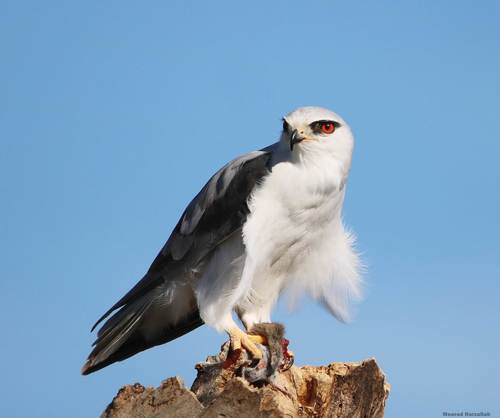 peneireiro-cinzento
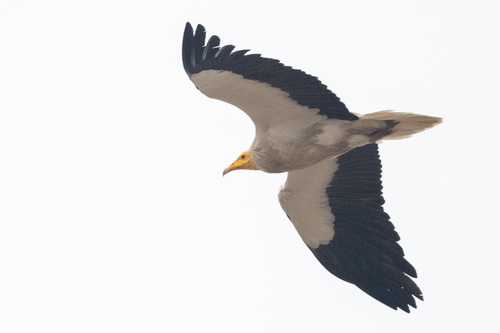 britango
Em resumo
A marca de campo mais confiável para separar o peneireiro-cinzento do britango é a estrutura geral e o perfil de voo: o peneireiro-cinzento é um rapinante compacto e pequeno, com asas longas e pontudas e uma cauda curta, enquanto o britango é muito maior, com uma cauda em forma de cunha e um padrão distinto de asas brancas e pretas. As plumagens juvenis diferem acentuadamente: os jovens peneireiros são marrom-avermelhado por cima e no peito, enquanto os britangos juvenis são marrons escuros com manchas brancas. Em voo, a longa cauda em forma de cunha do britango e o corpo pálido com penas de voo pretas se destacam em relação à plumagem mais uniforme cinza e branca do peneireiro e às manchas pretas nas asas. A forma do bico e a cor facial também são fundamentais: o peneireiro tem um bico pequeno e curvado e olhos vermelhos, enquanto o britango tem um bico longo e esguio e pele facial amarela nua.
Dicas de identificação
- Tamanho e volume: O britango é muito maior e mais pesado que o peneireiro-cinzento; isso geralmente é óbvio mesmo à distância. Se ambos forem vistos juntos, o peneireiro parece pequeno e esguio, enquanto o britango é robusto e de asas longas.
- Forma da cauda: Em voo, o britango mostra uma cauda em forma de cunha distinta, enquanto o peneireiro-cinzento tem uma cauda curta e quadrada. Esta é uma marca confiável para todas as idades.
- Forma das asas e estilo de voo: O peneireiro-cinzento tem asas longas e pontudas e frequentemente paira, semelhante a um falcão, sobre campos. O britango planará com asas largas e pontudas, mas não paira; ele circula em térmicas com um voo constante e flutuante.
- Plumagem juvenil: Os jovens peneireiros são marrom-avermelhado por cima e no peito, com branco e cinza em outros lugares; os britangos juvenis são marrons escuros com manchas brancas e não apresentam tons enferrujados. Use esta marca para aves que ainda não estão em plumagem adulta completa.
- Padrão de asas de adultos: Os adultos do britango têm uma asa inferior preta e branca impressionante, com penas de voo pretas contrastando acentuadamente com as coberturas brancas e o corpo. Os adultos do peneireiro-cinzento são principalmente brancos por baixo, com preto nas pontas das asas e nos ombros, mas não possuem o padrão ousado do britango.
- Características faciais: O peneireiro-cinzento tem olhos vermelhos e um bico pequeno e curvado, com o rosto coberto de penas. O britango tem pele facial amarela nua que se estende até a garganta, e um bico longo, esguio e curvado. Isso é visível de perto ou com boas ópticas.
- Forma do bico: O bico do peneireiro é curto e compacto, adequado para capturar presas pequenas. O bico do britango é mais longo, mais esguio e ligeiramente curvado para baixo, adaptado para a alimentação de carniça.
- Cor das pernas: Os britangos adultos têm pernas rosas; os juvenis têm pernas cinzas. As pernas do peneireiro são menos distintas, mas não são rosas.
- Postura empoleirada: O peneireiro-cinzento empoleira-se ereto e alerta, frequentemente em galhos ou fios expostos. O britango empoleira-se mais curvado, com um corpo mais pesado e pescoço mais longo.
- Contexto de habitat: Os peneireiros são mais frequentemente vistos sobre campos abertos ou agrícolas, pairando ou empoleirando-se. Os britangos são mais prováveis de serem encontrados em regiões áridas ou semiáridas, penhascos ou perto de carcaças e lixo.
- Plumagem suja: Os britangos adultos frequentemente parecem sujos ou enferrujados devido à mancha de solo, especialmente na cabeça e no corpo. Os peneireiros são sempre brancos e cinzas limpos (exceto pelos juvenis enferrujados).
- Cor dos olhos: O peneireiro-cinzento tem olhos vermelhos impressionantes, visíveis de perto. Os olhos do britango são menos conspícuos, com a pele facial sendo a principal característica.
- Sexo e idade: Ambas as espécies são monomórficas sexualmente em plumagem, mas as fêmeas dos britangos são ligeiramente maiores e os machos em reprodução podem ter pele facial laranja mais profunda. Isso é sutil e raramente útil em campo.
- Contexto sazonal: O peneireiro-cinzento não é migratório, mas nômade, respondendo a populações de roedores; o britango é migratório em algumas regiões, então o tempo pode ajudar em algumas áreas.
- Risco de confusão: O erro mais comum é confundir um peneireiro pairando com um britango à grande distância, ou um britango pálido com um peneireiro quando visto de baixo. Sempre verifique a forma da cauda, o padrão das asas e o tamanho geral.
Tamanho
O britango é dramaticamente maior e mais pesado que o peneireiro-cinzento. Com uma massa média adulta de quase 2 kg [wikidata], o britango ofusca o peneireiro, que é um pequeno rapinante (massa exata não fornecida, mas muito mais leve). No campo, o tamanho do britango é óbvio tanto empoleirado quanto em voo, com um corpo muito mais robusto e envergadura maior. O peneireiro é mais próximo em tamanho de um falcão ou pequeno falcão, enquanto o britango é comparável a outros grandes urubus do Velho Mundo, embora seja o menor de seu grupo.
Plumagem
- Aves juvenis/imaturas:
- Os juvenis do peneireiro-cinzento têm penas marrom-avermelhadas nas partes superiores e no peito, proporcionando um tom quente e enferrujado que está ausente em todas as idades do britango. Essa cor é derivada de porfirinas e acredita-se que ajude na camuflagem. O restante da plumagem é uma mistura de branco, cinza e preto, com o preto restrito às coberturas das asas e primárias.
- Os britangos juvenis são de cor negra ou marrom chocolate no geral, com manchas pretas e brancas. Eles não têm o branco limpo dos adultos e os tons enferrujados dos jovens peneireiros. A plumagem adulta do britango só é alcançada após cerca de cinco anos, então imaturos escuros são comuns.
- Adultos:
- Os adultos do peneireiro-cinzento são strikingly pálidos, com partes inferiores brancas, partes superiores cinzas e manchas pretas ousadas nas asas (especialmente no 'ombro' e primárias). Os olhos são vermelhos e o bico é pequeno e curvado.
- Os britangos adultos são brancos no geral, mas frequentemente parecem sujos ou enferrujados devido à mancha de solo. As penas de voo são pretas, criando um forte contraste com as coberturas brancas e o corpo, especialmente visível de baixo. A cauda é em forma de cunha e a pele facial é nua e amarela até a garganta. O bico é longo e esguio, com uma ponta curvada, e as pernas são rosas nos adultos.
- Em voo:
- O peneireiro mostra asas longas e pontudas e uma cauda curta e quadrada, com um corpo principalmente branco e manchas pretas nas asas.
- O britango planará com asas largas e pontudas com uma cauda em forma de cunha, e a asa inferior mostra um padrão ousado em preto e branco.
Comportamento
O peneireiro-cinzento é mais conhecido por seu hábito de pairar sobre campos abertos, muito parecido com um falcão, e é frequentemente visto caçando roedores e grandes insetos. Ele empoleira-se ereto em galhos ou fios expostos. O britango, em contraste, é um carniceiro planador, tipicamente visto circulando alto em térmicas durante as partes mais quentes do dia. Ele raramente paira e é mais provável de ser visto no chão em carcaças ou planando sobre o campo aberto. O voo do britango é mais flutuante e menos direto do que o do peneireiro, e ele depende do planador em vez da caça ativa.
Habitat
Ambas as espécies podem ser encontradas em campo aberto, mas o peneireiro-cinzento está mais intimamente ligado a campos abertos, planícies e, às vezes, encostas gramadas, frequentemente perto de áreas agrícolas ou de gado. O britango é mais difundido, ocorrendo da Ibéria e do Norte da África através da Ásia Ocidental até a Índia, e é frequentemente visto em regiões áridas ou semiáridas, penhascos e paisagens abertas onde carcaças estão disponíveis. O britango é mais provável de ser visto em torno de assentamentos humanos e locais de lixo, enquanto o peneireiro prefere áreas com abundância de pequenas presas e menos perturbação humana.