

black-winged ground dove vs west peruvian dove
Metriopelia melanoptera versus Zenaida meloda
Jogue um quiz com black-winged ground dove e west peruvian dove
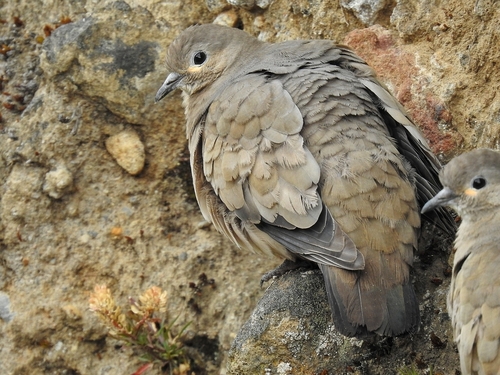 black-winged ground dove
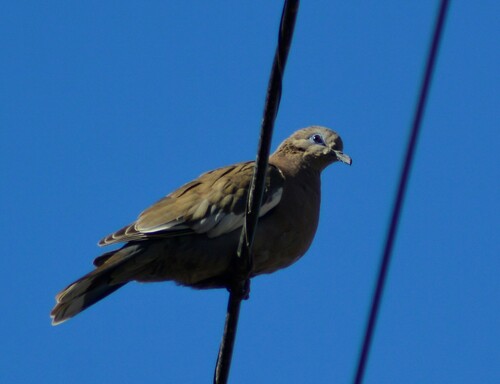 west peruvian dove
Em resumo
A marca de campo mais confiável entre black-winged ground dove e west peruvian dove é a proeminente faixa branca na asa do west peruvian dove, vista como um ousado crescente branco tanto em repouso quanto especialmente em voo, que está ausente no black-winged ground dove. Os juvenis de ambas as espécies são mais apagados, mas a faixa branca na asa do west peruvian dove ainda é evidente, enquanto os juvenis do black-winged ground dove não apresentam nenhum padrão branco forte na asa e mostram penas com bordas cor de palha. Estruturalmente, o west peruvian dove é maior e mais robusto, com um bico mais grosso e um canto da cauda branco largo em voo. Ambas as espécies podem mostrar tons rosados na parte inferior, mas o west peruvian dove é muito maior e tem um anel ocular azul distinto em adultos. O habitat e a elevação podem ajudar, mas a sobreposição é possível, então confie primeiro no padrão da asa e da cauda.
Dicas de identificação
- Faixa branca na asa (todas as idades): O west peruvian dove sempre mostra uma faixa branca ousada na asa, visível como um crescente em repouso e um forte flash em voo. O black-winged ground dove nunca mostra uma faixa branca ousada na asa—apenas uma borda pálida e algum cinza claro na asa fechada.
- Padrão da cauda em voo: O west peruvian dove tem cantos brancos largos na cauda e pontas cinzas, óbvios em voo. O black-winged ground dove não possui esses cantos brancos na cauda.
- Asa superior juvenil: O juvenil do west peruvian dove mantém a faixa branca na asa, enquanto os juvenis do black-winged ground dove têm penas com bordas cor de palha e nenhum branco forte na asa.
- Tamanho e estrutura: O west peruvian dove é muito maior e mais robusto, com um bico mais grosso e cauda mais longa. O black-winged ground dove é menor, mais compacto e mais leve.
- Bico: O west peruvian dove tem um bico notavelmente mais grosso, especialmente em comparação com o bico mais fino do black-winged ground dove.
- Anel ocular: O adulto do west peruvian dove tem um anel ocular nu de azul índigo a azul-violeta brilhante, enquanto a cor dos olhos e a pele nua ao redor dos olhos do black-winged ground dove são variáveis e nunca tão brilhantes.
- Cor das pernas: Os adultos do west peruvian dove têm pernas e pés vermelhos; os juvenis são cor de rosa acastanhado. A cor das pernas do black-winged ground dove não é descrita como diagnóstica.
- Cor das partes inferiores: Ambas as espécies podem mostrar tons rosados na parte inferior, mas as partes inferiores do west peruvian dove são cinza quente com um tom rosa-avermelhado, enquanto os machos do black-winged ground dove são cor de rosa claro (fêmeas mais apagadas, menos rosas).
- Rosto e pescoço: O west peruvian dove tem um rosto e pescoço cor de palha que desvanecem para cinza no peito; o black-winged ground dove tem uma garganta esbranquiçada e flancos cinzas.
- Contexto do habitat: Se visto em puna de alta elevação, páramo, ou perto de floresta de Polylepis, especialmente acima de 2.000 m, suspeite do black-winged ground dove. Em ambientes de baixa altitude, encostas, urbanos ou agrícolas, o west peruvian dove é mais provável, mas cuidado com a expansão de área.
- Comportamento: O black-winged ground dove é mais propenso a estar em pequenos bandos em áreas abertas de grama ou arbustos perto da linha de árvores; o west peruvian dove é frequentemente encontrado em grupos maiores e se adapta bem a habitats perturbados.
- Vocalizações: A canção do west peruvian dove é um coo baixo e rítmico repetido por vários segundos; o black-winged ground dove emite notas duplas mais agudas e curtas. Use a voz apenas se você estiver familiarizado com ambas.
- Diferenças sexuais: As fêmeas do black-winged ground dove são mais apagadas e menos rosas na parte inferior; os sexos do west peruvian dove são semelhantes.
- Movimento sazonal: O black-winged ground dove pode descer para altitudes mais baixas no inverno, então não confie apenas na altitude fora da temporada de reprodução.
- Armadilhas: Pombos imaturos podem ser confusos, mas a faixa branca na asa e os cantos da cauda do west peruvian dove são confiáveis em todas as idades; a ausência dessas marcas aponta para o black-winged ground dove.
Tamanho
O west peruvian dove é substancialmente maior e mais pesado: os adultos medem 25–33 cm de comprimento e pesam cerca de 216 g, enquanto o black-winged ground dove mede 21–23 cm e cerca de 105 g. No campo, o west peruvian dove parece mais robusto e longo, com um bico mais grosso e cauda mais longa. O black-winged ground dove é mais compacto e mais leve no geral. O tamanho sozinho nem sempre é confiável à distância, mas a diferença é notável quando vistos juntos ou com experiência.
Plumagem
- Juvenis: Os juvenis do west peruvian dove são mais claros do que os adultos, mas ainda mostram a faixa branca na asa e os cantos brancos largos da cauda em voo; suas pernas são cor de rosa acastanhado e o anel ocular azul está ausente. Os juvenis do black-winged ground dove não têm nenhum branco forte na asa, têm penas com bordas cor de palha e nenhum tom rosa na parte inferior.
- Adultos: Os adultos do west peruvian dove têm partes superiores cinza-acastanhado, um rosto e pescoço cor de palha, partes inferiores cinza quente com um tom rosado, e uma faixa branca ousada na asa visível em repouso e em voo. Sua cauda é pontuada com cinza e tem cantos brancos largos. O anel ocular é azul índigo a azul-violeta brilhante e as pernas/pés são vermelhos. Os adultos do black-winged ground dove são cinzentos ou marrons terrosos acima (machos com leve tom rosa, fêmeas mais apagadas), garganta esbranquiçada, partes inferiores cor de rosa claro, e uma asa fechada com uma borda branca e algum cinza claro, mas nunca uma faixa branca ousada. A cor dos olhos e a pele nua ao redor dos olhos são variáveis. A cauda não possui os cantos brancos largos do west peruvian dove.
- Sexos: Ambas as espécies são semelhantes entre os sexos, mas as fêmeas do black-winged ground dove são mais apagadas e menos rosas na parte inferior.
Comportamento
Ambas as espécies se alimentam no chão, mas o black-winged ground dove é mais frequentemente visto em pequenos bandos em áreas abertas de grama perto da linha de árvores, enquanto o west peruvian dove é um colonizador adaptável, frequentemente encontrado em habitats mais urbanos, agrícolas ou perturbados, bem como em áreas abertas. O west peruvian dove está expandindo sua área e é mais provável de ser visto em ambientes modificados pelo homem, às vezes em grupos maiores. O black-winged ground dove tende a pousar em florestas de Polylepis ou colônias de Puya e é menos provável de ser encontrado em ambientes urbanos.
Habitat
O black-winged ground dove é uma espécie andina alta, tipicamente encontrada em áreas gramadas perto da linha de árvores, puna ou páramo, e pousa em florestas de Polylepis ou colônias de Puya. É principalmente residente em altitudes entre 2.000–4.400 m (às vezes 900–4.900 m no Chile), descendo no inverno. O west peruvian dove é uma espécie de baixa altitude a encosta da costa do Pacífico e vales adjacentes, mas está se expandindo para novas áreas, incluindo zonas urbanas e agrícolas, e pode atravessar os Andes para a Argentina ocidental e central. Embora suas áreas possam se sobrepor em alguns vales andinos, o black-winged ground dove está mais ligado a habitats mais altos e menos perturbados, enquanto o west peruvian dove é comum em áreas mais baixas e mais influenciadas pelo homem.
Voz
O black-winged ground dove emite uma série de notas duplas relativamente agudas ('rrree-up...rrree-up...'), e um chamado curto 'piu'. O west peruvian dove tem um coo de tom baixo, rítmico e monótono ('Who.. huLOO..hu..huLOO..hu..huLOO') e um chamado coo-coo-LEE, com uma faixa vocal entre 377–566 Hz. A canção do west peruvian dove é mais baixa, mais prolongada e repetida por períodos mais longos, enquanto a do black-winged ground dove é mais alta e curta. As vocalizações são úteis se ouvidas bem, mas a sobreposição nas vocalizações dos pombos pode causar confusão.
black-winged ground dove · west peruvian dove · Minhas aves difíceis