

Motmot

ハグロハシリバト 対 ミナミハジロバト

Metriopelia melanoptera 対 Zenaida meloda

ハグロハシリバトとミナミハジロバトのクイズ
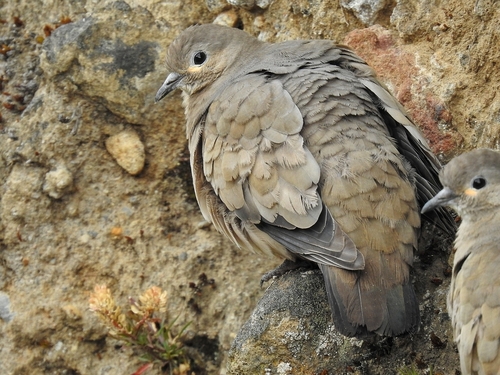
ハグロハシリバト (Metriopelia melanoptera) ハグロハシリバト
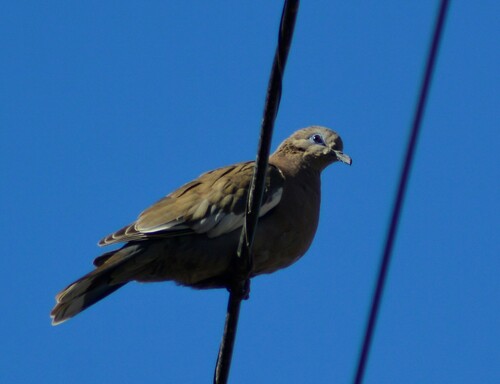
ミナミハジロバト (Zenaida meloda) ミナミハジロバト

メディア

読み込み中…

要点

ハグロハシリバトとミナミハジロバトの最も信頼できるフィールドマークは、ミナミハジロバトの目立つ白い翼のバンドで、静止時や特に飛行中に大胆な白い三日月として見られ、ハグロハシリバトには存在しません。両種の幼鳥は鈍い色合いですが、ミナミハジロバトの白い翼のバンドは依然として明白であり、ハグロハシリバトの幼鳥は強い白い翼のパターンが欠けており、バフの縁取りの羽毛を示します。構造的には、ミナミハジロバトはより大きく、ずんぐりしており、より太いくちばしと飛行中に広い白い尾の角を持っています。両種は下側にピンクがかった色合いを示すことがありますが、ミナミハジロバトははるかに大きく、成鳥には特徴的な青いアイリングがあります。生息地と標高は役立つことがありますが、重複が可能なので、まず翼と尾のパターンに頼ってください。

識別のコツ

  1. 白い翼のバンド(すべての年齢): ミナミハジロバトは常に翼に大胆な白いバンドを示し、静止時には三日月として、飛行中には強いフラッシュとして見えます。ハグロハシリバトは決して大胆な白い翼のバンドを示さず、閉じた翼には淡い縁といくつかの淡い灰色しかありません。
  2. 飛行中の尾のパターン: ミナミハジロバトは尾に広い白い角と灰色の先端を持ち、飛行中に明らかです。ハグロハシリバトにはこれらの白い尾の角がありません。
  3. 幼鳥の上翼: 幼鳥のミナミハジロバトは白い翼のバンドを保持していますが、ハグロハシリバトの幼鳥はバフの縁取りの羽毛を持ち、翼に強い白がありません。
  4. サイズと構造: ミナミハジロバトははるかに大きく、ずんぐりしており、より太いくちばしと長い尾を持っています。ハグロハシリバトはより小さく、コンパクトで軽いです。
  5. くちばし: ミナミハジロバトは、特にハグロハシリバトのより細いくちばしと比較して、明らかに太いくちばしを持っています。
  6. アイリング: 成鳥のミナミハジロバトは明るいインディゴからバイオレットブルーの裸のアイリングを持っていますが、ハグロハシリバトの目の色と裸の皮膚は変動し、決して明るい青ではありません。
  7. 脚の色: ミナミハジロバトの成鳥は赤い脚と足を持ち、幼鳥は茶色がかったピンクです。ハグロハシリバトの脚の色は診断的とは記述されていません。
  8. 腹部の色: 両種は下側にピンクがかった色合いを示すことがありますが、ミナミハジロバトの腹部は温かい灰色で、ピンク赤からピンクがかった色合いがありますが、ハグロハシリバトのオスはファーンピンク(メスは鈍く、ピンクが少ない)です。
  9. 顔と首: ミナミハジロバトはバフ色の顔と首を持ち、胸の灰色にフェードします。ハグロハシリバトは白っぽい喉と灰色の側面を持っています。
  10. 生息地の文脈: 高標高のプナ、パラモ、またはポリレピスの森林の近くで見られた場合、特に2,000 m以上ではハグロハシリバトを疑ってください。低地、丘のふもと、都市、または農業の環境では、ミナミハジロバトの方が可能性が高いですが、範囲の拡大に注意してください。
  11. 行動: ハグロハシリバトは、樹木の境界近くの開けた草地や低木のエリアで小さな群れでいる可能性が高いですが、ミナミハジロバトはしばしばより大きな群れで、乱れた生息地に適応しています。
  12. 声: ミナミハジロバトの歌は低く、リズミカルなクー音が数秒間繰り返されます。ハグロハシリバトは高音で短い二重音を出します。両方に慣れている場合のみ声を使用してください。
  13. 性差: ハグロハシリバトのメスは鈍く、下側がピンクが少ないですが、ミナミハジロバトの性別は似ています。
  14. 季節的な移動: ハグロハシリバトは冬に低い標高に降りることがあるため、繁殖シーズン外では標高だけに頼らないでください。
  15. 落とし穴: 未熟なハトは混乱を招くことがありますが、ミナミハジロバトの白い翼のバンドと尾の角はすべての年齢で信頼できるものであり、これらのマークが欠けている場合はハグロハシリバトを示します。

大きさ

ミナミハジロバトはかなり大きく、重いです:成鳥は25〜33 cmの長さで、約216 gの重さがありますが、ハグロハシリバトは21〜23 cmで約105 gです。フィールドでは、ミナミハジロバトはずんぐりして長く見え、より太いくちばしと長い尾を持っています。ハグロハシリバトは全体的によりコンパクトで軽いです。サイズだけでは距離で信頼できないことがありますが、一緒に見たり経験があるときには違いが顕著です。

羽色

行動

両種は地面で餌を食べますが、ハグロハシリバトは樹木の境界近くの開けた草地で小さな群れで見られることが多いのに対し、ミナミハジロバトは適応力のあるコロニストで、都市、農業、または乱れた生息地や開けた国でも見られます。ミナミハジロバトはその範囲を拡大しており、人間が改変した環境で見られる可能性が高く、時にはより大きな群れで見られます。ハグロハシリバトはポリレピスの森林やプヤの群落で休む傾向があり、都市環境で見られる可能性は低いです。

生息環境

ハグロハシリバトは高いアンデスの種で、通常は樹木の境界近くの草地、プナ、またはパラモで見られ、ポリレピスの森林やプヤのコロニーで休みます。主に2,000〜4,400 mの標高に生息し(時にはチリで900〜4,900 m)、冬に降りることがあります。ミナミハジロバトは太平洋沿岸と隣接する谷の低地から丘のふもとの種ですが、新しい地域、都市や農業ゾーンに拡大しており、アンデスを越えて西部および中央アルゼンチンに入ることができます。彼らの範囲は一部のアンデスの谷で重複することがありますが、ハグロハシリバトはより高く、乱れの少ない生息地に結びついているのに対し、ミナミハジロバトは低く、人間の影響を受けた地域で一般的です。

声

ハグロハシリバトは比較的高音の二重音(「rrree-up...rrree-up...」)と短い「ピウ」という呼び声を出します。ミナミハジロバトは低音のリズミカルで単調なクー音(「Who.. huLOO..hu..huLOO..hu..huLOO」)とクー・クー・リーという呼び声を持ち、音域は377〜566 Hzです。ミナミハジロバトの歌は低く、より引き延ばされ、長い間繰り返されますが、ハグロハシリバトの歌は高くて短いです。声はよく聞こえれば役立ちますが、ハトの声の重複は混乱を引き起こすことがあります。

より良い説明を送る

比較と同じ項目を使ってください。文章はすぐに公開されます。

The most reliable field mark between Black-winged Ground Dove and West Peruvian Dove is the prominent white wing band of the West Peruvian Dove, seen as a bold white crescent both at rest and especially in flight, which is absent in Black-winged Ground Dove. Juveniles of both species are duller, but the West Peruvian Dove's white wing band is still evident, while Black-winged Ground Dove juveniles lack any strong white wing pattern and show buff-edged feathers. Structurally, West Peruvian Dove is larger and bulkier, with a stouter bill and a broad white tail corner in flight. Both species can show pinkish tones below, but the West Peruvian Dove is much larger and has a distinctive blue eye ring in adults. Habitat and elevation can help, but overlap is possible, so rely on wing and tail pattern first.

  1. White wing band (all ages): West Peruvian Dove always shows a bold white band across the wing, visible as a crescent at rest and a strong flash in flight. Black-winged Ground Dove never shows a bold white wing band—only a pale edge and some pale gray on the closed wing.
  2. Tail pattern in flight: West Peruvian Dove has broad white corners on the tail and gray tips, obvious in flight. Black-winged Ground Dove lacks these white tail corners.
  3. Juvenile upperwing: Juvenile West Peruvian Dove retains the white wing band, while Black-winged Ground Dove juveniles have buff-edged feathers and no strong white in the wing.
  4. Size and structure: West Peruvian Dove is much larger and bulkier, with a stouter bill and longer tail. Black-winged Ground Dove is smaller, more compact, and lighter.
  5. Bill: West Peruvian Dove has a noticeably stouter bill, especially compared to the finer bill of Black-winged Ground Dove.
  6. Eye ring: Adult West Peruvian Dove has a bright indigo to violet-blue bare eye ring, while Black-winged Ground Dove's eye color and bare skin are variable and never as bright blue.
  7. Leg color: West Peruvian Dove adults have red legs and feet; juveniles are brownish-pink. Black-winged Ground Dove's leg color is not described as diagnostic.
  8. Underparts color: Both can show pinkish tones below, but West Peruvian Dove's underparts are warm gray with pink-red to pinkish tinge, while Black-winged Ground Dove males are fawn-pink (females duller, less pink).
  9. Face and neck: West Peruvian Dove has a buff face and neck fading to gray on the chest; Black-winged Ground Dove has a whitish throat and gray flanks.
  10. Habitat context: If seen in high-elevation puna, páramo, or near Polylepis woodland, especially above 2,000 m, suspect Black-winged Ground Dove. In lowland, foothill, urban, or agricultural settings, West Peruvian Dove is more likely, but beware of range expansion.
  11. Behavior: Black-winged Ground Dove is more likely to be in small flocks in open grassy or shrubby areas near treeline; West Peruvian Dove is often in larger groups and adapts well to disturbed habitats.
  12. Vocalizations: West Peruvian Dove's song is a low, rhythmic coo repeated for several seconds; Black-winged Ground Dove gives higher-pitched, shorter double notes. Use voice only if you are familiar with both.
  13. Sex differences: Black-winged Ground Dove females are duller and less pink below; West Peruvian Dove sexes are similar.
  14. Seasonal movement: Black-winged Ground Dove may descend to lower elevations in winter, so do not rely solely on altitude out of breeding season.
  15. Pitfalls: Immature doves can be confusing, but the white wing band and tail corners of West Peruvian Dove are reliable at all ages; absence of these marks points to Black-winged Ground Dove.

West Peruvian Dove is substantially larger and heavier: adults are 25–33 cm long and weigh around 216 g, while Black-winged Ground Dove is 21–23 cm and about 105 g. In the field, West Peruvian Dove appears bulkier and longer, with a stouter bill and longer tail. Black-winged Ground Dove is more compact and lighter overall. Size alone is not always reliable at a distance, but the difference is notable when seen together or with experience.

  • Juveniles: West Peruvian Dove juveniles are paler than adults but still show the white wing band and broad white tail corners in flight; their legs are brownish-pink and the blue eye ring is absent. Black-winged Ground Dove juveniles lack any strong white in the wing, have buff-edged feathers, and no pink tinge below.
  • Adults: West Peruvian Dove adults have brownish-gray upperparts, a buff face and neck, warm gray underparts with pinkish tinge, and a bold white wing band visible at rest and in flight. Their tail is tipped with gray and has broad white corners. The eye ring is bright indigo to violet-blue and legs/feet are red. Black-winged Ground Dove adults are grayish or earth brown above (males with faint pink tinge, females duller), whitish throat, fawn-pink underparts, and a closed wing with a white edge and some pale gray, but never a bold white band. Eye color and bare skin around the eye are variable. The tail lacks the broad white corners of West Peruvian Dove.
  • Sexes: Both species are similar between sexes, but Black-winged Ground Dove females are duller and less pink below.

Both species feed on the ground, but Black-winged Ground Dove is more often seen in small flocks in open grassy areas near treeline, while West Peruvian Dove is an adaptable colonizer, often found in more urban, agricultural, or disturbed habitats as well as open country. West Peruvian Dove is expanding its range and is more likely to be seen in human-modified environments, sometimes in larger groups. Black-winged Ground Dove tends to roost in Polylepis woodland or Puya stands and is less likely to be found in urban settings.

Black-winged Ground Dove is a high Andean species, typically found in grassy areas near treeline, puna, or páramo, and roosts in Polylepis woodland or Puya colonies. It is mostly resident at elevations between 2,000–4,400 m (sometimes 900–4,900 m in Chile), descending in winter. West Peruvian Dove is a lowland to foothill species of the Pacific coast and adjacent valleys, but is expanding into new areas, including urban and agricultural zones, and can cross the Andes into western and central Argentina. While their ranges can overlap in some Andean valleys, Black-winged Ground Dove is more tied to higher, less disturbed habitats, while West Peruvian Dove is common in lower, more human-influenced areas.

Black-winged Ground Dove gives a series of relatively high-pitched, double notes ('rrree-up...rrree-up...'), and a short 'piu' call. West Peruvian Dove has a low-pitched, rhythmic, monotonous cooing ('Who.. huLOO..hu..huLOO..hu..huLOO') and a coo-coo-LEE call, with a vocal range between 377–566 Hz. West Peruvian Dove's song is lower, more drawn-out, and repeated for longer periods, while Black-winged Ground Dove's is higher and shorter. Vocalizations are helpful if heard well, but overlap in dove vocalizations can cause confusion.

変更を破棄しますか?

保存していない編集があります。今離れると失われます。

ハグロハシリバト · ミナミハジロバト · 苦手な鳥