

trinta-réis-negro vs trinta-réis-negro-de-asa-branca
Chlidonias niger versus Chlidonias leucopterus
Jogue um quiz com trinta-réis-negro e trinta-réis-negro-de-asa-branca
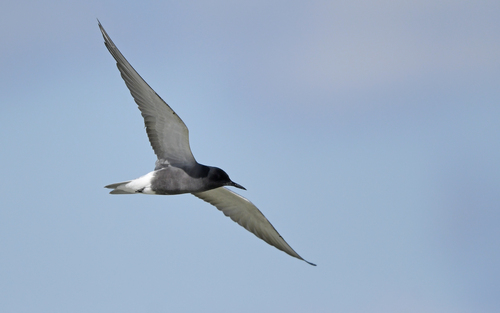 trinta-réis-negro
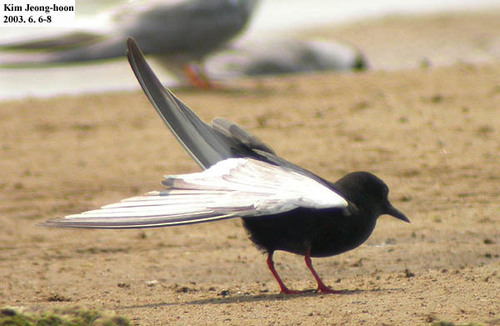 trinta-réis-negro-de-asa-branca
Em resumo
A marca de campo mais confiável entre trinta-réis-negro e trinta-réis-negro-de-asa-branca, especialmente em plumagens juvenis e não reprodutivas, é o padrão das partes superiores e do rabo em voo: os juvenis e imaturos de trinta-réis-negro apresentam um rabo cinza-acastanhado e frequentemente têm marcas cinza-acastanhadas borradas nos lados do peito branco, enquanto os juvenis de trinta-réis-negro-de-asa-branca têm um rabo branco claro e uma 'sela' marrom-escura na manta, com um colar branco pronunciado. Os adultos em plumagem reprodutiva são ambos principalmente pretos por baixo, mas o trinta-réis-negro tem um dorso cinza escuro e menos branco nas asas, enquanto o trinta-réis-negro-de-asa-branca exibe asas brancas impressionantes que contrastam com um corpo preto e uma cauda cinza mais clara (quase branca). A cor do bico e das pernas também difere: o trinta-réis-negro tem um bico mais longo, esguio e escuro e pernas escuras, enquanto o trinta-réis-negro-de-asa-branca tem um bico preto mais curto e grosso e pernas vermelhas. Ambas as espécies são trinta-réis de pântano, frequentemente encontradas sobre água doce, mas suas diferenças de plumagem são a maneira mais confiável de separá-las em campo.
Dicas de identificação
- Parte Superior Juvenil/Imaturo e Rabo: Em voo, procure um rabo branco claro e uma 'sela' marrom-escura na manta dos juvenis de trinta-réis-negro-de-asa-branca, em comparação com um rabo cinza-acastanhado e partes superiores apagadas nos juvenis de trinta-réis-negro. Esta é a marca mais confiável para aves jovens.
- Marcas Lateral do Peito (Juvenis): Os juvenis de trinta-réis-negro frequentemente mostram marcas cinza-acastanhadas borradas nos lados do peito branco, que o trinta-réis-negro-de-asa-branca não possui. Se você ver essas manchas, é trinta-réis-negro.
- Colar Branco (Juvenis): Ambas as espécies podem mostrar um colar branco, mas ele é mais largo e pronunciado no trinta-réis-negro-de-asa-branca, ajudando a isolar a manta escura como uma 'sela.'
- Cor do Rabo (Todas as Idades): O trinta-réis-negro-de-asa-branca sempre tem um rabo branco, enquanto o rabo do trinta-réis-negro é cinza-acastanhado. Isso é visível em voo e é um separador chave.
- Padrão das Asas (Adultos): Em plumagem reprodutiva, o trinta-réis-negro-de-asa-branca exibe principalmente asas brancas (especialmente as asas externas), contrastando com um corpo preto. O trinta-réis-negro tem uma asa menos contrastante, com mais cinza e menos branco.
- Cor da Cauda: O trinta-réis-negro-de-asa-branca tem uma cauda cinza clara a quase branca, enquanto a cauda do trinta-réis-negro é cinza-acastanhado claro. Ambas as caudas parecem 'quadradas', então a forma é menos útil do que a cor.
- Estrutura do Bico: O bico do trinta-réis-negro é mais longo, esguio e ligeiramente curvado para baixo, quase tão longo quanto a cabeça. O bico do trinta-réis-negro-de-asa-branca é mais curto, mais grosso e decididamente mais curto que a cabeça. A cor do bico é escura em ambos, mas o bico do trinta-réis-negro-de-asa-branca pode parecer ligeiramente mais claro na base em algumas luzes.
- Cor das Pernas: O trinta-réis-negro tem pernas escuras; o trinta-réis-negro-de-asa-branca tem pernas vermelhas curtas, especialmente óbvias em plumagem reprodutiva ou quando empoleiradas.
- Padrão da Cabeça (Não Reprodutiva/Imatura): Ambas as espécies mostram uma mancha triangular escura na frente do olho, mas o trinta-réis-negro-de-asa-branca em plumagem não reprodutiva tem mais manchas brancas na coroa e na parte de trás da cabeça, e uma testa branca. O trinta-réis-negro mantém uma touca mais escura e menos branco na cabeça.
- Cor do Rosto: O trinta-réis-negro-de-asa-branca pode mostrar um tom amarelado no rosto, especialmente em juvenis, que o trinta-réis-negro não possui.
- Padrão da Asa Inferior: O trinta-réis-negro-de-asa-branca mostra mais preto nas coberturas da asa inferior em plumagem não reprodutiva; a asa inferior do trinta-réis-negro é mais simples.
- Estilo de Voo: O voo do trinta-réis-negro é mais dinâmico e errático, enquanto o voo do trinta-réis-negro-de-asa-branca é mais raso e mais tranquilo, mas isso é sutil e melhor usado como evidência de apoio.
- Vocalização: O 'kik' agudo do trinta-réis-negro pode ajudar em bandos, mas a voz não é um separador forte.
- Habitat/Distribuição: Se na América do Norte, espera-se o trinta-réis-negro; o trinta-réis-negro-de-asa-branca é raro. Na Eurásia, ambos são possíveis, então confie na plumagem.
- Armadilha Híbrida: Híbridos raros podem mostrar uma mistura de características (por exemplo, manta escura com manchas laterais no peito); se uma ave mostrar características intermediárias, considere a hibridização, mas espere que aves puras se encaixem nos padrões acima.
Tamanho
Ambas as espécies são muito semelhantes em tamanho e estrutura, com o trinta-réis-negro pesando em média cerca de 60 g. O bico do trinta-réis-negro é mais longo (cerca de 27 mm, quase tão longo quanto a cabeça), esguio e ligeiramente curvado para baixo, enquanto o bico do trinta-réis-negro-de-asa-branca é mais curto (22–25 mm), mais grosso e decididamente mais curto que a cabeça. No geral, o tamanho não é uma marca de campo confiável para separação.
Plumagem
- Juvenil/Primeiro Inverno/Imaturo:
- Trinta-réis-negro: Apresenta um rabo cinza-acastanhado, partes superiores apagadas com bordas de penas claras e marcas cinza-acastanhadas borradas nos lados do peito branco. A cauda é cinza-acastanhado claro e parece 'quadrada.' Os juvenis têm um colar branco largo e uma mancha triangular escura na frente do olho. A parte superior da asa é geralmente uniforme, sem forte contraste.
- Trinta-réis-negro-de-asa-branca: Os juvenis têm um rabo branco claro e uma 'sela' marrom-escura (manta) nitidamente destacada por um colar branco e rabo branco. A manta, as tertiais e os escapulares têm pontas estreitas de marrom claro. A cauda é cinza clara (quase branca) e também parece 'quadrada.' O rosto é tingido de amarelo, e a mancha triangular escura na frente do olho está presente. A parte superior da asa mostra mais contraste devido ao branco nas asas e no rabo.
- Plumagem Reprodutiva Adulto:
- Trinta-réis-negro: Cabeça, pescoço e barriga pretos; dorso cinza escuro; asa anterior branca; touca preta ou marrom-escura formando uma capuz quase completo; rabo cinza-acastanhado; cauda cinza-acastanhado claro. O rosto é branco com uma grande mancha triangular escura na frente do olho.
- Trinta-réis-negro-de-asa-branca: Pescoço e barriga pretos; dorso cinza muito escuro; rabo branco; cauda cinza clara (quase branca); asas principalmente brancas com a asa interna cinza e coberturas com pontas marrons. A cabeça é preta com uma testa branca e coroa manchada, e o rosto pode ser tingido de amarelo.
- Não Reprodutiva/Inverno Adulto:
- Ambas as espécies perdem a maior parte do preto no corpo, substituído por cinza ou branco, mas o trinta-réis-negro mantém um rabo mais escuro e menos contraste na parte superior da asa, enquanto o trinta-réis-negro-de-asa-branca mantém um rabo branco e mais branco nas asas. O trinta-réis-negro-de-asa-branca mostra mais manchas brancas na coroa e na parte de trás da cabeça.
Comportamento
Ambas as espécies forrageiam voando sobre a água e pegando presas da superfície ou capturando insetos em voo, em vez de mergulhar como os trinta-réis do gênero Sterna. O voo do trinta-réis-negro é descrito como esguio, cheio e dinâmico, frequentemente errático enquanto mergulha em busca de alimento. O voo do trinta-réis-negro-de-asa-branca é mais raso e tranquilo. Ambas as espécies são ágeis e flutuantes no ar, mas as diferenças no estilo de voo são sutis e nem sempre confiáveis para separação.
Habitat
Tanto o trinta-réis-negro quanto o trinta-réis-negro-de-asa-branca são trinta-réis de pântano, tipicamente encontrados em ou perto de áreas úmidas de água doce, lagos e pântanos durante a temporada de reprodução. O trinta-réis-negro se reproduz na Europa, Ásia Ocidental e América do Norte, hibernando nas costas da África e América do Sul. O trinta-réis-negro-de-asa-branca tem uma distribuição mais ampla no Velho Mundo, reproduzindo-se em toda a Europa, África, Ásia e até mesmo na Austrália. A sobreposição de habitat é possível na Eurásia, mas o contexto sozinho raramente é diagnóstico.
Voz
O trinta-réis-negro emite um chamado agudo 'kik', e grandes bandos podem ser bastante barulhentos. Nenhuma diferença vocal distinta é notada para o trinta-réis-negro-de-asa-branca nas fontes fornecidas, portanto a voz não é um separador confiável em campo.
trinta-réis-negro · trinta-réis-negro-de-asa-branca · Minhas aves difíceis