
Mignattino comune vs Mignattino alibianche
Chlidonias niger contro Chlidonias leucopterus
Fai un quiz con Mignattino comune e Mignattino alibianche
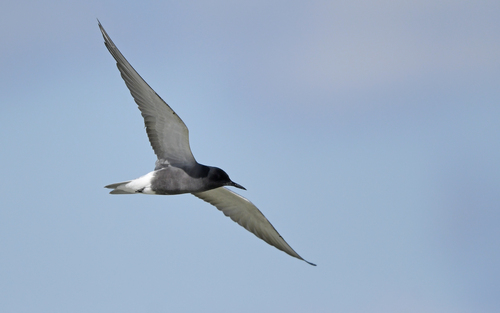 Mignattino comune
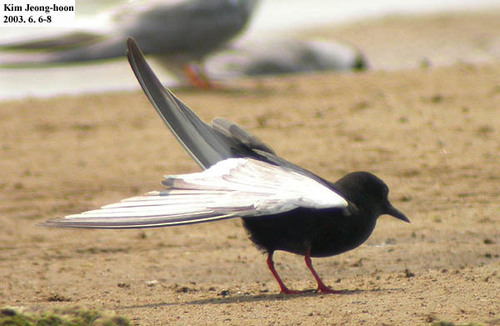 Mignattino alibianche
In breve
Il segno di campo più affidabile tra Mignattino comune e Mignattino alibianche, specialmente nei piumaggi giovanili e non riproduttivi, è il modello delle parti superiori e del codione in volo: i giovani e gli immaturi di Mignattino comune mostrano un codione grigio-bruno e spesso hanno macchie grigio-brune sfocate sui lati del petto bianco, mentre i giovani di Mignattino alibianche hanno un codione bianco chiaro e un 'sella' marrone scuro attraverso il mantello, con un colletto bianco pronunciato. Gli adulti in piumaggio riproduttivo sono entrambi per lo più neri sotto, ma il Mignattino comune ha un dorso grigio scuro e meno bianco nelle ali, mentre il Mignattino alibianche mostra ali bianche sorprendenti che contrastano con un corpo nero e una coda grigia più chiara (quasi bianca). Anche il colore del becco e delle gambe differisce: il Mignattino comune ha un becco più lungo, snello e nerastro e gambe scure, mentre il Mignattino alibianche ha un becco nero più corto e tozzo e gambe rosse. Entrambe le specie sono mignattini di palude, spesso trovati su acque dolci, ma le loro differenze nel piumaggio sono il modo più affidabile per separarli sul campo.
Consigli di identificazione
- Juvenile/Immature Upperwing and Rump: In volo, cerca un codione bianco chiaro e una 'sella' marrone scuro sul mantello dei giovani Mignattino alibianche, rispetto a un codione grigio-bruno e parti superiori opache nei giovani Mignattino comune. Questo è il segno più affidabile per i giovani uccelli.
- Breast-side Markings (Juveniles): I giovani Mignattino comune mostrano spesso macchie grigio-brune sfocate sui lati del petto bianco, che il Mignattino alibianche non ha. Se vedi queste macchie, è un Mignattino comune.
- White Collar (Juveniles): Entrambe le specie possono mostrare un colletto bianco, ma è più ampio e pronunciato nel Mignattino alibianche, aiutando a isolare il mantello scuro come una 'sella.'
- Rump Color (All Ages): Il Mignattino alibianche ha sempre un codione bianco, mentre il codione del Mignattino comune è grigio-bruno. Questo è visibile in volo ed è un separatore chiave.
- Wing Pattern (Adults): In piumaggio riproduttivo, il Mignattino alibianche mostra ali per lo più bianche (soprattutto le ali esterne), in contrasto con un corpo nero. Il Mignattino comune ha un'ala meno contrastante, con più grigio e meno bianco.
- Tail Color: Il Mignattino alibianche ha una coda grigia chiara fino a quasi bianca, mentre la coda del Mignattino comune è grigio-bruna chiara. Entrambe le code sembrano 'quadrate,' quindi la forma è meno utile del colore.
- Bill Structure: Il becco del Mignattino comune è più lungo, snello e leggermente ricurvo, quasi lungo quanto la testa. Il becco del Mignattino alibianche è più corto, tozzo e decisamente più corto della testa. Il colore del becco è nerastro in entrambi, ma il becco del Mignattino alibianche può apparire leggermente più chiaro alla base in alcune luci.
- Leg Color: Il Mignattino comune ha gambe scure; il Mignattino alibianche ha gambe rosse corte, soprattutto evidenti in piumaggio riproduttivo o quando è posato.
- Head Pattern (Nonbreeding/Immature): Entrambe le specie mostrano una macchia triangolare scura davanti all'occhio, ma il Mignattino alibianche in piumaggio non riproduttivo ha più macchie bianche sulla corona e sulla parte posteriore della corona, e una fronte bianca. Il Mignattino comune mantiene un cappello più scuro e meno bianco sulla testa.
- Face Color: Il Mignattino alibianche può mostrare una sfumatura giallastra sul viso, specialmente nei giovani, che il Mignattino comune non ha.
- Underwing Pattern: Il Mignattino alibianche mostra più nero nelle copritrici delle ali inferiori in piumaggio non riproduttivo; l'ala inferiore del Mignattino comune è più semplice.
- Flight Style: Il volo del Mignattino comune è più dinamico ed erratico, mentre il volo del Mignattino alibianche è più superficiale e più tranquillo, ma questo è sottile e meglio utilizzato come prova di supporto.
- Vocalization: Il 'kik' acuto del Mignattino comune può aiutare nei gruppi, ma la voce non è un forte separatore.
- Habitat/Range: Se in Nord America, ci si aspetta il Mignattino comune; il Mignattino alibianche è raro. In Eurasia, entrambi sono possibili, quindi fai affidamento sul piumaggio.
- Hybrid Pitfall: I rari ibridi possono mostrare un mix di caratteristiche (ad es., mantello scuro con macchie laterali sul petto); se un uccello mostra tratti intermedi, considera l'ibridazione ma aspettati che gli uccelli puri si adattino ai modelli sopra descritti.
Taglia
Entrambe le specie sono molto simili in dimensioni e struttura, con il Mignattino comune che pesa in media circa 60 g. Il becco del Mignattino comune è più lungo (circa 27 mm, quasi lungo quanto la testa), snello e leggermente ricurvo, mentre il becco del Mignattino alibianche è più corto (22–25 mm), tozzo e decisamente più corto della testa. In generale, la dimensione non è un segno di campo affidabile per la separazione.
Piumaggio
- Juvenile/First-winter/Immature:
- Mignattino comune: Mostra un codione grigio-bruno, parti superiori opache con bordi di piume chiari e macchie grigio-brune sfocate sui lati del petto bianco. La coda è grigio-bruna chiara e appare 'quadrata.' I giovani hanno un colletto bianco piuttosto ampio e una macchia triangolare scura davanti all'occhio. L'ala superiore è generalmente uniforme, priva di forti contrasti.
- Mignattino alibianche: I giovani hanno un codione bianco chiaro e una 'sella' marrone scuro (mantello) nettamente separata da un colletto bianco e un codione bianco. Il mantello, le terziali e le scapolari hanno punte brune chiare strette. La coda è grigia chiara (quasi bianca) e appare anch'essa 'quadrata.' Il viso è leggermente giallastro e la macchia triangolare scura davanti all'occhio è presente. L'ala superiore mostra più contrasto grazie al bianco nelle ali e nel codione.
- Adult Breeding Plumage:
- Mignattino comune: Testa, collo e ventre neri; dorso grigio scuro; ala anteriore bianca; cappello nero o bruno-nerastro che forma quasi un cappuccio completo; codione grigio-bruno; coda grigio-bruna chiara. Il viso è bianco con una grande macchia triangolare scura davanti all'occhio.
- Mignattino alibianche: Collo e ventre neri; dorso grigio molto scuro; codione bianco; coda grigia chiara (quasi bianca); ali principalmente bianche con l'ala interna grigia e copritrici con punte brune. La testa è nera con una fronte bianca e corona macchiata, e il viso può essere leggermente giallastro.
- Nonbreeding/Adult Winter:
- Entrambe le specie perdono la maggior parte del nero sul corpo, sostituito da grigio o bianco, ma il Mignattino comune mantiene un codione più scuro e meno contrasto nell'ala superiore, mentre il Mignattino alibianche conserva un codione bianco e più bianco nelle ali. Il Mignattino alibianche mostra più macchie bianche sulla corona e sulla parte posteriore della corona.
Comportamento
Entrambe le specie si nutrono volando sopra l'acqua e prendendo prede dalla superficie o catturando insetti in volo, piuttosto che tuffandosi come i mignattini del genere Sterna. Il volo del Mignattino comune è descritto come snello, pieno e dinamico, spesso erratico mentre si tuffa per il cibo. Il volo del Mignattino alibianche è più superficiale e tranquillo. Entrambe le specie sono agili e galleggianti in aria, ma le differenze nello stile di volo sono sottili e non sempre affidabili per la separazione.
Habitat
Sia il Mignattino comune che il Mignattino alibianche sono mignattini di palude, tipicamente trovati in o vicino a zone umide d'acqua dolce, laghi e paludi durante la stagione riproduttiva. Il Mignattino comune nidifica in Europa, Asia occidentale e Nord America, svernando sulle coste africane e sudamericane. Il Mignattino alibianche ha una distribuzione più ampia nel Mondo Antico, nidificando in tutta Europa, Africa, Asia e persino in Australia. È possibile una sovrapposizione degli habitat in Eurasia, ma il contesto da solo è raramente diagnostico.
Voce
Il Mignattino comune emette un richiamo acuto 'kik', e grandi stormi possono essere piuttosto rumorosi. Non sono state notate differenze vocali distintive per il Mignattino alibianche nelle fonti fornite, quindi la voce non è un separatore affidabile sul campo.
Mignattino comune · Mignattino alibianche · I miei uccelli difficili