

talha-mar vs trinta-réis-grande
Rynchops niger versus Phaetusa simplex
Jogue um quiz com talha-mar e trinta-réis-grande
 talha-mar
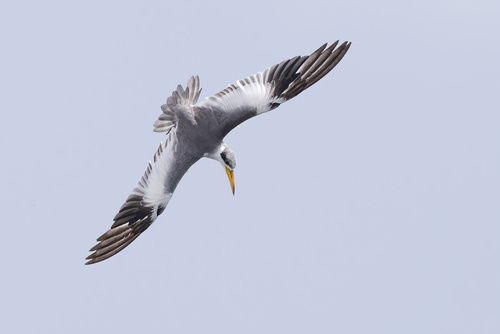 trinta-réis-grande
Em resumo
A marca de campo mais confiável entre talha-mar e trinta-réis-grande é a estrutura única do bico: talha-mar tem um bico strikingly longo e comprimido lateralmente com uma mandíbula inferior muito mais longa, enquanto trinta-réis-grande tem um bico grosso, totalmente amarelo, que é grande, mas não alongado ou irregular. Em voo, talha-mar exibe asas superiores pretas com uma borda traseira branca e uma cauda escura, enquanto trinta-réis-grande tem partes superiores cinzas e partes inferiores brancas sem borda traseira preta. Talha-mar juvenis têm partes superiores marrons com pontas de penas brancas, enquanto imaturos de trinta-réis-grande não são descritos como tendo tal contraste. Ambas as espécies podem parecer semelhantes a trinta-réis à distância, mas sua estrutura e cor do bico são distintas. A sobreposição de habitat é possível no norte da América do Sul, mas talha-mar é mais provável em ambientes costeiros ou estuarinos, enquanto trinta-réis-grande é quase sempre encontrado em áreas interiores, em rios e lagos.
Dicas de identificação
- A estrutura do bico é a marca de campo mais confiável: talha-mar tem um bico longo e comprimido lateralmente com uma mandíbula inferior muito mais longa (vermelho na base, preto na ponta); trinta-réis-grande tem um bico grosso, totalmente amarelo, que é grande, mas não alongado ou irregular. Isso funciona para todas as idades e estações.
- Plumagem juvenil/imatura: Apenas imaturos de talha-mar mostram partes superiores marrons com pontas de penas brancas e franjas. Imaturos de trinta-réis-grande não são descritos como tendo esse padrão, então qualquer parte superior marron e com pontas brancas aponta para talha-mar.
- Asa superior em voo: talha-mar (todas as idades) mostra asas superiores pretas com uma borda traseira branca; trinta-réis-grande tem partes superiores cinzas e sem borda traseira preta. Isso é visível em voo e às vezes quando empoleirado com as asas abertas.
- Forma e comprimento da cauda: talha-mar tem uma cauda mais longa e pontiaguda com bordas brancas; trinta-réis-grande tem uma cauda curta, o que dá uma aparência mais compacta quando empoleirado ou em voo.
- Cor das pernas: talha-mar tem pernas vermelhas; trinta-réis-grande tem pernas e pés amarelos. Isso é melhor visto quando as aves estão empoleiradas ou em pé em bancos de areia.
- Cor da coroa e partes superiores: adultos de talha-mar têm uma coroa, nuca e parte superior do corpo pretas; trinta-réis-grande tem uma coroa preta e coberturas auriculares, mas partes superiores cinzas. Na estação não reprodutiva, ambos mostram coroas mais claras, mas as partes superiores do talha-mar ficam mais marrons, e um colar branco na nuca aparece.
- Testa e partes inferiores: Ambas as espécies têm testas e partes inferiores brancas, mas apenas talha-mar tem um contraste acentuado com partes superiores pretas.
- Estilo de voo: talha-mar voa com batidas de asas suaves e graciosas, muitas vezes baixo sobre a água com o bico aberto e a mandíbula inferior cortando a superfície. trinta-réis-grande voa mais como um trinta-réis típico, com um comportamento de deslizamento menos exagerado.
- Postura empoleirada: talha-mar frequentemente se senta baixo, com o bico fechado e a mandíbula inferior protrusa; trinta-réis-grande fica mais ereto, mostrando seu bico amarelo grosso.
- Vocalização: Se você ouvir um 'kak-kak-kak' latido, é talha-mar. A voz de trinta-réis-grande não é descrita aqui.
- Contexto de habitat: talha-mar é mais provável em ambientes costeiros ou estuarinos, especialmente na América do Norte; trinta-réis-grande é quase sempre encontrado em áreas interiores em rios e lagos na América do Sul.
- Tamanho e jizz: talha-mar é mais pesado, mais longo e tem uma envergadura muito maior, parecendo mais esguio e com asas mais longas. trinta-réis-grande é mais compacto e de cauda curta.
- Mudanças sazonais: Na estação não reprodutiva, talha-mar desenvolve um colar branco na nuca e partes superiores mais claras, mas a estrutura e a cor do bico permanecem distintas.
- Diferenças sexuais: Não são fortemente diagnósticas em campo, mas machos de talha-mar são em média mais pesados que as fêmeas; isso não é uma marca de campo confiável.
- Armadilhas comuns: À distância, ambos podem parecer semelhantes a trinta-réis com bonés pretos e partes inferiores brancas, mas a cor e a estrutura do bico, o padrão da asa superior e o habitat são as melhores maneiras de separá-los.
Tamanho
Talha-mar é visivelmente mais pesado e ligeiramente mais longo que trinta-réis-grande. A massa corporal média é de cerca de 301,5 g para talha-mar contra 235 g para trinta-réis-grande [wikidata], e o comprimento de talha-mar é de 40–50 cm em comparação com os 38 cm do trinta-réis [wikipedia]. A envergadura é muito maior em talha-mar (107–127 cm) do que em trinta-réis-grande (não especificado, mas mais curta com base no tamanho e estrutura geral). No campo, talha-mar parece mais esguio e com asas mais longas, enquanto trinta-réis-grande é mais compacto e de cauda curta.
Plumagem
- Juvenil/imatura talha-mar: Partes superiores marrons com pontas de penas brancas e franjas; testa e partes inferiores brancas; asas superiores pretas com borda traseira branca; a parte inferior da asa varia de branca a cinza escuro. Isso contrasta com trinta-réis-grande, que não é descrito como tendo um padrão de asa superior ou corpo juvenil tão distinto—plumagem imatura não é detalhada, mas não há menção de penas marrons ou com pontas brancas.
- Adulto talha-mar (reprodução): Coroa, nuca e parte superior do corpo pretas; testa e partes inferiores brancas; asas superiores pretas com borda traseira branca; cauda e rabo cinza escuro com bordas brancas. O bico é vermelho na base, preto na ponta, com uma mandíbula inferior muito mais longa.
- Adulto trinta-réis-grande (reprodução): Coroa e coberturas auriculares pretas, partes superiores cinzas, secundárias brancas, coberturas primárias, lores e partes inferiores; cauda é curta; bico é grande e totalmente amarelo; pernas e pés são amarelos. Sem borda traseira preta na asa; partes superiores são cinzas, não pretas.
- Adultos não reprodutores: Ambas as espécies têm coroas e testas mais claras, mas talha-mar desenvolve um colar branco na nuca e partes superiores mais marrons, enquanto a coroa e a testa de trinta-réis-grande ficam mais claras, mas retêm as partes superiores cinzas e o bico amarelo.
Comportamento
Talha-mar frequentemente se alimenta em grandes bandos, voando baixo sobre a água com a mandíbula inferior cortando a superfície, principalmente à noite ou em baixa luminosidade. Seu voo é leve e gracioso, com batidas de asas constantes e um estilo de forrageio único. trinta-réis-grande se comporta mais como um trinta-réis típico, forrageando sobre rios e lagos, mergulhando para capturar presas e raramente deslizante. Quando empoleirado, talha-mar frequentemente fica com o bico fechado e a mandíbula inferior protrusa, enquanto trinta-réis-grande se empoleira mais ereto e mostra claramente seu bico amarelo grosso.
Habitat
Talha-mar é encontrado em áreas costeiras, estuários e às vezes em grandes corpos d'água interiores, especialmente na América do Norte e do Sul. Ele se reproduz em praias de areia, ilhas e bancos de areia. trinta-réis-grande é encontrado quase exclusivamente em áreas interiores, ao longo de rios e lagos de água doce em grande parte da América do Sul a leste dos Andes. A sobreposição é possível no norte da América do Sul, mas trinta-réis-grande raramente é costeiro, e talha-mar raramente é encontrado longe da costa, exceto em alguns sistemas fluviais.
Voz
Talha-mar emite um chamado distintivo de latido 'kak-kak-kak'. A voz de trinta-réis-grande não é descrita nas notas fornecidas, então a vocalização só é diagnóstica se você ouvir o chamado de latido de talha-mar.