

Black Skimmer vs Large-billed Tern
Rynchops niger contro Phaetusa simplex
Fai un quiz con Black Skimmer e Large-billed Tern
 Black Skimmer
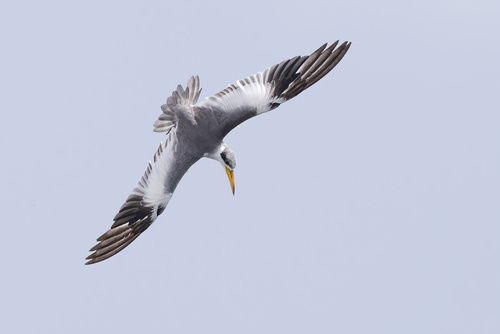 Large-billed Tern
In breve
Il segno distintivo più affidabile tra Black Skimmer e Large-billed Tern è la struttura unica del becco: il Black Skimmer ha un becco sorprendentemente lungo e compresso lateralmente con una mandibola inferiore molto più lunga, mentre il Large-billed Tern ha un becco spesso, completamente giallo, che è grande ma non allungato o irregolare. In volo, il Black Skimmer mostra ali superiori nere con un bordo posteriore bianco e una coda scura, mentre il Large-billed Tern ha parti superiori grigie e parti inferiori bianche senza bordo posteriore nero. I giovani Black Skimmer hanno parti superiori marroni con punte di piume bianche, mentre i giovani Large-billed Tern non sono descritti come aventi tale contrasto. Entrambe le specie possono apparire simili a un gabbiano a distanza, ma la loro struttura e il colore del becco sono distintivi. La sovrapposizione degli habitat è possibile nel nord del Sud America, ma il Black Skimmer è più probabile in ambienti costieri o estuarini, mentre il Large-billed Tern è quasi sempre nell'entroterra su fiumi e laghi.
Consigli di identificazione
- La struttura del becco è il segno distintivo più affidabile: il Black Skimmer ha un becco lungo e compresso lateralmente con una mandibola inferiore molto più lunga (rossa alla base, nera alla punta); il Large-billed Tern ha un becco spesso, completamente giallo, che è grande ma non allungato o irregolare. Questo vale per tutte le età e stagioni.
- Piumaggio giovanile/immaturo: Solo i giovani Black Skimmer mostrano parti superiori marroni con punte di piume bianche e frange. I giovani Large-billed Tern non sono descritti come aventi questo schema, quindi qualsiasi parte superiore marrone e con punte bianche indica un skimmer.
- Ali superiori in volo: Il Black Skimmer (tutte le età) mostra ali superiori nere con un bordo posteriore bianco; il Large-billed Tern ha parti superiori grigie e nessun bordo posteriore nero. Questo è visibile in volo e a volte quando è appollaiato con le ali spiegate.
- Forma e lunghezza della coda: Il Black Skimmer ha una coda più lunga e appuntita con bordi bianchi; il Large-billed Tern ha una coda corta, che conferisce un aspetto più compatto quando è appollaiato o in volo.
- Colore delle gambe: Il Black Skimmer ha gambe rosse; il Large-billed Tern ha gambe e piedi gialli. Questo è meglio visibile quando gli uccelli sono appollaiati o in piedi su banchi di sabbia.
- Colore della corona e delle parti superiori: Gli adulti Black Skimmer hanno una corona, una nuca e una parte superiore del corpo nera; il Large-billed Tern ha una corona nera e copritrici auricolari ma parti superiori grigie. Nella stagione non riproduttiva, entrambi mostrano corone più chiare, ma le parti superiori dello skimmer diventano più marroni e appare un collare bianco sulla nuca.
- Fronte e parti inferiori: Entrambe le specie hanno fronti e parti inferiori bianche, ma solo lo skimmer ha un forte contrasto con le parti superiori nere.
- Stile di volo: Il Black Skimmer vola con battiti d'ali regolari e aggraziati, spesso bassi sull'acqua con il becco aperto e la mandibola inferiore che affetta la superficie. Il Large-billed Tern vola più come un gabbiano tipico, con un comportamento di scorrimento meno esagerato.
- Postura in appollaiamento: Il Black Skimmer spesso si siede basso, con il becco chiuso e la mandibola inferiore sporgente; il Large-billed Tern sta più eretto, mostrando il suo spesso becco giallo.
- Vocalizzazione: Se senti un 'kak-kak-kak' ringhioso, è un Black Skimmer. La voce del Large-billed Tern non è descritta qui.
- Contesto dell'habitat: Il Black Skimmer è più probabile in ambienti costieri o estuarini, specialmente in Nord America; il Large-billed Tern è quasi sempre nell'entroterra su fiumi e laghi in Sud America.
- Dimensioni e aspetto: Il Black Skimmer è più pesante, più lungo e ha un'apertura alare molto maggiore, apparendo più snello e con ali più lunghe. Il Large-billed Tern è più compatto e con coda corta.
- Cambiamenti stagionali: Nella stagione non riproduttiva, il Black Skimmer sviluppa un collare bianco sulla nuca e parti superiori più chiare, ma la struttura e il colore del becco rimangono distintivi.
- Differenze sessuali: Non sono fortemente diagnostiche sul campo, ma i maschi di Black Skimmer sono in media più pesanti delle femmine; questo non è un segno distintivo affidabile.
- Trappole comuni: A distanza, entrambi possono apparire simili a un gabbiano con cappelli neri e parti inferiori bianche, ma il colore e la struttura del becco, il modello delle ali superiori e l'habitat sono i migliori modi per separarli.
Taglia
Il Black Skimmer è visibilmente più pesante e leggermente più lungo del Large-billed Tern. La massa corporea media è di circa 301,5 g per il Black Skimmer contro 235 g per il Large-billed Tern [wikidata], e la lunghezza del Black Skimmer è di 40–50 cm rispetto ai 38 cm del gabbiano [wikipedia]. L'apertura alare è molto maggiore nel Black Skimmer (107–127 cm) rispetto al Large-billed Tern (non specificato, ma più corto in base alle dimensioni e alla struttura complessive). Sul campo, il Black Skimmer appare più snello e con ali più lunghe, mentre il Large-billed Tern è più compatto e con coda corta.
Piumaggio
- Giovanile/immaturo Black Skimmer: Parti superiori marroni con punte di piume bianche e frange; fronte e parti inferiori bianche; ali superiori nere con bordo posteriore bianco; l'ala inferiore varia da bianca a grigia scura. Questo contrasta con il Large-billed Tern, che non è descritto come avente un tale distintivo modello di ali superiori o corpo giovanile—il piumaggio immaturo non è dettagliato, ma non c'è menzione di piume marroni o con punte bianche.
- Adulto Black Skimmer (riproduzione): Corona, nuca e parte superiore del corpo neri; fronte e parti inferiori bianche; ali superiori nere con bordo posteriore bianco; coda e groppa grigio scuro con bordi bianchi. Il becco è rosso alla base, nero alla punta, con una mandibola inferiore molto più lunga.
- Adulto Large-billed Tern (riproduzione): Corona e copritrici auricolari nere, parti superiori grigie, secondarie bianche, copritrici primarie, lore e parti inferiori; la coda è corta; il becco è grande e completamente giallo; gambe e piedi sono gialli. Nessun bordo posteriore nero sull'ala; le parti superiori sono grigie, non nere.
- Adulti non in riproduzione: Entrambe le specie hanno corone e fronti più chiare, ma il Black Skimmer sviluppa un collare bianco sulla nuca e parti superiori più marroni, mentre la corona e la fronte del Large-billed Tern diventano più chiare ma mantengono le parti superiori grigie e il becco giallo.
Comportamento
Il Black Skimmer spesso si nutre in grandi stormi, volando basso sull'acqua con la mandibola inferiore che affetta la superficie, principalmente di notte o in condizioni di scarsa illuminazione. Il suo volo è leggero e aggraziato, con battiti d'ali regolari e uno stile di foraggiamento unico. Il Large-billed Tern si comporta più come un gabbiano tipico, foraggiando su fiumi e laghi, tuffandosi per la preda e raramente scorrendo. Quando è appollaiato, il Black Skimmer spesso sta con il becco chiuso e la mandibola inferiore sporgente, mentre il Large-billed Tern si appollaia più eretto e mostra chiaramente il suo spesso becco giallo.
Habitat
Il Black Skimmer si trova in aree costiere, estuari e talvolta grandi corpi d'acqua interni, specialmente in Nord e Sud America. Si riproduce su spiagge sabbiose, isole e banchi di sabbia. Il Large-billed Tern si trova quasi esclusivamente nell'entroterra, lungo fiumi e laghi d'acqua dolce in gran parte del Sud America a est delle Ande. La sovrapposizione è possibile nel nord del Sud America, ma il Large-billed Tern è raramente costiero, e il Black Skimmer è raramente trovato lontano dalla costa, tranne che in alcuni sistemi fluviali.
Voce
Il Black Skimmer emette un distintivo richiamo ringhioso 'kak-kak-kak'. La voce del Large-billed Tern non è descritta nelle note fornite, quindi la vocalizzazione è diagnostica solo se senti il richiamo ringhioso del Black Skimmer.
Black Skimmer · Large-billed Tern · I miei uccelli difficili